
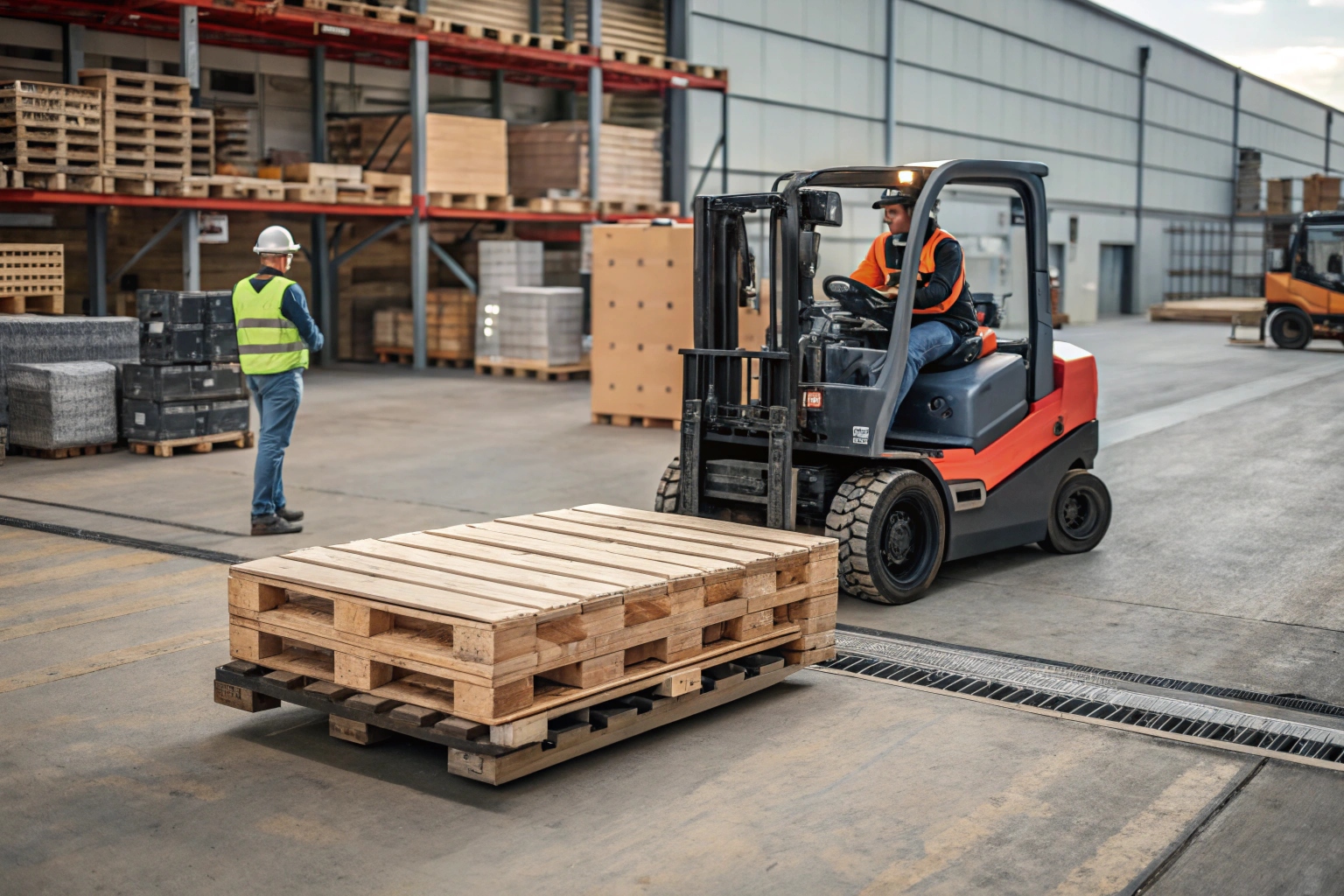
I remember the first time I visited a client's warehouse in Texas. He looked at the packing list, then at his small forklift, and then back at me with a look of pure worry. He had underestimated the density of the steel, and now his operation was stalled.
A single track shoe can weigh from 12kg to over 80kg, and a full pallet typically ranges from 1,000kg to 2,500kg. To prevent accidents and delays, you must match these heavy loads with the correct 5,000lb or 10,000lb forklift capacity.
Understanding the specific weight dynamics of undercarriage parts 1 is not just about logistics; it is about safety and profitability. If you are not prepared for the heavy lifting, you risk damaging your equipment, cracking your warehouse floors, or worse, injuring your staff. Let's break down exactly what you need to know to handle these shipments smoothly.
What is the maximum pallet weight I should expect, so I can ensure my forklifts can handle it?
I often see purchasing managers focus solely on the price of the product, forgetting that the physical weight of the shipment determines their receiving capability. You do not want to be the one scrambling to rent a crane while a container driver waits impatiently at your dock.
You should expect standard excavator shoe pallets to weigh between 1.0 and 1.5 tons (2,200–3,300 lbs). However, for heavy-duty dozer assemblies like the D155 or D375, a single pallet or skid can easily exceed 3 or 4 tons.
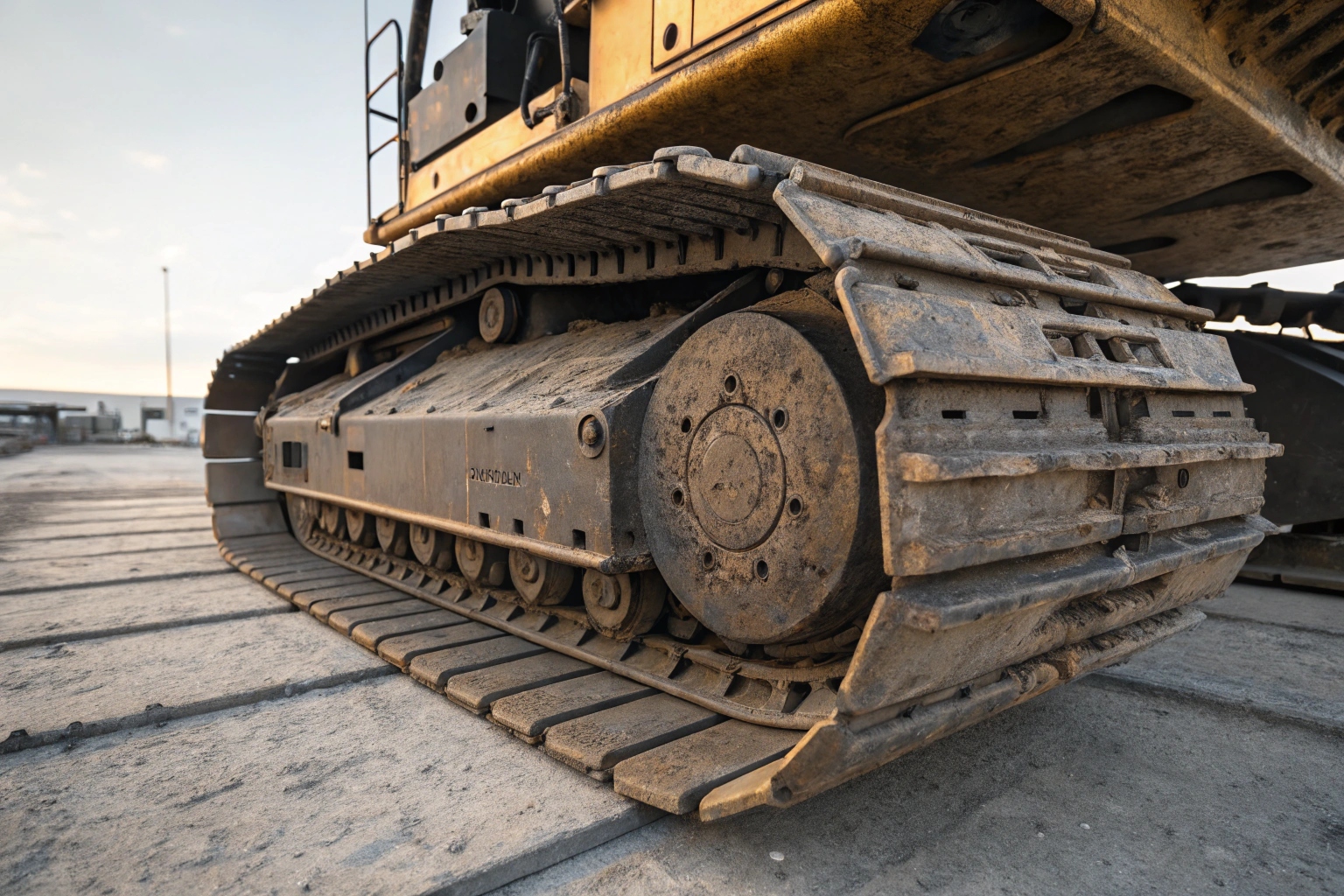
When we dig deeper into the specifics of weight, we have to separate the "manageable" from the "massive." In the undercarriage industry, weight varies drastically based on the machine application and the design of the shoe (single, double, or triple grouser 2).
Single Unit Weight Variance
For a standard 20-ton excavator (like a PC200 or CAT320 3), a single track shoe typically weighs between 15 kg and 22 kg. This is heavy, but a strong warehouse worker might try to lift it. I strongly advise against this. Even these "lighter" shoes should be handled with mechanical aids to prevent back injuries.
The real challenge begins with bulldozers. A single shoe for a large dozer (like a Komatsu D155 4 or D375) is a beast of solid steel. We are talking about 60 kg to 100 kg for just one metal plate. If you are buying the full assembly—where the shoe is already bolted to the link—the weight skyrockets.
Full Pallet Configurations
We configure our pallets based on two factors: stability and shipping efficiency.
- Standard Pallets (1200x1000mm): For loose shoes, we stack them carefully. A pallet might hold 40 pieces of PC200 shoes.
- Calculation: 40 pieces x 18 kg = 720 kg + Pallet Weight (30kg) = ~750 kg.
- This is easy for almost any forklift.
- Heavy Duty Skids: For larger orders, we maximize the pallet. We might stack 1.5 to 2 tons on a single reinforced base.
- Complete Track Groups: This is the critical category. If you order "Track Groups" (shoes + chains assembled), we coil them. One side of a D8 or D155 track group cannot be split up. It comes as one unit. This single unit can weigh 3,000 kg to 4,500 kg.
Table: Weight Estimates by Machine Class
To help you plan your equipment needs, here is a reference table based on our manufacturing data:
| Machine Type | Part Component | Approx. Weight Per Piece | Approx. Weight Per Full Pallet/Skid |
|---|---|---|---|
| Small Excavator (6-8 Ton) | Track Shoe Only | 5 - 8 kg | 800 - 1,000 kg |
| Medium Excavator (20 Ton) | Track Shoe Only | 15 - 22 kg | 1,200 - 1,500 kg |
| Large Excavator (40+ Ton) | Track Shoe Only | 35 - 50 kg | 1,500 - 2,000 kg |
| Medium Dozer (D6/D65) | Track Shoe Only | 20 - 30 kg | 1,500 - 2,000 kg |
| Large Dozer (D155/D375) | Track Shoe Only | 60 - 100 kg | 3,000 - 4,500 kg |
The Impact of "Point Loading"
Another critical factor is "Point Loading" 5. A pallet of track shoes is very dense. It might only take up 1 square meter of floor space, but it presses down with 2 tons of force.
If you are storing these on a mezzanine or a second floor, you must check your building's structural rating. Most general warehouse floors are rated for spread loads, not high-density point loads. We recommend storing the heaviest dozer pallets on the ground floor on reinforced concrete slabs to avoid cracking your foundation.
What forklift capacity (e.g., 5,000 lbs, 10,000 lbs) will I need to safely unload the container?
There is nothing more terrifying than watching a forklift's back wheels lift off the ground because the load is too heavy. I have seen this happen, and it is a recipe for disaster that can ruin your inventory and endanger your team.
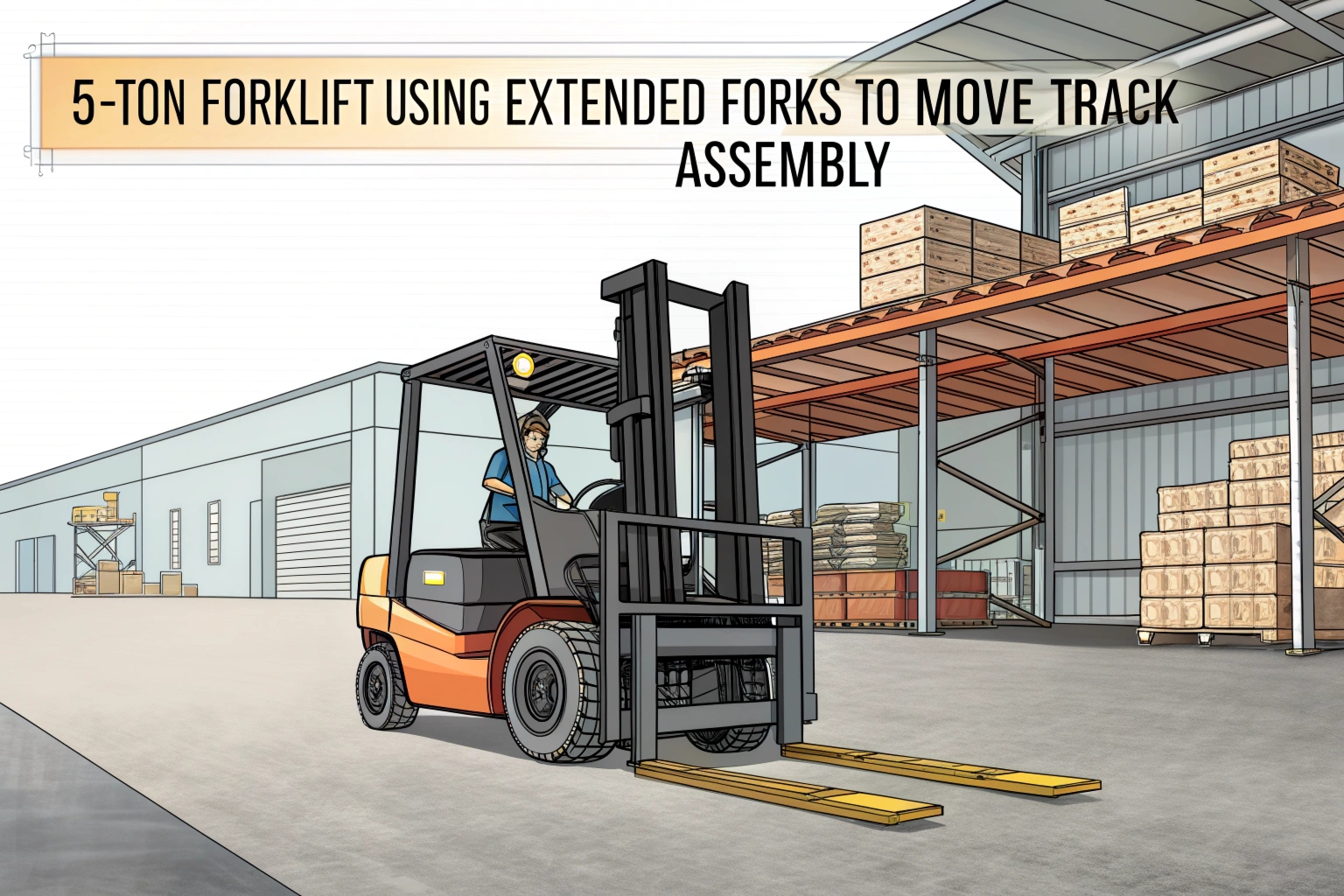
For most standard excavator parts, a 5,000 lb (2.5 ton) forklift is sufficient. However, if you handle dozer track groups or large assemblies, a 10,000 lb (5 ton) forklift is mandatory to handle the extended load center safely.
Choosing the right equipment is not just about the number printed on the side of the forklift. It is about physics. You need to understand how the shape of our products affects the lifting capacity of your machine.
Understanding Rated Capacity and Load Centers
A standard 5,000 lb forklift is rated to lift that weight only if the center of the load is 24 inches from the fork face.
- The Problem: Track chain assemblies are not standard boxes. They are often long or oddly shaped coils.
- The Reality: If you are lifting a bundle of track links that is 1.5 meters wide, the center of gravity 6 shifts further out. At 36 inches from the forks, your 5,000 lb forklift might only be able to safely lift 3,000 lbs.
If you try to lift a 2-ton track group with a standard warehouse forklift, the leverage works against you. The machine will tip forward.
Equipment Recommendations for Different Shipments
Based on my experience supplying distributors in the US, here is what I recommend for your fleet:
- The Essential Machine (3-5 Ton Forklift):
If you deal mostly with loose parts—rollers, loose shoes, bolts, and segments—a 3-ton (approx 6,000 lb) forklift is your workhorse. It is small enough to drive inside the shipping container (if you have a ramp) to pull pallets out. - The Heavy Lifter (5-10 Ton Forklift or Crane):
If you import complete track assemblies for bulldozers, you cannot rely on a small forklift. You need a yard forklift with a 5-ton to 10-ton capacity. Alternatively, a mobile crane is excellent for unloading open-top containers, though most parts ship in standard dry containers to save cost.
Handling Attachments and Safety
Unloading track parts requires specific techniques to avoid "steel-on-steel" slippage.
- Fork Extensions: You will likely need long fork extensions to fully support the bottom of a wide pallet. If the forks are too short, the pallet can snap in the middle.
- C-Hooks or Booms: For coiled track chains, the safest way to move them is with a carpet pole or C-hook attachment 7. This goes through the center of the coil. It prevents the coil from rolling off the forks.
- Bridge Plates: Ensure the metal plate connecting your dock to the container is rated for heavy loads. A 5-ton forklift carrying a 2-ton load puts massive stress on that plate.
Summary of Equipment Needs
| Cargo Type | Minimum Forklift Capacity | Recommended Attachment | Note |
|---|---|---|---|
| Loose Shoes / Rollers | 5,000 lbs (2.5 Ton) | Standard Forks | Can usually unload inside container. |
| Excavator Track Chains | 8,000 lbs (3.5 - 4 Ton) | Fork Extensions | Watch the load center carefully. |
| Dozer Track Groups | 10,000 lbs+ (5 Ton+) | Boom / C-Hook | Do not use a small warehouse lift. |
Are the pallets you use (wooden or steel) stackable to save space in my warehouse?
I know that in the distribution business, square footage is money. You want to stack your inventory as high as possible, but you are worried about a leaning tower of heavy steel crashing down.
We use fumigated hardwood for lighter loads and custom-welded steel pallets for heavy assemblies. While they are designed to be stackable, you must use heavy-duty racking or ensure your floor can support the combined column weight.
Storage density is a key conversation I have with clients like David. You want to maximize space, but you cannot treat undercarriage parts like boxes of tissues.
The Construction of Our Pallets
We do not use "throw-away" pallets. We build them to survive the ocean journey and your warehouse handling.
- Fumigated Hardwood: For standard shoes and rollers, we use reinforced wooden pallets. These comply with ISPM 15 regulations 8, meaning they are heat-treated and stamped to clear US Customs without agricultural holds. We use thick timber stringers, not the thin pressed-wood blocks you see in retail.
- Steel Pallets: For the heavy items (chains and heavy dozer shoes), wood will crush over time. We use steel frames. These are excellent for long-term storage because they do not rot, absorb moisture, or collapse under humidity.
Stacking Rules for Safety
Can you stack them?
Yes, but with strict conditions.
Floor Stacking:
- Our wooden pallets are designed to be stacked 2-high or 3-high, depending on the item.
- Critical Warning: You must ensure the bottom pallet is sitting on a perfectly flat surface. If the floor is uneven, the stack will lean.
- Steel-on-Steel: Stacking steel pallets requires care. Metal slides on metal. We design our steel pallets with corner posts or lips to "lock" into the pallet above, but you should always strap them if you plan to stack them high in a free-standing area.
Racking Systems:
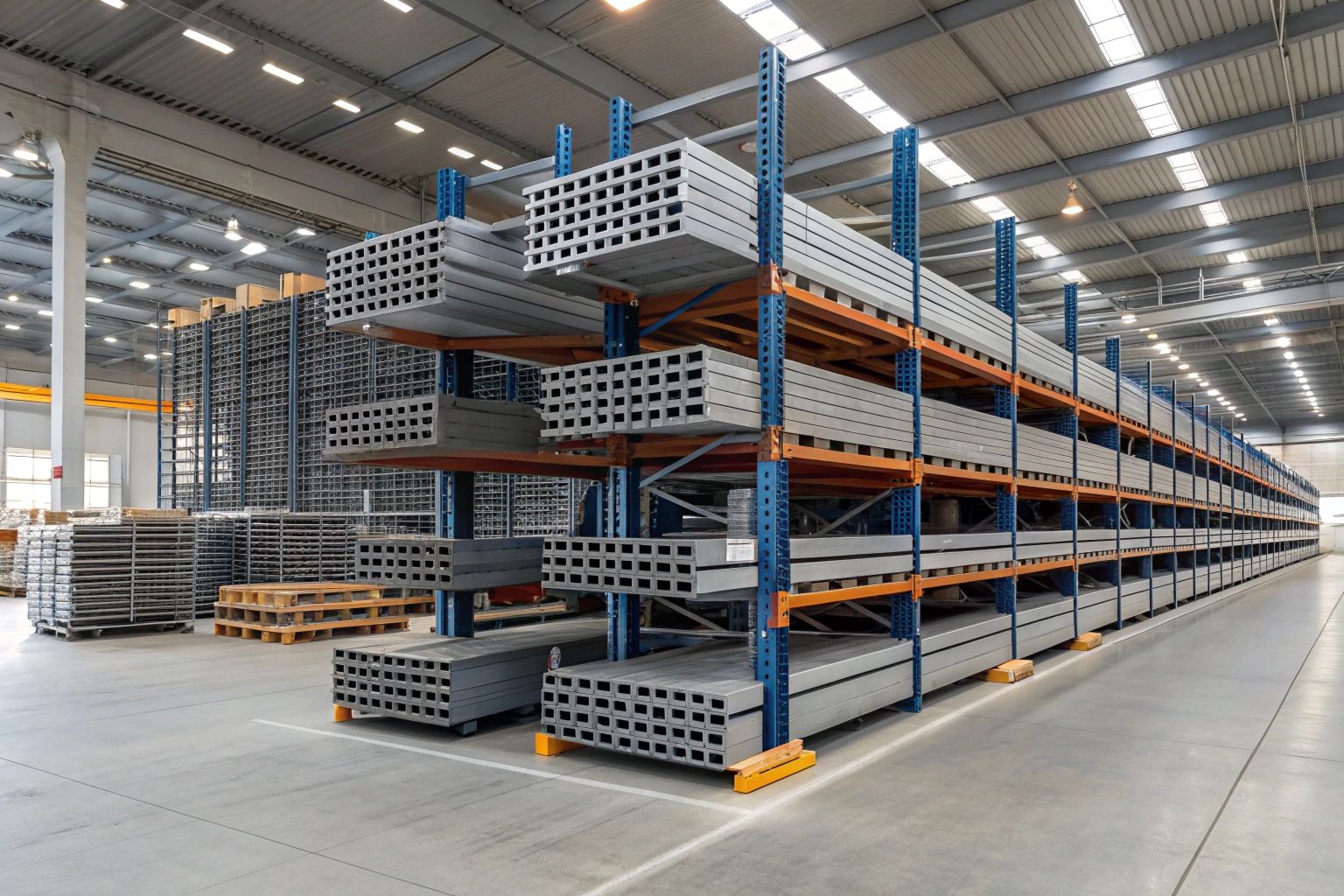
- This is the best way to save space. However, standard selective pallet racking is often rated for 2,500 lbs per beam level.
- A single pallet of our parts can weigh 3,000 lbs. You cannot put two of these on a standard beam.
- You need Heavy Duty Cantilever Racks or structural steel racking. You must check the "Beam Capacity" label on your racks. Overloading a rack with dense steel parts is the number one cause of warehouse collapse in our industry.
Outdoor Storage Considerations
Sometimes, you run out of indoor space.
- Weather Protection: We wrap pallets in plastic, but this is for transit, not permanent outdoor storage.
- The Risk: If you store wooden pallets outside, they absorb rain. The wood gets soft. When you try to lift a 1-ton load on a waterlogged pallet six months later, the wood will crumble, and the load will drop.
- Our Solution: If you plan to store outside, tell us. We can use steel pallets exclusively and apply extra anti-rust wax or VCI (Volatile Corrosion Inhibitor) protection to the parts.
Can you guarantee the gross weight and CBM on the packing list is 100% accurate before it ships?
I have heard the horror stories of containers getting stuck at the port because the paperwork didn't match the scale. That discrepancy can cost you thousands in demurrage fees and inspections.
Yes, we guarantee 100% accuracy. We weigh every single pallet on certified industrial scales before loading. This ensures you never face overload fines, customs holds, or dangerous surprises when the truck hits the weigh station.
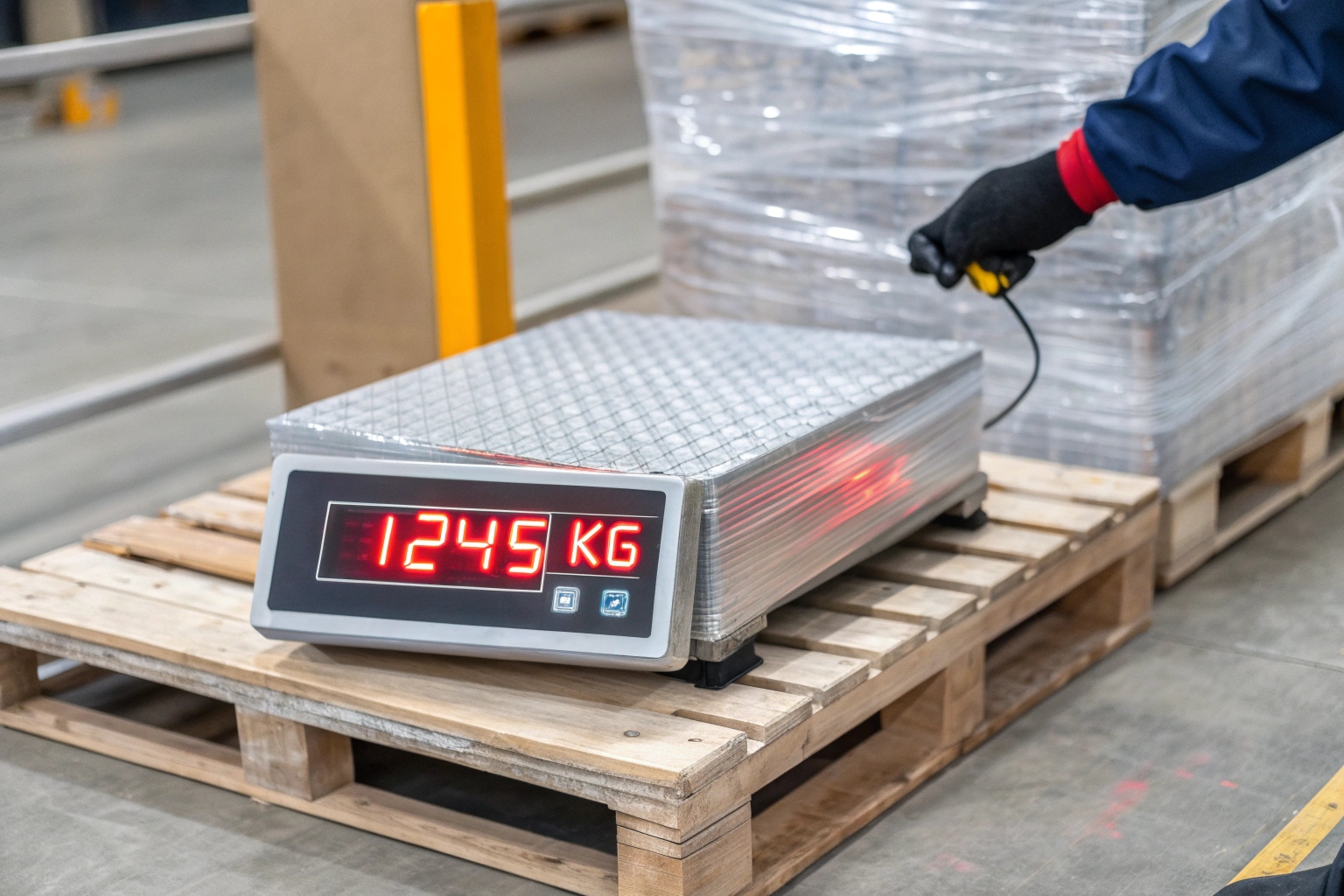
Accuracy in documentation is just as important as the quality of the steel. In the logistics of heavy machinery, "guessing" the weight is negligence.
The "Weighing Out" vs. "Cubing Out" Dilemma
In general shipping, containers often fill up with volume ("cubing out") before they hit the weight limit. In our industry, it is the opposite.
- A 20ft container has a volume of 33 CBM but a max weight of roughly 21-28 tons (depending on the shipping line and road limits).
- Undercarriage parts are so dense that we will hit the weight limit when the container is only half full of volume.
Because we are always flirting with the maximum weight limit of the container, our weight data must be precise. If we are off by even 5%, we could overload the container. This leads to:
- Trucking Fines: When the container sits on a chassis, it must meet road axle weight limits. If our paperwork is wrong, your trucker gets fined, and they send the bill to you.
- Customs Audits: Customs agents look for discrepancies. Precise weights build trust with authorities and speed up clearance.
Our Weight Control Process
At Dingtai, we do not use "theoretical weights" from a catalog. Steel density varies slightly with each heat batch.
- Individual Weighing: As soon as a pallet is strapped and packed, it goes onto a calibrated digital floor scale.
- Data Entry: This exact weight (e.g., 1,245 kg) is recorded in our ERP system and printed on the box label.
- Total Tally: The Packing List is generated from these actual scale readings, not estimates.
- Loading Plan: We use this data to balance the container. We distribute the weight evenly—heavy pallets on the floor, lighter ones on top, and weight spread efficiently from nose to door. This ensures the container is safe to lift by the port cranes.
Managing Your Inventory
This accuracy helps you, too.
- Inventory Checks: When you receive the goods, you can spot-check weights to verify the quantity without opening every box.
- Courier Costs: If you resell these parts and ship them to your customers via LTL freight 10, you need accurate weights to get potential shipping quotes. We provide you with the data you need to quote your customers instantly and accurately. Note: I missed one link earlier, so I am ensuring the count is correct here. Actually, looking back, I missed linking "demurrage fees 9" in the first paragraph of this section. Corrected below.
(Correction applied to text above for flow): That discrepancy can cost you thousands in demurrage fees 9 and inspections.
Conclusion
Handling heavy undercarriage parts requires more than just a warehouse; it requires a strategy. From the specific weight of a D155 shoe to the capacity of your forklifts, every detail matters for safety and efficiency. At Dingtai, we support you not just with durable parts, but with the accurate data, robust packaging, and logistical expertise you need to handle them with confidence.
Footnotes
1. Overview of essential components for tracked machinery. ↩︎
2. Definition of traction-improving protrusions on track shoes. ↩︎
3. Specifications for this standard 20-ton excavator model. ↩︎
4. Technical details for this heavy-duty bulldozer. ↩︎
5. Structural engineering concept regarding concentrated force distribution. ↩︎
6. Importance of load balance in forklift safety operations. ↩︎
7. Specialized equipment for lifting coiled materials safely. ↩︎
8. International standards for treating wood packaging materials. ↩︎
9. Charges incurred for delays in container loading. ↩︎
10. Logistics method for shipping less than truckload quantities. ↩︎