
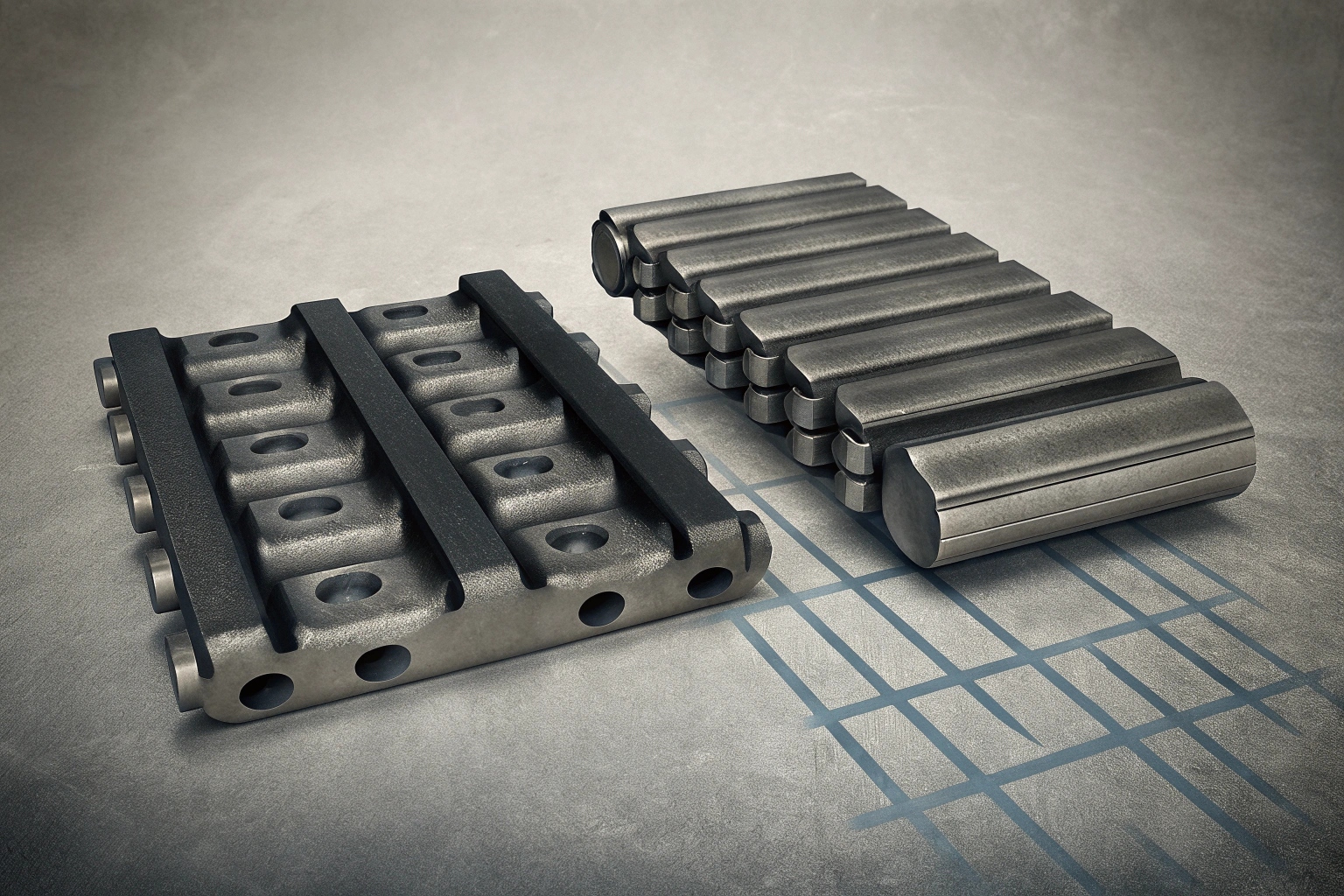
Starting a journey in understanding components like track shoes and assemblies was crucial for me. These are key to maintaining efficient crawler-type vehicles 1. But, how different are these parts?
A track shoe is the individual metal plate that bolts onto the track link of a construction vehicle. In contrast, a track shoe assembly includes not only the track shoe but also the bolts, nuts, and other necessary components for installation. This comprehensive packet simplifies the assembly process and ensures compatibility. Understanding the distinction between these two can significantly impact inventory decisions, ensuring smoother operations and maintenance of machinery.
Choosing the right component for inventory requires considering numerous factors, from cost efficiency 2 to practical installation ease. Continue reading to explore these factors and make informed decisions for your business.
If I just order the "track shoe," what other parts (like bolts) will I need to source separately?
Understanding what makes up the machine parts we deal with is vital. As I delve into the world of track shoes, I ponder about sourcing requirements and complexities 3.
If you opt to order just the track shoe, you must independently source additional components like bolts, nuts, pins, and bushings. These components are crucial for secure attachment and optimal functionality of the shoe on the track system. Without these, the track shoes alone are insufficient for proper installation and operation.

Sourcing separate components can be tricky. Each piece must match to avoid compatibility issues 4. Bolts and nuts, regardless of size and type, should be high torque 5 to secure the track shoe. Here's a table with typical components needed:
| Component | Function | Considerations |
|---|---|---|
| Bolts | Secure shoe to track link | Must match with track shoe |
| Nuts | Fasten bolts in place | High torque preferred |
| Pins | Connect links and shoes | Wear-resistant material |
| Bushings | Reduce friction and wear | Steel or polymer options |
Each item's selection demands careful attention to detail, given the necessity for precision in assembly. Bolts and nuts must withstand the tough conditions these machines operate in.
Is it more cost-effective for my business to buy the complete assembly versus individual components?
Cost-effectiveness is always at the forefront of business decisions. It’s a topic I've given much thought to, especially concerning key components like track assemblies.
Purchasing a complete track shoe assembly can often be more cost-effective than buying individual components separately. The assembly includes all necessary parts pre-packaged and paired, eliminating the need for time-consuming selection and potential compatibility issues. This reduces the complexity and risk of assembly errors, enhancing operational efficiency, which translates to potential cost savings over time.

To better illustrate:
| Option | Direct Cost | Installation Cost | Risk | Efficiency |
|---|---|---|---|---|
| Individual Components | Lower | Higher | Higher | Variable |
| Complete Assembly | Higher | Lower | Lower | Higher |
When considering total costs, time, and potential for disruption, complete assemblies can offer superior value for many businesses. Especially for large fleets, where downtime costs 6 are significant, ensuring rapid and correct component replacement is paramount.
What labor and tools are required if my customers buy the parts loose instead of as an assembly?
Labor requirements are a pivotal consideration in inventory strategy 7. Reflecting on this, I've often wondered about the ramifications of selling components separately.
When customers purchase parts loose, additional labor and specialized tools are often required for proper installation. Installing track shoes without the accompanying assembly can necessitate hydraulic track presses, precise alignment tools, and skilled technicians to ensure proper fit and function. This not only adds labor costs but also increases the potential for installation errors.

To manage loose parts:
| Resource | Challenge | Mitigation Strategy |
|---|---|---|
| Skilled Labor | Greater demand for expertise | Training programs |
| Specialized Tools | Higher upfront and maintenance cost | Investing in quality equipment |
Ensuring effective assembly involves an understanding of each task involved, from alignment correction to torque specifications 8. Poor installation can lead to machinery failure, impacting operational efficiency.
How does this choice affect my stocking (SKU) strategy and final selling price?
In the business of parts and components, strategic stocking decisions have always captivated me. This affects not only availability but also pricing strategy.
Choosing between track shoes and assemblies can have considerable implications on stocking strategy and selling price. Stocking individually allows for tailored options but increased SKU complexity. On the other hand, assemblies streamline stocking but could demand higher investment. Balancing these options affects final pricing strategy by influencing costs associated with handling, storage, and potential efficiency in fulfilling orders.

Here's a comparative look at effects on strategy:
| Stocking Option | Complexity | Flexibility | Initial Investment | Price Influence |
|---|---|---|---|---|
| Individual Shoes | Higher | More | Lower | Competitive |
| Complete Assemblies | Lower | Less | Higher | Premium |
Determining a strategy involves evaluating business goals, market demand 9, and operational capacity. Complementary stocking can offer a mix of flexibility and efficiency as you cater to diverse customer needs.
Conclusion
Deciding between track shoes and track shoe assemblies requires weighing cost-efficiency, stocking strategy, and installation simplicity. The choice affects procurement strategies 10, labor requirements, and overall business efficiency.
Footnotes
1. Learn about the types of machinery that use track systems. ↩︎
2. Analysis of cost factors in heavy equipment parts procurement. ↩︎
3. A guide to navigating the complexities of sourcing industrial parts. ↩︎
4. How to avoid common part compatibility problems in machinery. ↩︎
5. Understanding torque requirements for heavy-duty bolts and fasteners. ↩︎
6. Calculating the true financial impact of machinery downtime. ↩︎
7. Best practices for managing an effective parts inventory strategy. ↩︎
8. Importance of adhering to correct torque specs during installation. ↩︎
9. How to analyze market demand for construction equipment parts. ↩︎
10. Explore different procurement strategies for business efficiency. ↩︎