
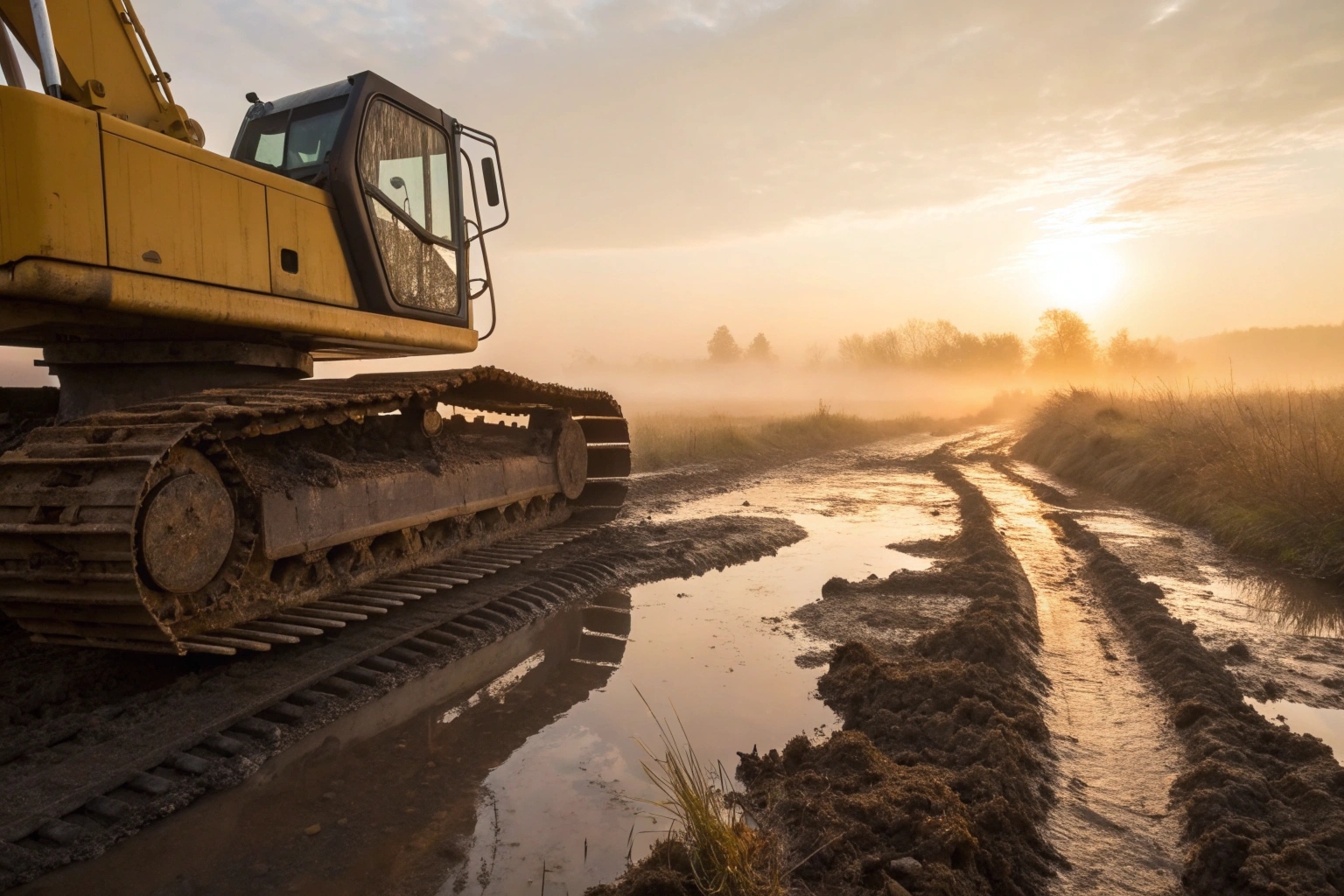
I know the sinking feeling—literally—of watching a heavy dozer struggle in deep mud. It destroys your schedule, eats into your fuel budget, and keeps you awake at night. Let me show you how to pick the right track shoes to keep your machines floating and moving.
To balance traction and soil protection in soft soils, you must choose track shoes that maximize flotation while reducing ground pressure. Wide triple grouser shoes are often the best choice because they spread weight evenly to prevent sinking. For extreme mud, self-cleaning swamp shoes with relief holes prevent packing and maintain grip without tearing up the ground.
Let’s dig into the specific designs that solve these tricky terrain problems and help you make the best decision for your fleet.
Are triple grouser shoes the best "all-around" option for balancing traction and low ground disturbance?
Single grousers dig deep, but sometimes that aggression causes too much mess and destroys the surface. Triple grousers might be the middle ground you need to protect the soil while keeping the machine moving.
Yes, triple grouser shoes are often the best compromise for general soft ground. Their three lower-profile bars offer less penetration than single grousers, which significantly reduces ground disturbance. They provide excellent flotation on soft soil while still giving enough traction for general maneuvering, making them ideal for mixed job sites.
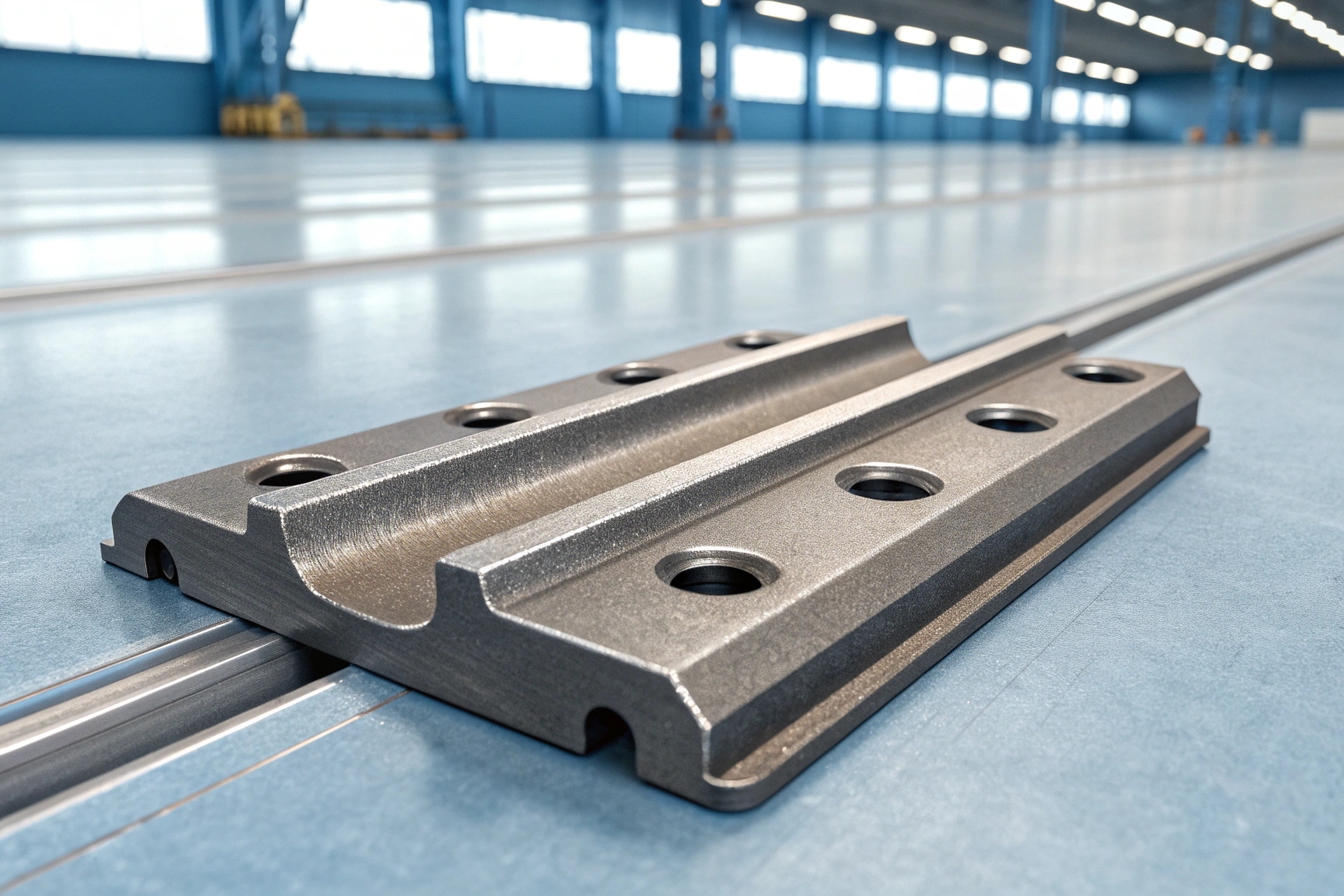
When I walk through my factory floor here at Dingtai, I often see rows of triple grouser shoes ready for export. There is a reason they are so popular globally. In the world of excavation and heavy construction, you are rarely on just one type of ground for the whole year. You might start a project on hard dirt and end up in a soft meadow. Triple grouser shoes are the "all-rounders" of the undercarriage 1 world.
Here is why they work so well for balancing traction and protection. A single grouser 2 acts like a sharp knife; it slices deep into the ground to pull the machine forward. This is great for rock or hard clay, but in soft soil, it just churns everything up. It turns a job site into a mud pit. Triple grousers, on the other hand, have three shorter ribs. These ribs bite into the ground just enough to move you, but they do not dig deep ditches.
Understanding the Traction Mechanics
This design also affects how the machine turns. High traction means high resistance when you try to steer. If you have ever heard a machine groan while turning on a single grouser, you know the stress it puts on the rollers and idlers. Triple grousers have lower turning resistance. This makes the machine more agile and creates less "tearing" of the topsoil when the operator spins the tracks.
I once worked with a long-term client, David, who was running a pipeline project through farmland in the US. He started with single grousers, and the local farmers were furious about the damage his machines were doing to the fields. We switched him to 600mm wide triple grousers. The wider shoe spread the weight out (flotation), and the shorter grousers stopped tearing up the grass roots. He finished the job without any more complaints.
Comparison of Grouser Types
To help you visualize the difference, here is a quick breakdown of how they compare:
| Feature | Single Grouser | Double Grouser | Triple Grouser |
|---|---|---|---|
| Grip/Traction | Very High | High | Moderate |
| Ground Disturbance | Severe (Digs deep) | Moderate | Low (Floats on top) |
| Turning Resistance | High | Medium | Low |
| Best Terrain | Rock, Hard Clay | Mixed General Use | Soft Soil, Clay, General |
However, you must be careful with the width. It is tempting to go as wide as possible for flotation, but wide shoes can break. If a wide shoe steps on a hard rock on the edge, the leverage can snap the shoe or the link. Always balance the need for flotation with the risk of breakage.
When should I recommend a "flat" or "swamp" shoe (with no grousers) to my customers?
Sometimes, even triple grousers dig too much and get stuck. In true swamps, you need a shoe that acts like a snowshoe to keep the machine on top of the liquid soil.
You should recommend flat or swamp shoes when the machine operates in marshes, peat, or very soft mud. These shoes usually have a triangular or arc shape to prevent suction. They float on top of the terrain rather than digging in, which stops the machine from getting stuck.
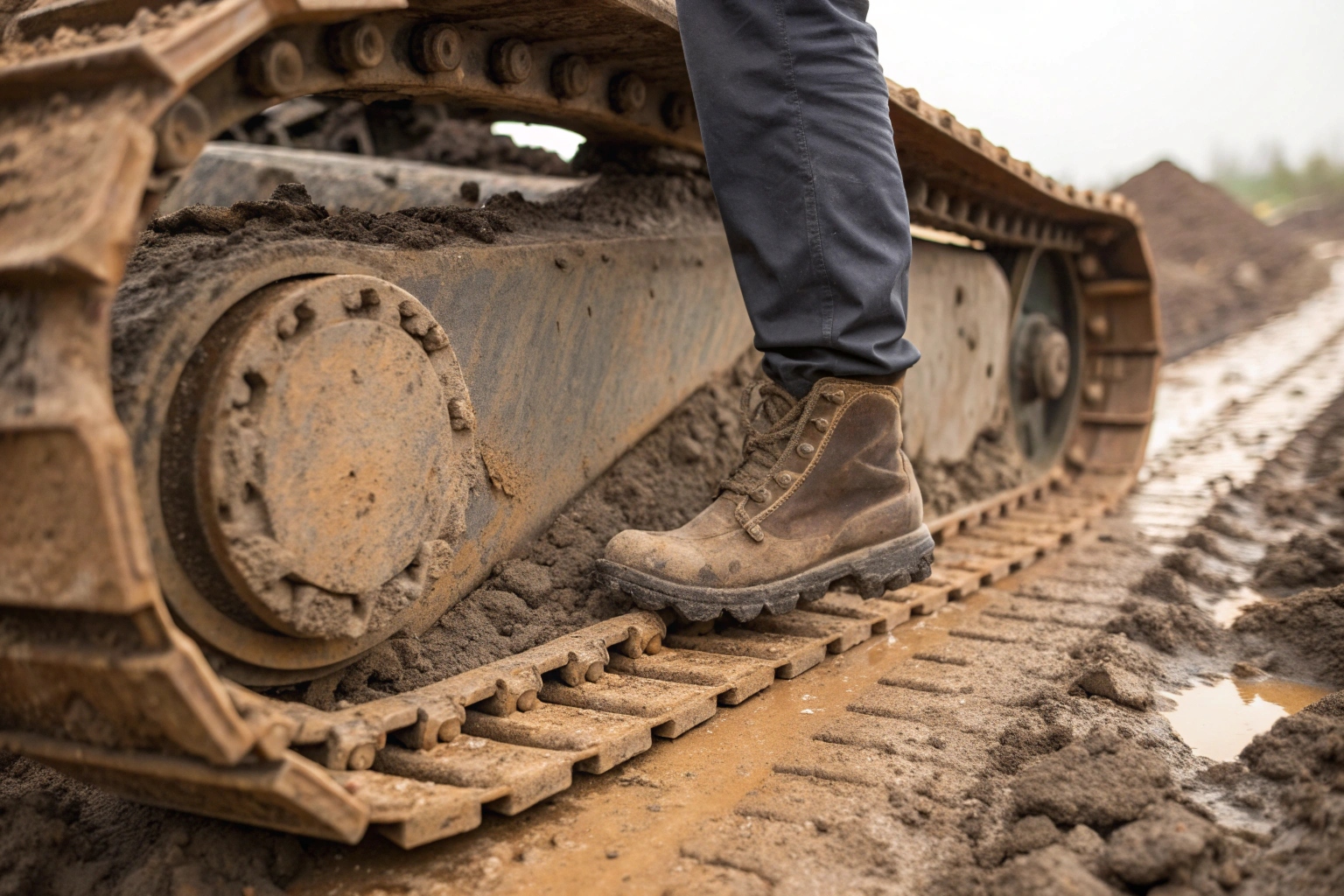
When the ground is practically liquid, standard rules of traction do not apply. If you use a standard flat shoe in a wetland, you run into a big problem: suction. Imagine stepping into deep mud with a flat boot. When you try to lift your foot, the mud holds onto it. This is the vacuum effect 3. For a 20-ton excavator, this suction forces the engine to work much harder just to lift the track off the ground, wasting fuel and power.
This is where the "Swamp Shoe" (often called a triangle shoe) comes in. At Dingtai, we manufacture these with a very specific geometry. They are not perfectly flat plates. They are often cast in an arc or triangle shape. This shape breaks the suction. When the track lifts as it goes around the sprocket, the angled edges peel away from the mud rather than fighting against a vacuum.
The Importance of the Mud Hole
Another critical feature you will see on these shoes is the "mud hole." You might think a hole in the shoe would make it weaker, but it is essential for survival in soft soil. Without these relief holes, mud packs tightly between the shoe and the track link.
As this mud builds up, it acts like a wedge. It stretches the track chain until it becomes so tight that it can snap a pin or ruin the front idler 4. The hole allows the mud to squeeze out, keeping the chain tension correct.
Swamp Shoe Features Overview
- Arc/Triangle Profile: Reduces the suction force when the track leaves the ground.
- Extra Width: Provides maximum surface area to lower ground pressure (PSI).
- Relief Holes: Allows liquid mud to escape, preventing chain packing.
- No Aggressive Cleats: Prevents the machine from digging its own grave.
I advise my customers to be very honest about the terrain. If there is any hard rock hidden in that swamp, these shoes will suffer. Cast swamp shoes are brittle compared to forged steel traction shoes. They are designed for flotation, not impact. If you hit a granite boulder with a cast swamp shoe, it can crack.
However, for pure wetlands, peat bogs, or dredging work, there is no substitute. They allow heavy machinery to "walk on water" relatively speaking. If your customer is working on environmental restoration 5 projects where the ground is delicate and wet, the swamp shoe is the only responsible recommendation. It prioritizes staying on top of the surface over pulling power.
How do I prevent my machine (with your shoes) from damaging sensitive ground surfaces (like asphalt or turf)?
Crossing a finished road can ruin a steel track and the road itself. You need a buffer between the hard steel and the delicate street to avoid heavy fines.
To prevent damage to asphalt or turf, you must use rubber pads that bolt or clip onto your steel shoes. Polyurethane pads are also excellent options. These create a soft buffer that stops steel cleats from cutting into the pavement, allowing you to cross roads without paying for repairs.
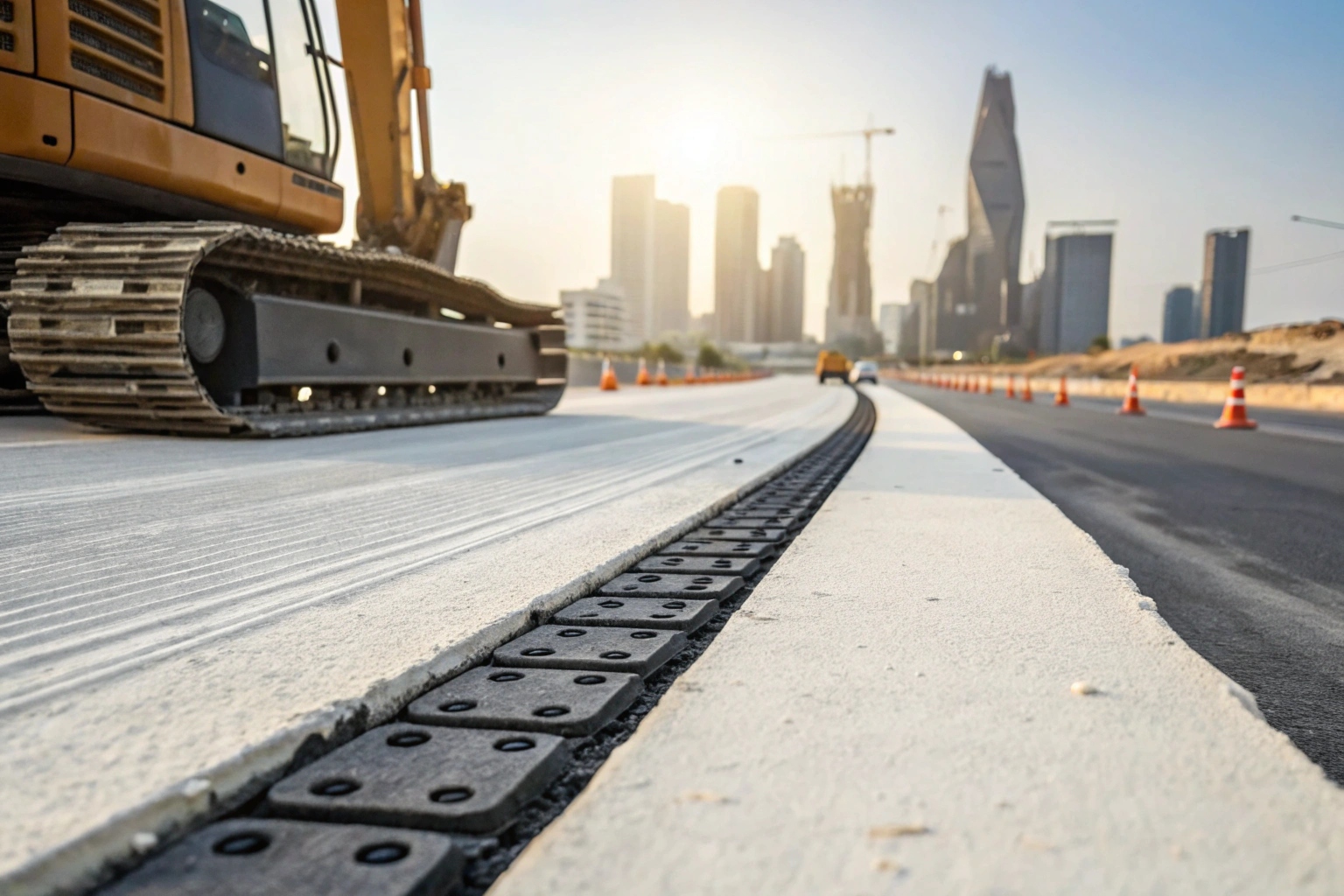
We have all seen the damage a steel-tracked machine does to a paved road. It leaves little white cuts in the asphalt that eventually turn into potholes. In many cities, you will get a heavy fine for this. But changing the entire track from steel to rubber is expensive and time-consuming.
The solution is the rubber track pad. This is a product we ship frequently to the US and Europe where urban construction 6 is common. These pads act like a shoe for your shoe. They sit between the steel grouser and the ground.
There are three main ways to attach these, and choosing the right one matters for your workflow:
Types of Protection Pads
- Clip-on Pads: These are for temporary use. If you have a machine that is mostly in the dirt but needs to cross a road once a week, use clip-on pads. They attach quickly to the existing steel shoe. You do not need to drill holes.
- Bolt-on Pads: These are for semi-permanent use. If you are working on a street resurfacing project for a month, use bolt-on pads. You bolt them directly through holes in the steel shoe (usually triple grousers). They are more stable than clip-ons and won't fall off during sharp turns.
- Chain-on (Roadliner) Pads: These replace the steel shoe entirely. The rubber is bonded directly to a steel core that bolts to the track chain. This is for machines that spend 100% of their time on flat, hard surfaces.
Rubber Pad Selection Guide
| Type | Best Application | Installation Difficulty | Durability |
|---|---|---|---|
| Clip-on | Occasional road crossing | Easy (Fast) | Moderate |
| Bolt-on | Urban construction sites | Medium (Needs tools) | High |
| Chain-on | Paving, Finished surfaces | Hard (Permanent swap) | Very High |
One detail I always emphasize is the material. Standard rubber is good for traction, but it wears out fast if the surface is abrasive. Polyurethane 7 is the upgrade. It costs more, but it lasts 2-3 times longer than rubber. It is tougher and resists cuts better.
If you ignore this and drive steel tracks on asphalt, you create two problems. First, you damage the road. Second, you damage the machine. Steel tracks are not designed for the vibration of hard surfaces. That vibration travels up into the final drive 8 gears and shakes bolts loose. Rubber pads absorb that shock. It is a small investment that protects the infrastructure and your equipment.
What are "offset" track shoes, and how do they help in soft conditions?
Standard shoes are symmetrical, but sometimes you need an asymmetrical design to handle side loads and widen your stance.
Offset track shoes extend further to one side of the link assembly than the other. This design widens the overall track gauge without changing the internal undercarriage spacing. They help in soft conditions by increasing the stability footprint and pushing the flotation area outward, which prevents tipping in unstable, muddy soil.
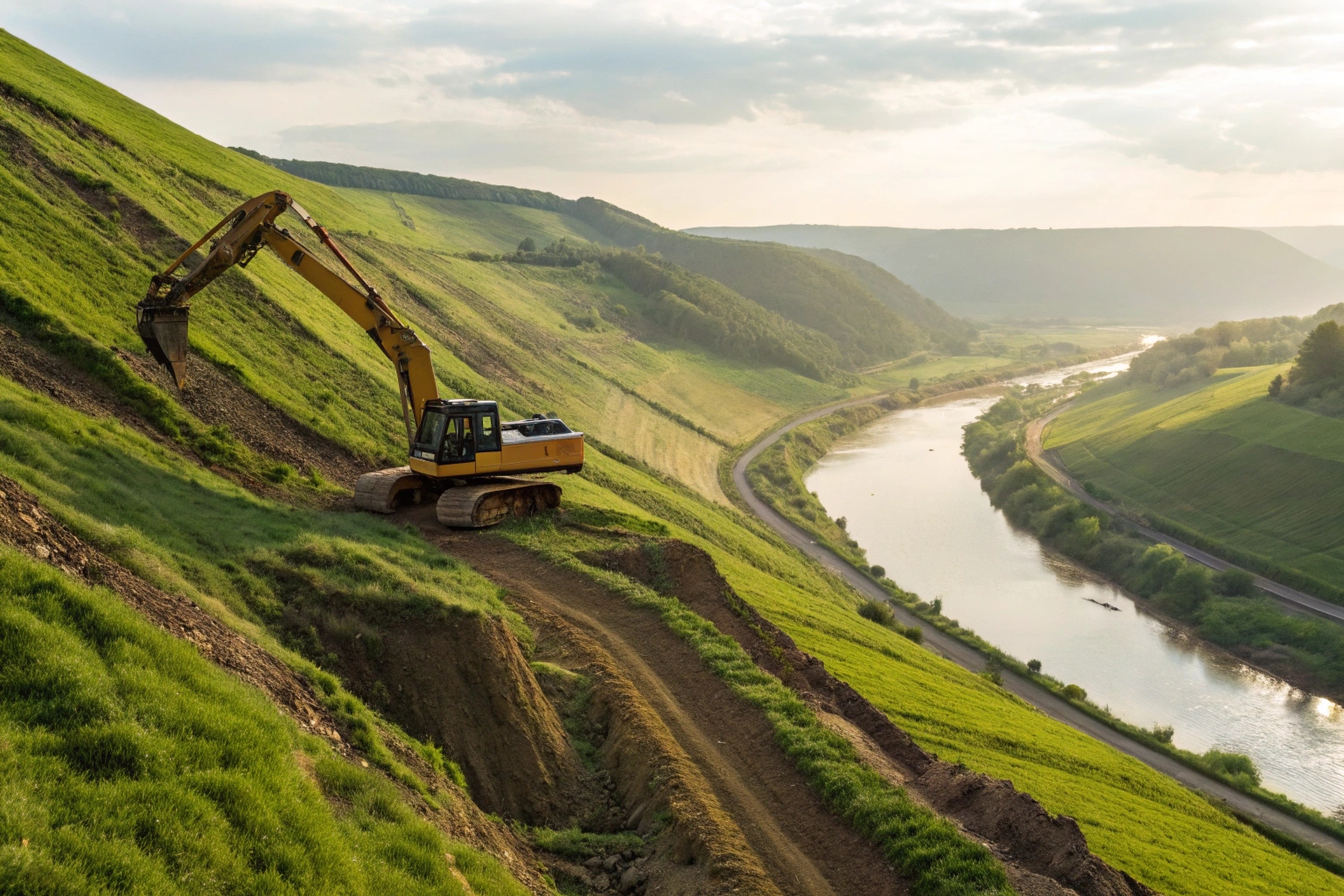
Offset shoes are a specialized tool that many people overlook. On a standard track shoe, the track link bolts right in the middle. The shoe sticks out an equal amount on the left and right. An offset shoe is different. The mounting holes are shifted, so the shoe sticks out much further on the "outside" of the machine.
Why does this matter for soft soil? It is all about stability and clearance.
Increasing Machine Stability
When you are in soft soil, the edges of the rut can collapse. By pushing the contact area further out, you effectively widen the stance of the machine. It is like standing with your feet wide apart versus standing with your feet together. The wider stance makes it much harder for the machine to tip over sideways. This is critical when working on soft slopes or river banks.
Also, offset shoes help protect the inner undercarriage components. In deep mud, the soil tends to squeeze up and over the shoe. If the shoe is standard, that mud goes right into the track rollers 9 and the motor housing. With an offset shoe, the extra width is on the outside, which keeps the "dirty work" further away from the delicate inner workings of the frame.
The Trade-off: Wear and Tear
However, there is a trade-off. We always warn our customers about "load distribution." Because the shoe is not centered, when the weight of the machine presses down, it creates a twisting force (torque) on the track link and the bushing. It is like holding a heavy weight at arm's length.
Because of this twisting force, offset shoes can wear out the pins and bushings 10 faster if you use them on hard ground. They are strictly for soft, yielding surfaces where the ground absorbs some of that stress.
Offset vs Standard Shoe Characteristics
| Characteristic | Standard Shoe | Offset Shoe |
|---|---|---|
| Symmetry | Symmetrical | Asymmetrical |
| Stability Width | Standard | Wider (Better for slopes) |
| Link Stress | Balanced | Unbalanced (Higher torque) |
| Mud Clearance | Standard | Better protection for inner frame |
If you are customizing a machine for a client who works on levees or canal banks, offset shoes are a great recommendation. They provide that extra bit of safety margin against tipping. Just remind them to check their track tension and link wear more frequently. It is a specialized solution for a specific problem, but when you need that stability, nothing else works quite as well.
Conclusion
Choosing the correct shoe balances flotation and grip. It saves your undercarriage from early failure and protects the job site from damage. Let’s discuss your specific terrain needs today.
Footnotes
1. Comprehensive guide to undercarriage components and maintenance. ↩︎
2. Overview of single grouser shoes for high-traction applications. ↩︎
3. Explanation of how suction creates resistance in mud. ↩︎
4. Maintenance tips for preserving front idlers and tracks. ↩︎
5. Standards for ecological restoration in sensitive environments. ↩︎
6. Challenges and strategies for construction in urban areas. ↩︎
7. Material properties of polyurethane vs rubber for durability. ↩︎
8. Importance of final drive maintenance in heavy machinery. ↩︎
9. Function and importance of track rollers in undercarriages. ↩︎
10. Understanding wear patterns on track pins and bushings. ↩︎