
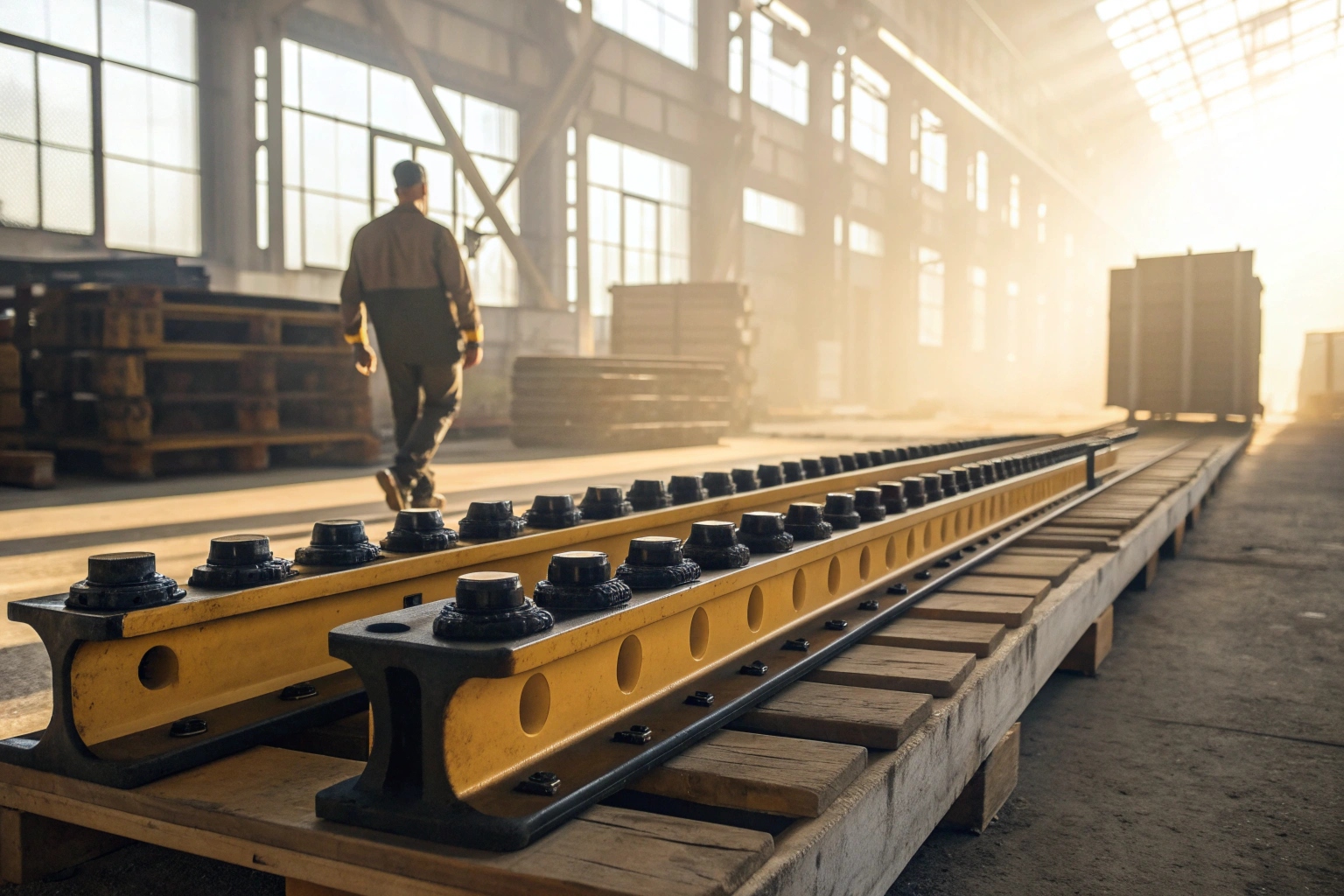
I know the frustration of having a multi-million dollar bulldozer sitting idle because a simple track shoe shipment is late. I have seen how one week of delay can ruin a project schedule.
We guarantee on-time delivery for track shoe assemblies through strict production scheduling, maintaining safety stocks for common models, and 100% inspection before shipping. Our factory maintains a 95%+ on-time delivery rate by monitoring every milestone from raw material to port.
Waiting for parts is never part of your business plan. I want to show you exactly how my team at Dingtai ensures your cargo leaves our dock on the day we promised.
What is our factory's on-time delivery rate (KPI) over the last 12 months?
I understand that talk is cheap, so I track our performance data very closely to ensure we meet the high standards of customers like David.
Over the last 12 months, Dingtai has maintained an on-time delivery (OTD) rate of 96.2% for all track shoe assembly orders. We achieve this by syncing our ERP system with real-time workshop data to catch bottlenecks early.

Why a 96% OTD rate matters for your supply chain
In the heavy machinery industry, a "good" delivery rate is usually around 80%. When I say we hit 96%, it means out of 100 containers we shipped to the US, Europe, and the Middle East, 96 of them left the factory exactly on or before the contract date. This consistency is the result of over 20 years of manufacturing experience. We don't just guess when a job will be finished; we calculate it based on the number of links, shoes, and bolts needed for the specific assembly.
I manage this by breaking down the production into clear steps. For example, the heat treatment of track shoes 1 takes a specific number of hours. If the quenching furnace is busy, we know it immediately. We also keep a large stock of raw materials. This prevents us from being held up by steel price fluctuations 2 or local shortages that might stop other smaller factories.
Our Production Milestone Tracking
| Production Stage | Lead Time (Standard) | Quality Check Point |
|---|---|---|
| Raw Material Prep | 3-5 Days | Spectrometer Material Test |
| Forging/Casting | 7-10 Days | Dimensional Accuracy Check |
| Heat Treatment | 3-5 Days | Hardness (HRC) Depth Test |
| Assembly & Bolting | 2-4 Days | Torque Tension Verification |
| Final Coating & Packing | 2 Days | 100% Visual Inspection |
By following this table, I can tell you exactly where your order is at any moment. If we are making a track shoe assembly for a Caterpillar D8 or a Komatsu D155, we use pre-set templates to ensure the workflow is identical every single time. This system reduces human error and keeps our delivery dates honest.
What happens if my shipment is delayed by your production schedule?
I believe in taking full responsibility for what happens inside my factory walls because I know your reputation depends on the parts I send you.
If a delay is caused by our internal production schedule, we immediately implement an emergency recovery plan. This includes adding overtime shifts, prioritizing your order on the assembly line, or even upgrading to faster shipping methods at our own expense.
Handling the unexpected in production
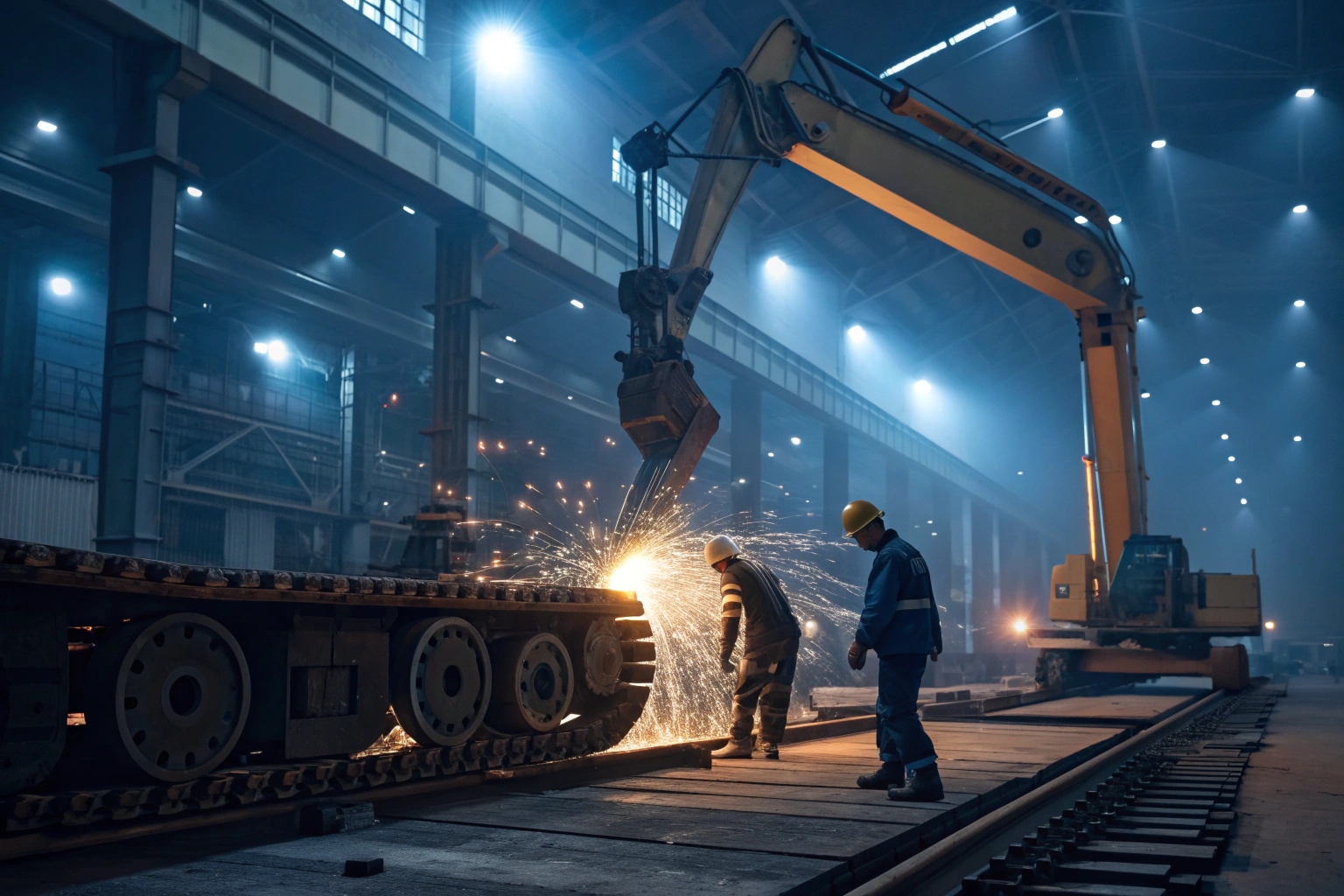
Sometimes things go wrong. A machine might break, or a specific casting 3 might not pass our 100% quality check. If this happens and it pushes your date back, I don't hide it. My first step is to see if we can "split ship." If you need 50 sets of track shoe assemblies but 20 are ready, I will suggest sending those 20 first so your most urgent customers are happy while we finish the rest.
I also look at our technical team’s capacity. With over 20 professional technicians, we can often re-route production to a different line. We treat your delivery date as a hard deadline, not a suggestion. If the delay is truly our fault—meaning it isn't caused by a hurricane or a global shipping crisis 4—we sit down and discuss how to make it right for you financially or through future credits.
Comparison of Standard vs. Emergency Production
| Feature | Standard Production | Emergency Recovery (Delay) |
|---|---|---|
| Work Shifts | 1-2 Shifts / Day | 3 Shifts (24/7) |
| Logistics Priority | Standard Booking | First-Available Express |
| Quality Control | Batch Sampling | 100% Senior Tech Audit |
| Communication | Weekly Update | Daily Status Reports |
This proactive approach is why many of our OEM partners stay with us for decades. They know that even if a problem occurs, Dingtai will move mountains to fix it. We don't just send an email saying "sorry"; we send a solution that keeps your business moving forward.
Can we write a late-delivery penalty clause into our purchase contract?
I want you to feel 100% secure when you send a deposit to Dingtai, which is why I am open to formalizing our delivery promises.
Yes, we can include a late-delivery penalty clause in our contract, typically starting at 1% of the delayed goods' value per week. We are confident in our capacity and believe this accountability builds a stronger long-term partnership.

Why I agree to penalty clauses
Most Chinese suppliers are afraid of penalty clauses. They worry about losing money. I see it differently. If I am not willing to put a penalty in the contract, it means I don't trust my own factory. For a professional buyer like David, a penalty clause 5 isn't just about the money—it's about "skin in the game." It proves that Dingtai is a serious, professional manufacturer and not just a middleman who disappears when things get tough.
We usually set a "grace period" of 3 to 7 days to account for minor port congestion 6 or truck delays, but after that, the penalty kicks in. This keeps our production manager focused. He knows that every day of delay has a real cost for the company. It aligns our interests with yours. If we are late, we pay. It is that simple.
Typical Penalty Structure for Track Shoe Orders
- Days 1-7 Overdue: Grace period (No penalty).
- Days 8-14 Overdue: 1% deduction from the balance of the delayed items.
- Days 15-30 Overdue: 2% deduction per week.
- Over 30 Days: Option for the buyer to cancel or renegotiate with a maximum 10% cap on penalties.
Having this in writing protects you from "ghosting" or excuses. It ensures that when you tell your customers a date, you have the backing of a legal agreement 7. We have found that since we started offering this to our VIP distributors 8, our communication has actually become even better because everyone knows the high stakes involved.
I hate getting bad news at the last minute, and I know you do too, so my team is trained to be your "eyes and ears" in China.
If a delay is unavoidable, our team—led by specialists like Linda—will notify you at least 7-10 days in advance. We provide a written explanation, a new confirmed ship date, and a daily photo or video update of the remaining production.

The "No Surprise" Communication Policy
The biggest pain point I hear from US buyers is that they find out about a delay only when they ask for the Bill of Lading 9. At Dingtai, we use a "No Surprise" policy. My sales team, like Linda, doesn't just wait for you to call. She is in the workshop every day checking the status of the track shoe assemblies. If the steel mill delivers the wrong grade of material, she tells you that day, not three weeks later.
We use WhatsApp, WeChat, or Email—whatever you prefer—to keep the conversation going. We can even do live video calls from the factory floor so you can see your parts being boxed up. This level of transparency builds trust. When you know the truth, you can manage your own customers' expectations. You can adjust your marketing or your service schedules 10. We see ourselves as an extension of your own team, not just a vendor across the ocean.
Our Communication Response Standards
| Situation | Response Time | Action Taken |
|---|---|---|
| General Inquiry | Under 12 Hours | Status update from ERP |
| Production Risk | Within 24 Hours | Written alert + Solution plan |
| Quality Issue | Immediate | Photo evidence + Replacement plan |
| Logistics Update | Weekly | Tracking number & Port status |
I believe that honesty is the only way to build a relationship that lasts 20 years. If we hit a snag, we tell you the truth, we tell you the fix, and we tell you how we will prevent it from happening again. That is the Dingtai way of doing business.
Conclusion
I am committed to making sure your track shoe assemblies arrive when you need them. Through strict KPIs, penalty clauses, and honest communication, we take the stress out of your supply chain.
Footnotes
1. Explore the engineering principles of heat treatment to improve metal durability. ↩︎
2. Real-time market data and analysis on global steel prices and trends. ↩︎
3. Technical resources and standards for the steel casting and forging industry. ↩︎
4. Latest news and analysis on global shipping disruptions and maritime logistics. ↩︎
5. Definition and common applications of penalty clauses in commercial contracts. ↩︎
6. Logistics industry insights regarding port congestion and supply chain delays. ↩︎
7. Legal definitions and essential elements required for a binding contract. ↩︎
8. Strategies for managing high-value distribution networks and sales partnerships. ↩︎
9. Overview of essential shipping documentation and bill of lading regulations. ↩︎
10. Community discussions on maintenance and scheduling for heavy earthmoving equipment. ↩︎