
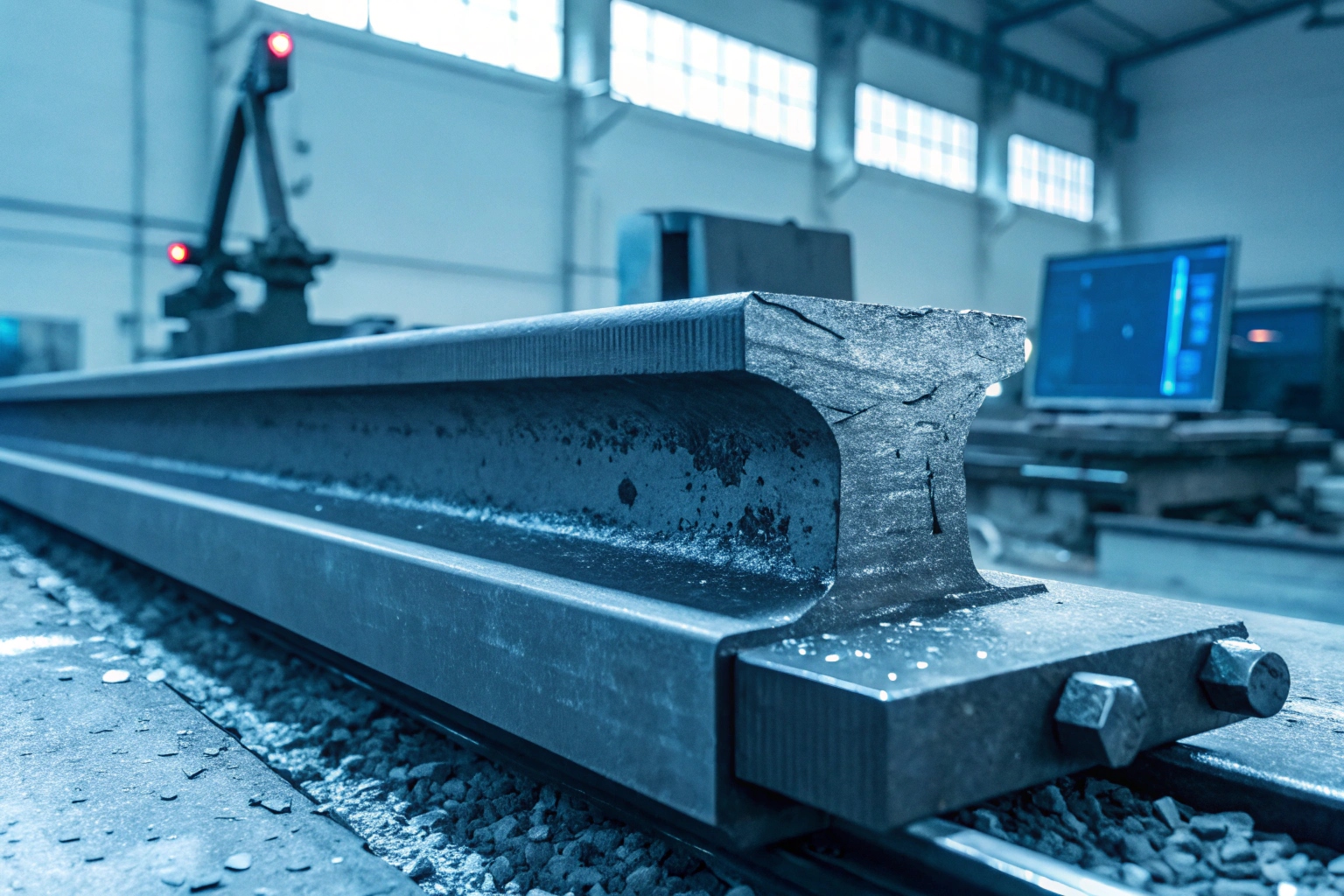
I know that choosing a new supplier for undercarriage parts 1 is scary. You might worry about parts breaking in the field or the factory hiding mistakes. Today, I want to tell you a true story about a mistake we made, and exactly how I fixed it.
A quality failure in heavy machinery manufacturing occurs when a component does not meet the engineering specifications or performance standards required for safe operation. Handling these failures requires a transparent Root Cause Corrective Action (RCCA) process. This process identifies the technical origin of the defect, implements immediate containment to protect the customer, and establishes permanent production changes to prevent recurrence.
You need to know that your supplier has your back when things go wrong. A good partner does not hide problems; they solve them. This story will show you how we handle challenges and why you can trust us.
What Was the Technical Root Cause of the Failure?
I remember the day I got the email. A customer told me that a batch of our track shoe assemblies 2 was making a strange noise during testing. I felt terrible. I immediately went to the production floor to find out what happened. I did not want to make excuses. I wanted to find the truth.
The technical root cause of a track shoe assembly failure often involves deviations in welding parameters, such as voltage, travel speed, or heat input. In this specific case, the welding robot moved too fast, causing a lack of fusion in the joint. This resulted in a weld that looked good on the outside but was weak on the inside.
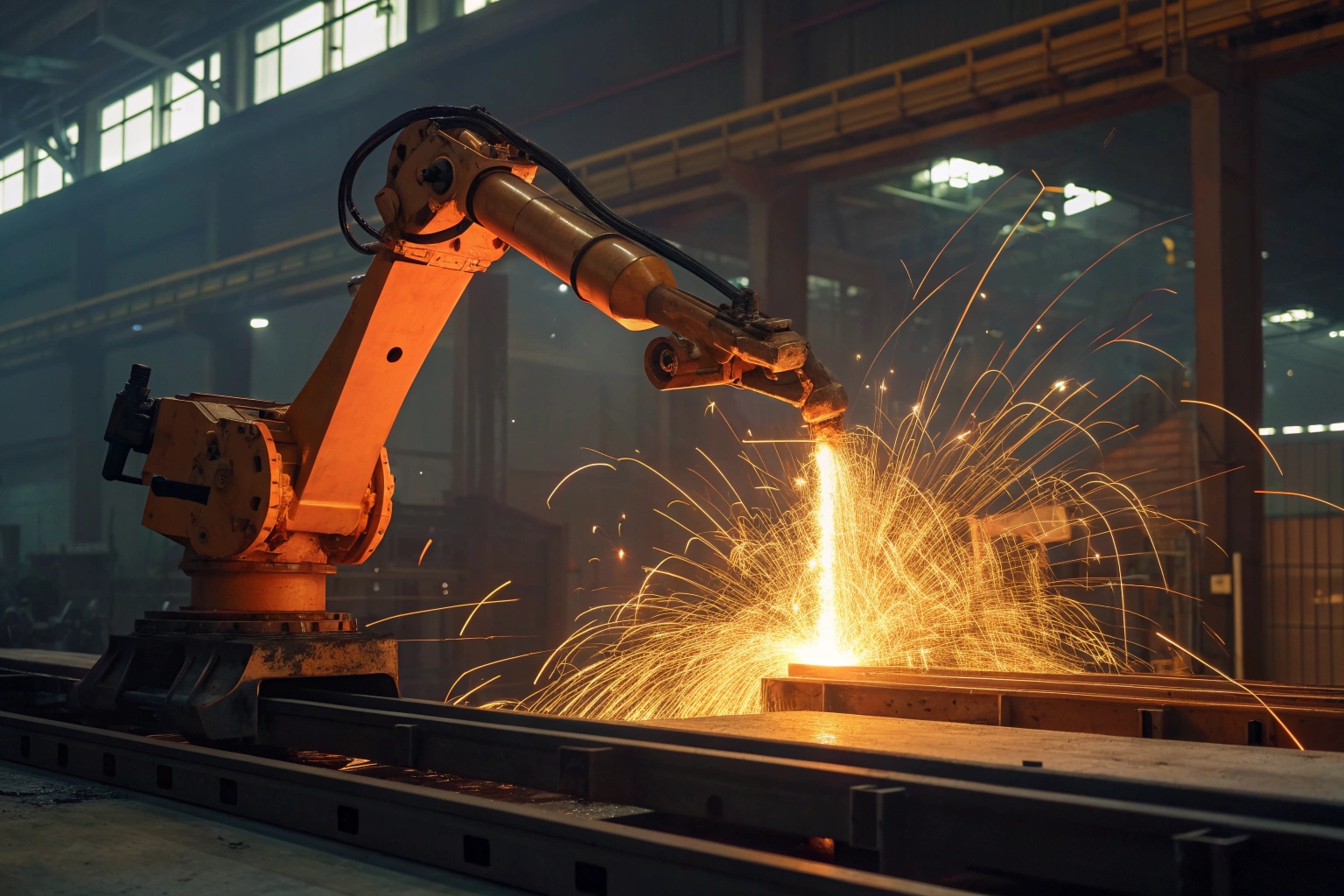
To understand this problem, you have to look deep into how we make these parts. The track shoe assembly takes a lot of punishment. It holds the weight of the machine and hits the rocks and ground hard. The connection between the shoe and the chain must be perfect. In this specific case, we found that the welding current was unstable for a short time.
The Physics of the Failure
The machine operator did not notice the small change on the monitor. The automated welding arm moved slightly faster than the standard speed. This meant the steel did not get hot enough to melt deep together. We call this "lack of penetration 3." On the surface, the weld bead looked smooth and solid. But underneath, there was a tiny gap. When the customer put the heavy excavator on the track, the stress opened that gap. That caused the noise they heard.
I gathered my engineers and we used a "Fishbone Diagram 4" to break down the problem. We looked at the Man, Machine, Material, and Method. The material was perfect boron steel 5. The machine was new. The problem was the method and the monitoring. We realized that our alarm system for the welding voltage was set too wide. It did not trigger an alert for this small drop in power.
We compared the bad parts with the good parts. The difference was small, but the result was big. This taught us that even a 5% deviation in manufacturing can cause a 100% failure in the field.
| Parameter | Standard Specification | Failed Part Actual | Result |
|---|---|---|---|
| Welding Current | 280 - 300 Amps | 265 Amps | Low Heat Input |
| Travel Speed | 35 cm/min | 40 cm/min | Shallow Penetration |
| Cooling Time | 45 Seconds | 45 Seconds | Normal |
| Visual Check | Pass | Pass | False Positive |
We learned that we could not rely only on human eyes to check the welds. The visual check passed, but the part failed. This was a hard lesson, but it was a necessary one. It forced us to look at the science of our welding process, not just the appearance of the product. This deep dive into the root cause gave me the confidence to tell the customer exactly what went wrong. I did not hide the data. I shared this table with them so they could see we understood the physics of the problem.
What Permanent Changes Did You Make to Your Production or QC Process to Prevent It From Ever Happening Again?
Fixing the one bad batch was not enough for me. I wanted to make sure this never happened again. I asked my team, "How can we make the system foolproof?" We decided that we needed to upgrade our technology and our training. We moved from just trusting people to trusting data and automated systems.
Permanent corrective actions (PCA) involve changing the manufacturing process to eliminate the possibility of the error returning. In track shoe production, this includes upgrading welding robots with real-time monitoring sensors, implementing ultrasonic testing (NDT) for internal weld integrity, and enforcing stricter operator certification programs.
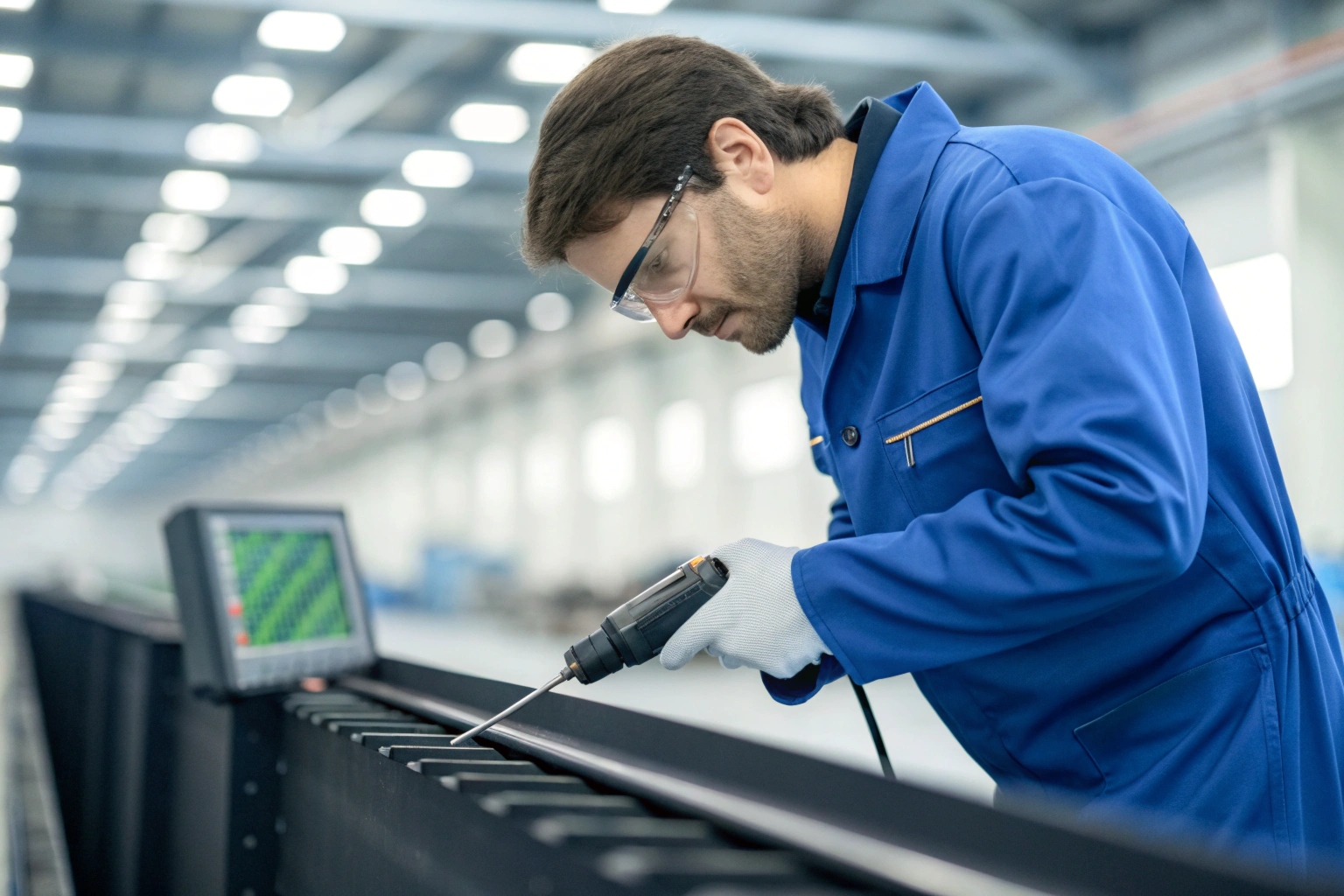
We started by upgrading the welding robots. We installed a "lock-out" system. If the voltage or speed goes outside the perfect range, the robot stops immediately. It does not finish the weld. It calls the operator to come and check. This removes the chance of a "silent error" passing through.
Moving From Destructive to Non-Destructive Testing
Next, we changed how we inspect the parts. Before, we cut open one part from every batch to check the inside. This is called "destructive testing." It is good, but it only checks one piece. Now, we use Ultrasonic Testing (UT) 6 on the production line. This uses sound waves to look inside the steel of every 10th piece. If the sound wave hits a gap, we know the weld is bad.
Machines are important, but people are the key. We realized our training was too focused on speed. We changed the training to focus on quality parameters. Every worker on the welding line now has to pass a stricter test every six months. We also improved our traceability 7. Now, every single track shoe has a unique QR code laser-marked on it.
The New Quality Safety Net
Here is how the new process compares to the old one. We built a system with more layers of safety.
| Feature | Old Process | New Improved Process |
|---|---|---|
| Weld Monitoring | Operator watches screen | Auto-lock system stops machine on error |
| Internal Check | Cut open 1 random part per batch | Ultrasonic scan of 10% of total production |
| Traceability | Batch Number only | Unique QR Code for every single shoe |
| Staff Training | Once a year | Every 6 months with practical exam |
This was a big investment for Dingtai. We spent money on new sensors and training hours. But I see it as an investment in your sleep. When you buy from us, I want you to sleep well knowing the parts are solid. Since we made these changes two years ago, we have not had a single welding failure on this product line. The "Root Cause Corrective Action" (RCCA) really worked. It transformed a failure into a stronger factory.
How Did You Compensate the Customer Who Received the Defective Parts?
My first thought was about the customer's project. They had machines waiting to work. I knew that every hour of downtime cost them money. I did not wait for a long meeting to decide what to do. I made the decision to act fast. I put myself in their shoes.
Immediate compensation for defective parts typically involves a 24-hour response time to replace the stock at the manufacturer's expense. The priority is to minimize downtime for the end-user. This often includes air-freighting replacement components, issuing full credit for the bad batch, and deploying a technical team to assist with on-site replacement.

When a quality issue happens, speed is everything. I told my team that money was not the most important thing right now. The reputation of Dingtai was the most important thing. We immediately identified the batch code of the bad products. We checked our warehouse and found 50 pieces that were ready to ship. We also had another 100 pieces on the production line that were perfect.
Taking Financial Responsibility
We did not send these parts by sea, which takes weeks. We booked an air freight 8 shipment. This is very expensive for heavy steel parts like track shoes. It cost us a lot of profit, but it saved the customer's schedule. The new parts arrived at their site in the USA within four days. I also offered to pay for the labor costs they spent removing the bad parts.
I want you to see the timeline of how we handled this. I believe that talking is cheap, but action shows the truth.
| Time from Report | Action Taken | Why We Did It |
|---|---|---|
| 1 Hour | Stopped all production of that model. | To stop the bleeding and prevent more bad parts. |
| 4 Hours | Identified the specific batch and scope. | To know exactly how many parts were affected. |
| 12 Hours | Video call with the customer. | To apologize personally and explain the plan. |
| 24 Hours | Shipped replacement parts via Air. | To get them running again as fast as possible. |
| 48 Hours | Issued credit note for extra costs. | To show we take financial responsibility. |
I also sent one of our technical engineers to fly to the customer's site. He did not go there to argue. He went there to help. He inspected the installation of the new parts to make sure everything was perfect. He also inspected the other machines they had to give them peace of mind.
The customer was surprised. They told me that other suppliers usually argue for weeks before doing anything. They said that usually, suppliers blame the shipping company or the installation. I don't do that. If it is my fault, I pay for it. This experience actually made our relationship stronger. They saw that I keep my promises even when it hurts my wallet. It proved that we value the relationship more than the profit of one single order.
Why Is Your "Root Cause Corrective Action" (RCCA) Process Important for Me as a Long-Term Partner?
You might ask why I am telling you about a failure. Most companies only show you their successes. But I believe you need to know how we handle the bad days. A supplier who claims they are perfect is lying. Manufacturing is complex. Steel is hard. Things happen.
A robust Root Cause Corrective Action (RCCA) process is the most important indicator of a supplier's long-term reliability. It ensures that quality improves over time rather than stagnating. For a procurement director, this means reduced risk of recurring defects, predictable supply chain stability, and a partner who actively lowers your total cost of ownership.

When you choose a long-term partner, you are marrying their process. If they don't have a good way to fix mistakes, you will deal with the same headaches every year. That is exhausting. I want to take that burden off your shoulders. My RCCA process protects your reputation. If you sell our parts to your customers, your brand name is on the line. You need to know that if a problem happens, I will catch it, fix it, and pay for it.
Reducing Your Total Cost of Ownership
You don't have to fight me to get fairness. I share my internal reports with my strategic partners like you. If we find a small issue in the factory, I tell you. I tell you how we fixed it before the parts even leave China. This transparency builds trust.
Also, this process saves you money. Bad quality is the most expensive thing you can buy. It costs you freight, customs duties 9, warehouse space, and sales team time to handle returns. By fixing the root cause, I make sure the product you get is "install and forget."
You have been in this industry for 20 years. You know the difference between a trader who sells boxes and a manufacturer who solves problems. I want to be the problem solver for you. My team in Fujian is not just making steel parts; we are building a safety net for your business. We learn from every single data point to make the next batch better than the last one.
Furthermore, an honest RCCA process creates a loop of continuous improvement 10. We don't just fix the one machine that failed; we look at the whole line. This means that next year, the products you buy will be even better than this year. We are constantly raising our own bar. This gives you a competitive advantage in your market. While your competitors are dealing with inconsistent quality, you have a steady, reliable flow of premium parts. That is the real value of a partnership.
Conclusion
We turn mistakes into masterclasses by fixing the root cause, reacting fast, and being 100% honest with you.
Footnotes
1. Importance of maintaining heavy machinery undercarriage components. ↩︎
2. Overview of track shoe components for excavators. ↩︎
3. Technical causes of welding penetration defects and flaws. ↩︎
4. Using Ishikawa diagrams for root cause analysis in manufacturing. ↩︎
5. Properties and benefits of boron steel in heavy-duty manufacturing. ↩︎
6. How ultrasonic waves detect internal structural flaws in metal. ↩︎
7. Standards for tracking products throughout the manufacturing supply chain. ↩︎
8. Benefits of air cargo for urgent industrial shipments. ↩︎
9. Understanding import duties and taxes for international shipments. ↩︎
10. Methodologies for ongoing manufacturing process and quality enhancement. ↩︎