
I know that as a purchasing director, nothing gives you a bigger headache than a customer complaining about a broken track shoe. I completely understand your worry because, in the heavy machinery industry, the cost of one hour of downtime can be higher than the price of the part itself. We know this very well, so we never joke about quality.
Yes, we can provide comprehensive laboratory wear-test reports, impact-test data, and field-trial records from real working conditions. We strictly follow ASTM and ISO international standards to verify every batch, ensuring that every track link you receive can withstand the harshest environments.
However, this is not just about a few pieces of paper; it is about trust. If I cannot turn this dry data into a guarantee that you can actually see, then these reports are meaningless. Next, I want to take you deep into how we use these tests to remove your worries about changing suppliers.
What international standards (like ASTM G65) do you use for your in-house laboratory wear and impact tests?
Standards are not just rules; they are our common language to make sure we are talking about the same level of quality.
For wear testing, we primarily use the ASTM G65 standard for dry sand/rubber wheel abrasion tests. For impact testing, we strictly follow the ASTM E23 standard for Charpy V-Notch impact tests to ensure material toughness at low temperatures.
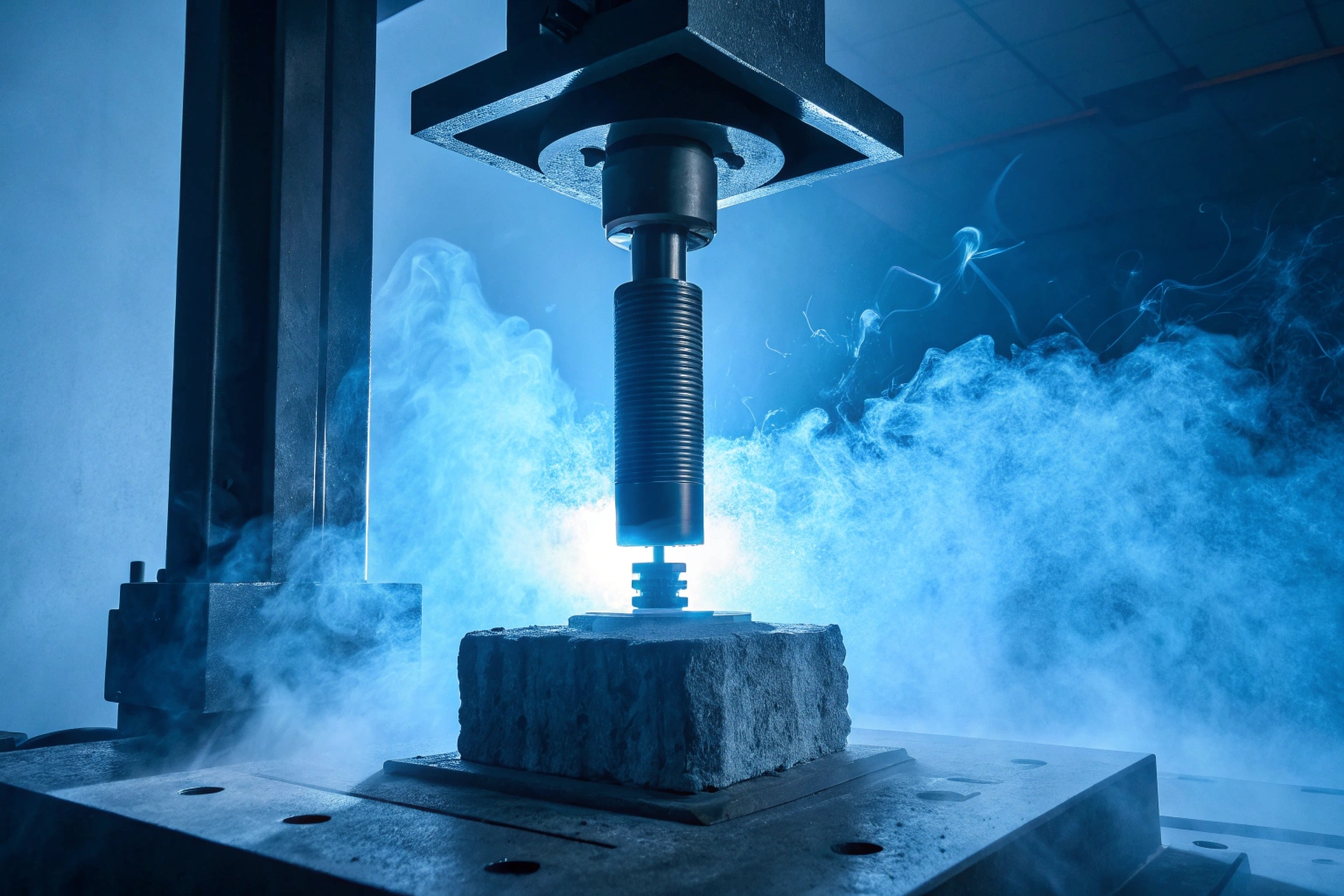
When we talk about the quality of undercarriage parts, many people only focus on "hardness," but this is actually a trap. If you only look for hardness, the product will become as brittle as glass, and it will break as soon as it hits a rock. Therefore, what we do in the lab is find the perfect balance between being "hard" and being "tough."
Understanding the ASTM G65 Wear Test
First, let's talk about the ASTM G65 Wear Test. This is our core standard for evaluating the wear resistance of track shoes and links. We use a machine that pours a steady stream of standard dry sand between a rotating rubber wheel and our steel sample. This simulates the continuous friction of sand and rock against the metal surface.
Many low-end factories do not want to do this test. Why? Because their heat treatment 1 depth is not enough. If they grind the surface a little, the soft core will be exposed immediately. However, our data shows that even after wearing down the surface by 2 millimeters, our hardness still stays between HRC 52-56. This means that whether your customer works in the sand of Florida or the mines of Colorado, our product's wear performance is consistent. We measure the volume loss in cubic millimeters. A lower number means better resistance. Our typical result is significantly lower than the industry standard allowance.
The Critical ASTM E23 Impact Test
Second, there is the crucial ASTM E23 Impact Test. You must have heard of some tracks breaking when working in cold winters or when hitting hard granite. This is usually because the steel does not have enough impact toughness. We test the energy absorption of the steel in an environment of minus 40 degrees Celsius.
We use special steel with added boron 2 (like 25MnB) instead of plain carbon steel. After our unique tempering process, this material can absorb huge impact forces without breaking. The machine swings a heavy pendulum to hit a notched sample of our steel. We measure how much energy the steel absorbs before it breaks. If the number is low, the steel is brittle. If the number is high, the steel is tough. We ensure our numbers are always high.
To help you compare more visually, I have made the table below to show the difference between our standards and common market products.
Table 1: Dingtai Lab Standards vs. Market Average
| Test Item | Dingtai Standard | Key Metrics | Market Average | Why this matters to you? |
|---|---|---|---|---|
| Wear Test | ASTM G65 3 (Method B) | Volume Loss < 1.5g | Volume Loss > 3.0g | Lower wear rate means your customers can extend replacement cycles and reduce downtime. |
| Impact Test | ASTM E23 4 (Charpy V-Notch) | Impact Energy > 18J (-40°C) | Impact Energy < 10J (Room Temp) | Prevents catastrophic track shoe breakage in extreme cold or high-impact conditions. |
| Hardness Depth | ISO 15787 5 | Effective Depth > 8mm | Effective Depth 3-5mm | Ensures sufficient wear protection in the middle and late stages of product life, not getting soft quickly. |
| Tensile Test | ASTM E8 | Tensile Strength > 1400 MPa | Tensile Strength < 1100 MPa | Guarantees track chains won't stretch or snap under heavy load traction. |
Through this strict lab data, we want to prove one point: whether facing heavy hits or long-term grinding, our products have data to support their reliability. We are not guessing if it works; we are measuring how long it works.
Can I see reports from real-world field trials on actual machines (like CAT or Komatsu excavators)?
Labs are ideal environments, but mines and construction sites are the only true places to test the truth.
Certainly, we have long-term tracking field reports on machines like the CAT D8 series bulldozers and Komatsu PC400 excavators. These reports detail our products' wear rates and final service life in different conditions, such as granite mines and river sand dredging.
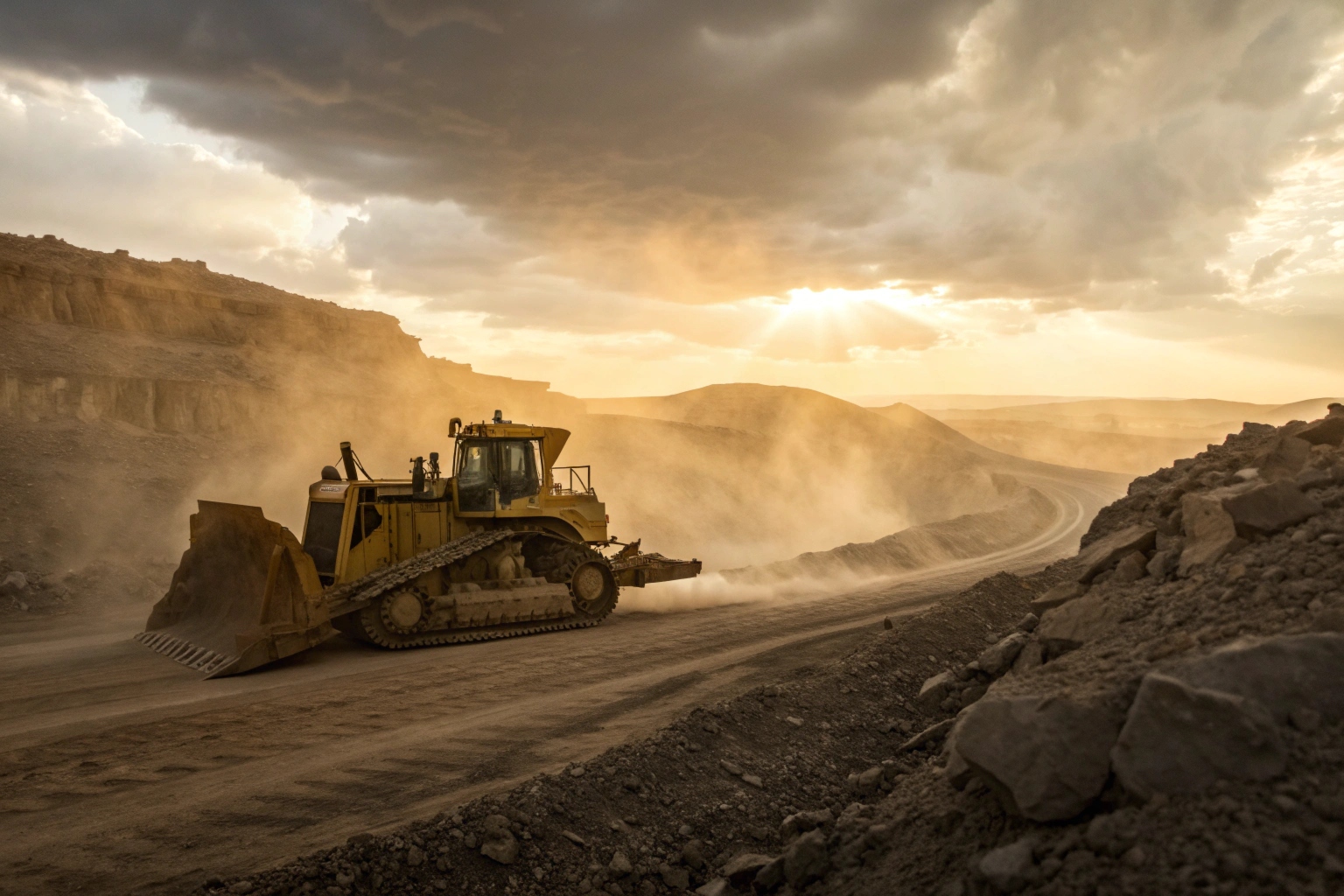
I must be honest with you; no matter how beautiful the lab data is, if it cannot deliver results on a muddy construction site, it is just waste paper. That is why we have set up "designated test bases" in several typical harsh conditions around the world. We do not just put parts on a machine and forget about them. We track them like a doctor tracks a patient.
The Australian Coal Mine Case Study
Let me share a specific case. Last year, we conducted an 18-month field test at an open-pit coal mine 6 in Australia. The test subject was a CAT D9R bulldozer working 20 hours a day. The rock hardness in this mining area is extremely high, which is very damaging to undercarriage parts.
We used a method called "A/B Testing." We installed Dingtai's lubricated chains and single-grouser track shoes on the left side of the machine. On the right side, we installed OEM parts 7 from a well-known Korean brand. This ensures the working conditions are exactly the same for both brands.
Every month, our engineers would go to the site to measure three key things:
- Pitch Extension: To see if the chain is stretching.
- Roller Tread Wear: To see how fast the metal is wearing away.
- Grouser Height: To see how much grip remains on the track shoe.
The results were amazing. After running for 3,500 hours, our track link pitch extension was only 1.5% more than the OEM parts. However, regarding the wear of the track shoe grouser, we were actually 5% slower than them. This means our heat treatment process is even slightly better in resisting wear. More importantly, during the entire test cycle, our seals did not show any oil leakage. This is where many aftermarket parts fail most easily.
Comprehensive Failure Analysis
These reports are not just simple "good" or "bad" conclusions. They contain detailed charts, wear curves, and failure analyses 8. We recorded every millimeter of wear and analyzed the impact of different operator habits on life span. If a shoe cracked, we analyzed why. Was it a rock? Was it a material defect? In this test, we had zero cracks.
Table 2: CAT D9R Field Test Data Summary (3500 Hours)
| Metric | Dingtai Measurement | Competitor (Famous OEM Brand) | Analysis |
|---|---|---|---|
| Grouser Height Wear | 18.5 mm | 19.8 mm | Our wear resistance is about 7% higher, thanks to special secondary induction hardening 9. |
| Pitch Extension | 2.1% | 1.9% | Slightly higher than OEM but far below the scrap standard (3%), fully meeting the life cycle. |
| Bushing Outer Wear | 1.2 mm | 1.1 mm | Performance is almost equal, showing our carburizing depth control is very precise. |
| Seal Failure Rate | 0% (No Leak) | 0% (No Leak) | Proves our oil seals and lubrication retention capability reached OEM level. |
These reports are completely open to you. If you are interested, I can send you the full PDF report for specific models, such as the PC200 or D6 that you mainly buy. We do not just sell parts; we sell proven performance data.
How does this "proof of performance" data give me confidence to switch from my current supplier?
I know changing suppliers is a huge gamble, and my job is to turn this gamble into a safe investment.
This data represents predictability and consistency, not just numbers. Through transparent test data and full process traceability, we eliminate the risks of quality fluctuation, allowing you to be sure that the next batch will be exactly the same as the last.
Among the pain points you mentioned earlier, one struck me: unstable product quality and differences between batches. This is indeed the thing purchasing directors fear most. One batch is good, but the next batch suddenly breaks. This unpredictability can ruin your reputation. You lose sleep wondering if the phone will ring with a complaint.
The Power of the "Birth Certificate"
The reason our test data can give you confidence is that it is not a one-time thing, but a systematic process. For every production batch (Lot), we generate an independent "Birth Certificate."
This means that when you receive a container of track rollers, you can randomly pick one and check the tracking code on its side. With this code, I can pull up its heat treatment furnace temperature curve, the raw material Mill Sheet 10, and the destructive test report for that batch, even three years later. You can see exactly what temperature the steel was when it was hardened.
This full process traceability is something your current suppliers might not be able to provide. They might only look for reports when something goes wrong. We lock in quality during the production process. We catch the bad parts before they get on the ship.
Data-Driven Maintenance for Your Customers
In addition, our data can help you "predict the future." Based on the massive amount of data we have accumulated in the lab and the field, we can assist you in creating scientific maintenance plans for your end customers.
You can tell your customer: "Based on tests, for these track parts in your sandy conditions, we suggest turning pins and bushings at 2,000 hours. This will extend the total life by 30%." This professional advice will turn you from a regular parts seller into a technical expert in your customer's eyes. You are not just selling steel; you are selling uptime.
Table 3: Risk Mitigation - Why Data Lowers Your Buying Risk
| Your Worry (Risk) | Our Solution | Value to You |
|---|---|---|
| Inconsistent Batch Quality | Every batch undergoes ASTM sampling with a saved "Birth Certificate." | If one item fails, we can isolate the scope immediately instead of a blind recall, protecting your brand. |
| Material Cheating | Provide third-party (like SGS) chemical analysis reports proving Boron steel content. | Eliminates the risk of cheap carbon steel being passed off as alloy steel, ensuring strength. |
| Warranty Disputes | Data-based claim standard: if it is a material defect, data proves it, and we pay immediately. | Simplifies the claim process because data does not lie; we take responsibility for what is ours. |
| New Product Trial Cost | Share our field test database to predict life span in advance. | You do not need to use your customers as "guinea pigs" because we have already done the testing for you. |
When everything is transparent and measurable, fear disappears. You are no longer buying based on feeling, but making decisions based on data. This is why professional purchasing directors like you eventually choose to trust us.
Are you (Dingtai) willing to co-sponsor a field trial at one of my customer's sites in the US?
If I did not have absolute confidence in my product, I would not dare to make this suggestion.
Absolutely yes. We are very eager to partner with you and your US end customers to provide a free or deeply discounted "test kit" that we monitor together. This is not just product verification; it is our way of sharing your market development costs.

I understand that no matter how many Chinese test reports I show you, they are not as convincing as results from your own customer's site, right under your nose. Also, I know you want to prove to your customers that you have found a cost-effective and high-quality alternative for them. But you also do not want to risk your relationship with them if the product fails.
So, I propose this "Co-Sponsored Field Trial".
How the Program Works
Here is the specific plan: You pick a customer with the most demanding quality requirements and typical working conditions (like a large quarry). We provide a complete set of undercarriage parts (for example, for a CAT D8 Dozer). We do not charge the regular price; we can charge just the cost price, or even provide it for free if we agree on certain strategic terms.
In return, we need you to help us collect data. For example, every 500 hours, ask your technicians to measure the wear data and take a few photos to send to me. We will provide the measurement templates and guidelines.
Three Major Benefits for You
Doing this has three huge benefits:
- Extremely Low Trial Cost: You do not need to spend your own money to buy samples for testing. I take the financial risk. If the parts fail (which they won't), I cover the cost.
- Customer Stickiness: You go to your customer with the offer of a "Free Trial" or "Tech Upgrade." This is a value-added service. It makes your customer feel you are always thinking about them and looking for better products to save them money. It strengthens your bond with them.
- Local Data Endorsement: Once the test is successful, you will own a case study that happened right there in the US. When you go to develop other American customers later, you can say, "This is data from a mine in Texas." This is ten thousand times more powerful than saying, "This is data from a Chinese factory."
Commitment to Support
We can even send our chief engineer to fly to the US to help you with installation guidance and initial data collection. This is not just a test; this is the start of our long-term strategic partnership. We are willing to invest real money to prove that Chinese-made undercarriage parts can compete with Japanese and Korean brands in the high-end market.
We are not looking for a one-time sale. We are looking for a partner who wants to dominate the market with us. This trial is the first step. Which customer do you think is the best fit for this test?
Conclusion
We have a full set of lab reports and field data, but more importantly, we dare to conduct field validation with you in the US. Data removes fear, and action builds trust. We are ready to let the facts speak for themselves.
Footnotes
1. Explanation of heat treatment processes for hardening metals. ↩︎
2. Properties of boron steel for wear and impact resistance. ↩︎
3. Standard test method for measuring abrasion using dry sand. ↩︎
4. Standard test methods for notched bar impact testing. ↩︎
5. Technical specifications for heat-treated steel parts. ↩︎
6. Overview of surface mining techniques and environments. ↩︎
7. Definition and role of Original Equipment Manufacturers. ↩︎
8. Process of investigating causes of component failure. ↩︎
9. Surface hardening method using electromagnetic induction. ↩︎
10. Certified document verifying chemical and physical material properties. ↩︎