
Key Advantages of Excavator Track Rollers
This significantly improves operational stability and safety when maneuvering over uneven or rough surfaces. Working in coordination with the travel system, track rollers facilitate flexible mobility and precise steering. Certain advanced configurations are designed to adapt to varying terrain profiles, meeting the demands of diverse construction applications. Built with a durable, wear-resistant structure, premium track rollers offer extended service life and reduced maintenance costs, making them a critical component for ensuring the reliability and efficiency of your excavator.
Bottom rollers (also known as Track rollers) are engineered to support the entire weight of the excavator. Manufactured from high-strength materials, they ensure the equipment operates with maximum stability, even under heavy load conditions. The roller design evenly distributes weight to minimize ground pressure and reduce impact damage to the terrain.
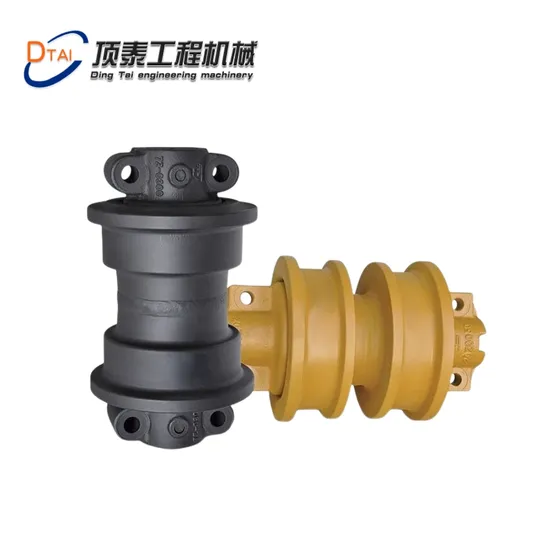
What is an Excavator Track Roller?
The track roller (also commonly known as a bottom roller) is a fundamental component of the crawler undercarriage, located along the bottom of the track frame on both sides of the machine.
Primary Functions & Benefits
- Weight Support & Movement: The roller’s main purpose is to support the entire operating weight of the excavator. It allows the track group to roll smoothly over the shell, ensuring stable machine operation.
- Load Distribution: By maintaining consistent contact with the tracks, the rollers evenly distribute weight. This effectively lowers ground pressure, protecting the worksite surface from excessive damage.
- Mobility Support: Acting as a critical part of the travel system, track rollers facilitate precise movement and steering, allowing the excavator to maneuver flexibly.
- Terrain Adaptability & Safety: High-quality rollers increase stability on uneven terrain, preventing slippage or tipping. Some specialized designs are engineered to adapt to specific terrain profiles, further enhancing safety.
Internal Structure
Constructed for durability, the assembly typically includes a roller shell, heavy-duty shaft, and floating seals. These are manufactured from high-strength materials to resist wear and abrasion, ensuring a long service life and reliable performance under heavy loads.
Excavator Track Roller Specifications & Configurations
| Specifications | Description | Applications |
|---|---|---|
| Diameter Range | Generally between 140mm and 300mm. | Different dimensions correspond to different excavator tonnages to meet load-bearing requirements. |
| Flange Width | Width varies by model, affecting contact stress and anti-derailment performance. | Wide flanges are suitable for complex terrain; narrow flanges are suitable for general construction. |
| Shaft Diameter | Common shaft diameters range from 40mm to 90mm. | Designed to match different chassis configurations, adapting to load and power transmission needs. |
| Material | Cast Steel ZG45, High-Strength Alloys, etc. | High wear resistance suitable for mining operations; rubber-coated options suitable for sites requiring high ground protection. |
| Heavy-Duty Specs | Large track rollers, adapted for heavy-load mining and large earthworks. | Mines, Heavy Earthworks. |
| Medium-Duty Specs | Suitable for municipal construction and general mining operations. | Municipal Construction, Mines. |
| Light-Duty Specs | Suitable for general construction projects and landscaping. | Construction Sites, Landscaping. |
Maintenance and Repair Guide: Excavator Track Rollers
Proper maintenance of track rollers (bottom rollers) is essential for preserving the longevity of the undercarriage and ensuring operational safety. Below are the standard protocols for maintenance, diagnostics, and replacement.
Part 1: Preventative Maintenance Strategies
- Routine Inspections: Regularly inspect rollers for oil leakage, roller shell fractures, or seizure. If any rotation issues or structural damage are detected, shut down the machine immediately to prevent cascading failure across the track group.
- Precision Lubrication: Strictly adhere to the OEM's viscosity specifications for gear oil. Schedule regular fluid changes to prevent internal abrasion caused by oil breakdown or low levels.
- Environmental Protection: Keep the roller surface clean and dry. In freezing conditions, ensure seals are free of ice buildup to prevent seal deformation and subsequent leakage.
- Debris Removal: Promptly clear mud, gravel, and concrete buildup from the rollers and track frame. Impacted debris increases rotational resistance and accelerates wear on the roller shell.
Part 2: Repair & Replacement Procedures
1. Pre-Repair Preparation
- Safety Protocols: Power down the machine, engage the hydraulic lockout, and apply Lock-Out/Tag-Out (LOTO) tags. Wear appropriate PPE (gloves, eye protection).
- Machine Stabilization: Elevate the excavator using rated jacks or blocking to suspend the track roller clear of the ground. Ensure the machine is completely stable.
- Tooling & Materials: Prepare impact sockets, torque wrenches, oil dispensers, OEM-specified gear oil, thread sealant, and replacement rollers.
- Surface Cleaning: High-pressure wash the undercarriage to remove contaminants. Dirt entering the roller assembly during repair can cause premature bearing failure.
2. Fault Detection & Diagnostics
- Visual Inspection: Check the roller shell for cracks or deformation. Inspect the floating seals for oil residue and the tread surface for excessive wear or flat spots.
- Rotation Test: Manually spin the roller. Resistance, grinding noises, or uneven movement indicates failure of the internal bearings or bushings.
- Fluid Analysis: Drain a small amount of oil. Discoloration (blackening) or metallic particles suggest internal component degradation.
3. Gear Oil Replacement
- Draining: Position a catch pan beneath the plug. Remove the plug and allow the old oil to drain completely. Let it stand for 5–10 minutes to ensure all sediment is evacuated.
- Flushing: Flush the internal cavity with a small amount of fresh oil to remove impurities. Re-install the drain plug using fresh thread sealant.
- Refilling: Inject new gear oil through the fill port until the fluid reaches the overflow point or the specified level mark.
- Leak Testing: Tighten the plug, wipe the area clean, and idle the machine for 3–5 minutes to verify the seal integrity.
4. Track Roller Replacement
- Removal: Loosen the mounting bolts in a diagonal pattern to relieve stress evenly. Remove the worn roller from the track frame.
- Mounting Surface Prep: Clean the mounting bracket, removing all rust and debris. If the bracket is deformed, it must be corrected to ensure the new roller sits flat.
- Pre-Installation Check: Verify the new roller spins freely and check that it is pre-filled with oil.
- Installation: Align the new roller, insert bolts, and tighten in a cross pattern. Finalize tightening using a torque wrench to OEM specifications (typically 180–250 N·m, consult your service manual).
- Verification: Manually spin the installed roller to ensure free movement without binding.
5. Track Tension Adjustment
- Tension Inspection: With the machine lifted or on level ground (per manual), measure track sag. Standard deflection is typically 10–30mm.
- Adjustment: Locate the track adjuster valve. Inject grease (or tighten the bolt) to increase tension; release grease to loosen. Adjust until sag falls within the standard range.
- Securing: Ensure the valve or lock nut is secure to prevent tension loss during operation.
6. Post-Repair Acceptance
- Final Inspection: Re-check all bolt torques and ensure no oil leaks are present.
- Operational Test: Operate the excavator at low speed. Verify the track rollers rotate smoothly and the track chain remains aligned without skipping.
- Documentation: Log the service date, parts replaced, and oil specifications in the equipment maintenance record for future tracking.
Here is a professional Request for Quotation (RFQ) template tailored for Chinese suppliers.
1. Product Scope & Part Numbers
We require pricing for the following components. Please see the attached Excel file regarding specific OEM Part Numbers and estimated monthly quantities.
- Track Rollers (Bottom Rollers)
- Carrier Rollers (Top Rollers)
- Idlers
- Sprockets
- Track Groups (Track Chains + Shoes)
- Track Adjusters (Recoil Springs & Cylinders)
2. Machine Compatibility
Our primary focus is on 20-ton to 50-ton excavators. The quotation must cover parts compatible with:
- CAT: 320, 330, 336 Series
- Komatsu: PC200, PC300, PC400 Series
- Hitachi: ZX200, ZX330 Series
(Refer to the attached "Demand_Forecast.xlsx" for specific drawings/part numbers)
3. Quality & Technical Specifications
We service the [North American / European / etc.] market; therefore, we require Premium Quality aftermarket parts.
- Material: Please specify the steel grade used (e.g., Boron Steel vs. Carbon Steel).
- Heat Treatment: Confirm depth of hardening and Rockwell C (HRC) values for the tread surface (e.g., HRC 52-58).
- Seals: We require heavy-duty floating seals (duo-cone) capable of withstanding extreme temperatures.
- Finish: Standard painting (yellow/black) or phosphate coating.
4. Commercial Terms
- Incoterms: Please quote FOB [Shanghai/Ningbo/Qingdao] and optionally CIF [Your Local Port].
- Volume: Initial trial order will be one 20ft container. Estimated annual volume: [X] containers.
- MOQ: Please state your Minimum Order Quantity per part number.
5. OEM & Branding Requirements
- Private Label: Can you laser-mark our logo and part number on the roller shell or link?
- Packaging: Do you support customized palletizing and branding?
- Loading: We require the ability to consolidate mixed parts (rollers + chains) into a single container.
Sourcing Excavator Undercarriage Track Rollers in China: Evaluating Partner Types
Manufacturer
Distinguished by robust technical engineering and superior quality control. While typically reflecting a premium price point, manufacturers are the optimal choice for custom specifications and high-end, OEM-standard requirements.
Factory
Focuses on high-volume production capacity to achieve low unit costs. While pricing is competitive, direct service capabilities and logistical support often lack the refinement of customer-centric organizations.
Exporter
Possesses extensive experience in international trade logistics and offers a diverse catalog of parts. However, exporters generally lack in-depth technical knowledge and provide limited after-sales engineering support.
Supplier
Streamlines the procurement process with rapid communication and response times. Component quality is variable and strictly dependent on the specific manufacturing partners they select.
Trading Company
Leverages large-scale networks to offer favorable pricing structures. While cost-effective, working with trading companies requires rigorous risk management to ensure supply chain transparency and consistent quality.
After-Sales Service & Support Protocols
- Rapid Technical Response: Should you encounter any technical challenges or quality concerns during operation, our support team is available immediately. We guarantee a response within 24 hours to provide expert troubleshooting and resolution strategies.
- Diagnostic & Repair Process: Upon receiving a service request, we initiate remote diagnostic guidance to identify the root cause. Depending on the specific requirements, we will deploy on-site engineering support or provide detailed repair solutions to resolve issues efficiently.
- Parts Availability: We maintain a robust inventory of critical replacement parts to ensure immediate availability. This supply chain reliability is designed to minimize equipment downtime and maintain your project schedule.
- Warranty & Quality Assurance: Products found to be defective are subject to free repair or replacement in strict accordance with our contractual warranty terms. We assume full responsibility for maintenance within the warranty period to protect your investment.
- Proactive Lifecycle Management: Our after-sales team conducts periodic follow-ups to monitor equipment performance. We provide professional maintenance recommendations to help you extend the service life of your machinery and maximize operational efficiency.
Why Choose Us: Precision Engineering & Global Reliability
Partnering with us grants you access to factory-direct precision and industrial-grade reliability. As a dedicated Manufacturer and Supplier, we leverage years of specialized R&D to engineer high-performance Track Rollers and undercarriage components for both excavators and bulldozers. Our rigorous quality control protocols ensure that every part delivers exceptional durability, structural integrity, and superior wear resistance.
Comprehensive Compatibility & Customization
Our extensive catalog ensures compatibility with major OEM makes and models, meeting diverse heavy-duty requirements. Beyond standard fitments, we provide specialized engineering capabilities to manufacture undercarriage parts tailored to your specific operational environments and load-bearing standards.
A Proven Global Track Record
Our components have earned their place in the global construction machinery landscape. From urban infrastructure projects in the United States and the United Kingdom to agricultural and terrain development in France and Australia, our Track Rollers are trusted by operators worldwide to perform under the most demanding conditions.
High Availability & Rapid Logistics
We maintain a deep inventory of Track Rollers and critical spare parts, organized for immediate deployment. This "ready-to-ship" capability eliminates supply chain bottlenecks and minimizes lead times, ensuring your project schedules remain uninterrupted and your fleet stays operational.
Expert Support & Seamless Procurement
We back every component with a comprehensive after-sales support system and expert technical guidance designed to minimize downtime. Furthermore, our extensive experience in international trade logistics ensures a seamless, compliant, and efficient procurement process for our global partners.
Choose us for a partnership defined by quality assurance, technical expertise, and a commitment to your project's success.