
I know how stressful it is to open a landed cost spreadsheet 1 and realize the numbers do not match your real-world budget. It is incredibly frustrating when hidden fees, unexpected tariff codes, or sudden changes in trade policy eat into your profit margins before the parts even arrive at your warehouse. You spend weeks negotiating the best price with a factory, only to lose all those savings to a surprise bill from US Customs 2.
To estimate import costs for track shoe assemblies, you must identify the correct HTS code (typically 8431.49.9044 for excavators) and apply the duty rates on the FOB value. While the general duty is often free, goods from China face an extra 25% Section 301 tariff, plus a Merchandise Processing Fee (0.3464%) and Harbor Maintenance Fee (0.125%).
Getting these numbers right is the only way to protect your bottom line and ensure your pricing remains competitive in the US market. Let’s break down exactly how to find the right codes, check for penalties, and calculate the final bill so you can plan your next order with absolute confidence.
What is the correct 10-digit HTS Code (Harmonized Tariff Schedule) I should use for track shoe assemblies?
I always tell my clients that the 10-digit HTS code is the foundation of your entire import process. If you get this wrong, you are either donating money to the government by paying too much, or you are risking a painful audit for paying too little.
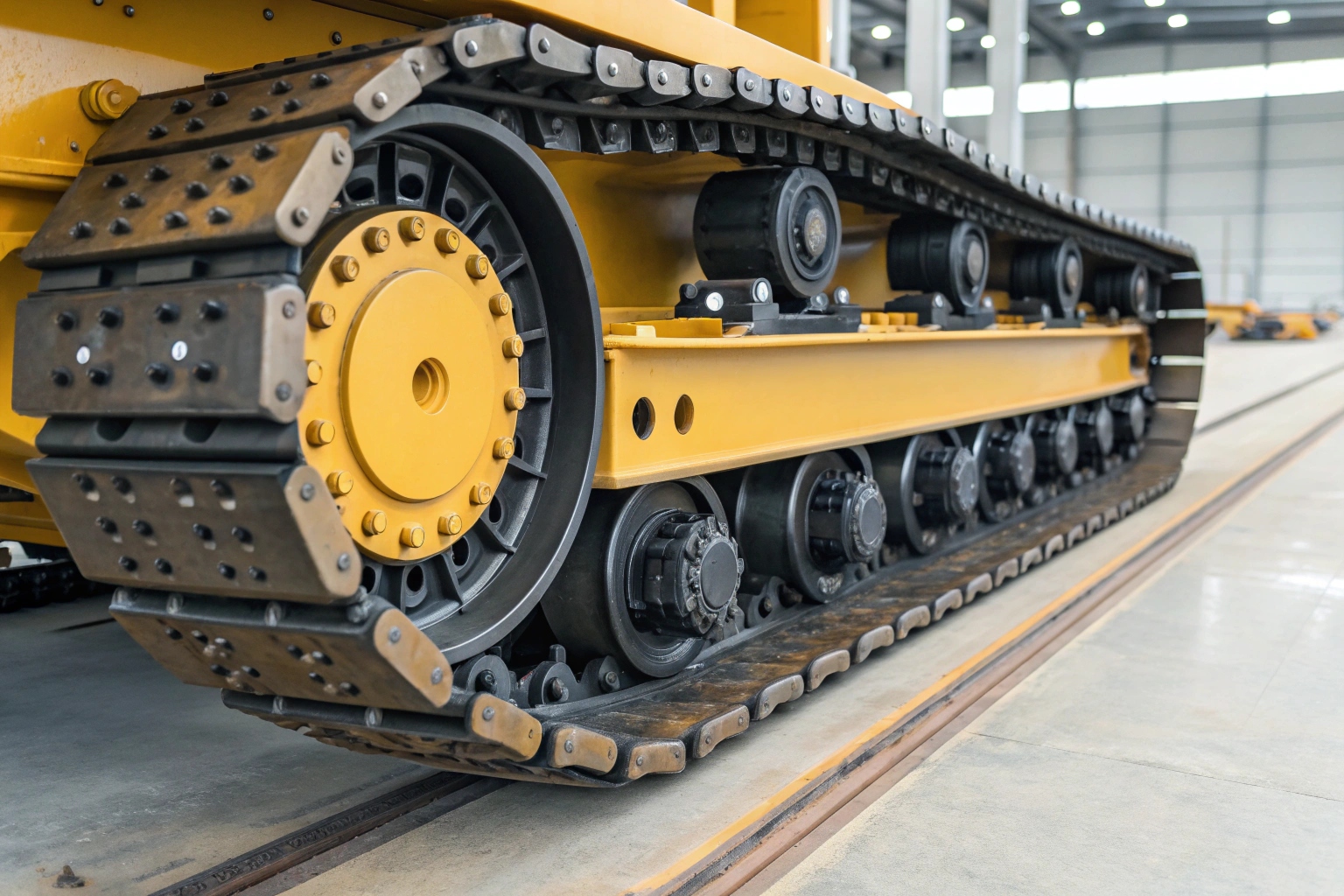
For most track shoe assemblies, you should use HTS heading 8431. Specifically, the code 8431.49.9044 is common for excavator parts, while 8431.42.0000 applies to bulldozer parts. These codes cover parts suitable for use solely or principally with the machinery of headings 8425 to 8430, distinguishing them from generic steel products.
Understanding the Logic Behind the Code
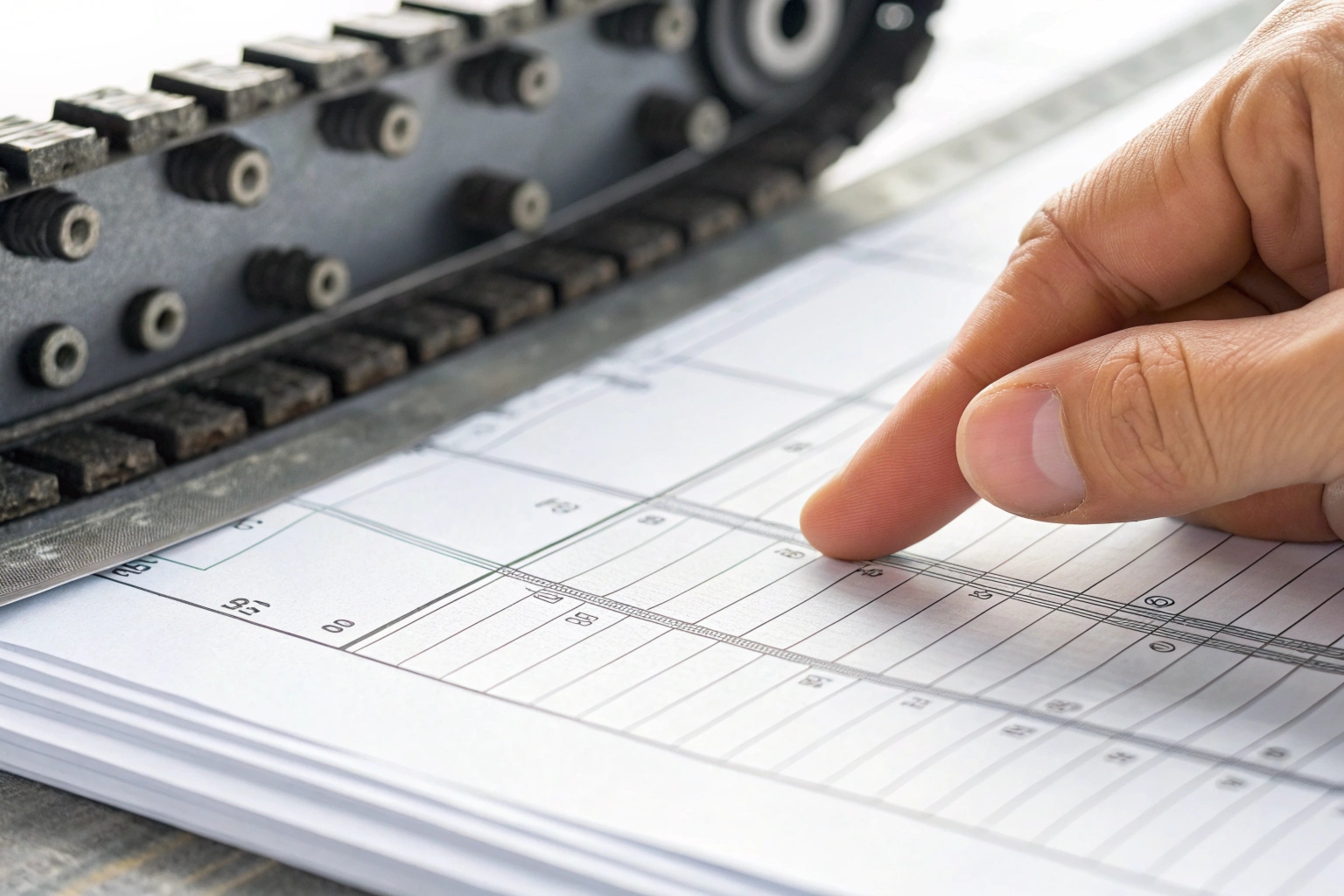
The Harmonized Tariff Schedule 3 (HTS) can feel like a maze, but for undercarriage parts, it follows a specific logic. The first four digits, 8431, are the bucket for "Parts suitable for use solely or principally with the machinery of headings 8425 to 8430." This includes cranes, bulldozers, graders, and excavators.
The next two digits help you sort by machine type. This is where you need to be precise:
- 8431.42: This is strictly for Bulldozers and Angledozers. If you are importing parts for a CAT D8, this is your home.
- 8431.49: This is for "Other." This includes Excavators (like a Komatsu PC200), draglines, and backhoes.
The final four digits are the "Statistical Suffix." These tell the US government exactly what the part is for data tracking. For excavator parts, we often use .9044 or .9095, depending on the exact description in the tariff book for that year.
Why You Should Avoid Chapter 72 or 73
A common mistake I see new buyers make is classifying track shoes as "Articles of Iron or Steel" under Chapter 73. They look at the product, see it is made of steel, and pick a generic code.
This is usually a bad idea for two reasons:
- Higher Duties: Generic steel codes often carry higher base duty rates than machinery parts.
- Anti-Dumping Risk: Chapter 73 is a minefield for Anti-Dumping 4 (AD) orders. If you classify a machined, assembled track shoe as a generic "steel casting," you might accidentally trigger a 300% duty meant for raw steel materials.
Because a track shoe assembly is machined, drilled, painted, and assembled with a pin and link, it is a "finished part," not raw material. Therefore, it belongs in Chapter 84 (Machinery).
Here is a quick reference table for the codes we use most often:
| Machine Type | HTS Code | Description | General Duty Rate |
|---|---|---|---|
| Bulldozers | 8431.42.0000 | Parts for bulldozers or angledozers | Free |
| Excavators | 8431.49.9044 | Parts for backhoes, shovels, clamshells, and draglines | Free |
| Other Machinery | 8431.49.9095 | Other parts for boring or sinking machinery | Free |
Always verify these with your customs broker before shipping, as the US International Trade Commission 5 (USITC) updates the suffix codes periodically.
Are there currently any anti-dumping duties or Section 301 tariffs on these parts from China?
I know that nobody likes paying extra taxes, but ignoring the political trade landscape is the fastest way to lose money. You need to know exactly which penalties apply to Chinese origins right now.
Yes, track shoe assemblies from China are subject to Section 301 tariffs, typically at a rate of 25% on top of the general duty. While general Anti-Dumping (AD) duties are less common for finished assemblies than for raw steel, you must check if your specific product description triggers any steel orders.
The Reality of Section 301
Since the trade war began a few years ago, the Section 301 tariffs have become a standard part of doing business with China. Almost all construction machinery parts under HTS 8431 are on "List 1" or "List 3" of the Section 301 tariffs 6.
This means that even if the "General" duty rate is 0% (Free), you must pay an additional 25% of the commercial value to US Customs.
- Example: If you buy $10,000 worth of parts.
- Base Duty: $0.
- Section 301 Duty: $2,500.
There was a time when importers could apply for "exclusions" to get this money back. However, most of those exclusions have expired. Unless your broker finds a very specific, active exclusion for your type of machinery part, you should build this 25% into your cost model immediately.
Differentiating "301" from "Anti-Dumping"
It is crucial to understand that Section 301 is different from Anti-Dumping (AD) or Countervailing Duties (CVD).
Section 301 is a broad tariff based on the country of origin (China). It applies to almost everything in a certain category.
Anti-Dumping (AD) is specific. It targets companies or industries that sell goods below fair value.
- The Risk: Raw steel castings from China often have AD duties.
- The Solution: Most Track Shoe Assemblies are considered "complex assemblies" rather than simple castings. Because they undergo significant processing (heat treatment, machining, painting, assembly), they generally do not fall under the raw steel AD orders.
However, if you import simple, unpainted, rough castings that need work done in the USA, you are walking into a danger zone. Always make sure your supplier describes the goods as "finished parts" to distinguish them from raw materials.
| Feature | Section 301 Tariffs | Anti-Dumping (AD/CVD) |
|---|---|---|
| Trigger | Country of Origin (China) | Specific Manufacturer/Industry unfair pricing |
| Scope | Broad (entire HTS codes) | Narrow (specific product descriptions) |
| Rate | Fixed (usually 25%) | Variable (can be 10% to 200%+) |
| Predictability | High (Rules are public) | Low (Rates can change retroactively) |
Where can I look up the current duty rate for this HTS Code to calculate my landed cost?
You might be tempted to just Google "duty rate for excavator parts," but I have found that search results are often outdated or refer to other countries. You need to use the official government source to be safe.
You should use the Official USITC Harmonized Tariff Schedule Search tool (hts.usitc.gov) for the most accurate legal rates. Once you find your code, look at "Column 1 - General" for the base rate and check the specific "Chapter 99" notes for Section 301 additions.

How to Navigate the USITC Database
The United States International Trade Commission (USITC) maintains a free, searchable database that is the gold standard for this information. Here is a simple step-by-step guide on how I use it:
- Go to the Website: Visit
hts.usitc.gov. - Enter the Heading: Type "8431" into the search bar.
- Scroll to Your Product: Look for "Bulldozers" (8431.42) or "Other" (8431.49).
- Read the Columns:
- Column 1 (General): This is your base rate for Most Favored Nations (including China). You will likely see "Free."
- Column 1 (Special): This is for free trade agreements (like USMCA for Canada/Mexico). This does not apply to China.
- Column 2: This is for embargoed countries (like North Korea). Ignore this.
Calculating the "Hidden" Fees
The website gives you the duty rate, but it does not calculate the fees. When you build your Excel sheet for landed cost, you need to add two more line items that the government charges on ocean shipments.
Merchandise Processing Fee (MPF):
- Rate: 0.3464% of the FOB value.
- The Cap: The interesting part is that there is a minimum (around $31) and a maximum (around $614). If you ship a full container worth $150,000, you only pay the maximum $614, which is a very small percentage. If you ship a small LCL pallet worth $3,000, the Merchandise Processing Fee 7 feels much larger relative to the value.
Harbor Maintenance Fee (HMF):
- Rate: 0.125% of the value.
- No Cap: This applies to any goods arriving by sea at a US port. It does not have a maximum limit. The Harbor Maintenance Fee 8 ensures ports are dredged and maintained.
So, your calculation formula looks like this:
$$Total Tax = (Value \times 25\%) + (Value \times 0.3464\% \text{ [watch for cap]}) + (Value \times 0.125\%)$$
By using the official USITC site and this formula, you can predict your costs within a few dollars.
Can my customs broker rely on your (the supplier's) invoice to declare the value and HTS code?
I have seen shipments get stuck at the port for weeks simply because the paperwork was vague. Your broker is busy; if they have to guess what is in the box, they will guess conservatively, which usually costs you money.
Your customs broker can use our invoice as the primary document for clearance, provided it is detailed and accurate. As the importer, you are legally responsible for the declaration, so we ensure our invoices list precise HTS codes, material descriptions, and separated freight costs to support your filing.

The Importance of a "Perfect" Commercial Invoice
In the eyes of US Customs (CBP), you are the Importer of Record 9. This comes with a legal obligation called "Reasonable Care." You cannot simply blame the factory if the HTS code is wrong. However, we know you cannot do it alone. Our job as your manufacturing partner is to provide a commercial invoice that answers every question a customs officer might have.
A generic invoice that says "Construction Parts... $20,000" is dangerous. Here is how we structure our documents to help your broker:
1. Specific Product Descriptions
We do not just write "Shoes." We write: "Excavator Track Shoe Assembly, 600mm Triple Grouser, Alloy Steel, Painted."
- Why it helps: This proves the item is a finished machine part, helping you avoid those dangerous "raw steel" classifications we talked about earlier.
2. Separating Freight from Value (FOB vs. CIF)
If we quote you a CIF price (shipping included), we will list the product cost and the freight cost on separate lines on the invoice.
- Why it helps: The US charges duty on the FOB value (product cost only). If the invoice lumps everything together, Customs might charge you 25% tax on the shipping cost, too! Separating them saves you money.
3. Suggested HTS Codes
We include the HS code we use for export. While your broker has the final say on the US import code, giving them the correct 6-digit root (8431.49) points them in the right direction immediately.
4. Packaging Declarations
We clearly state "No Solid Wood Packing Material" or provide the IPPC fumigation 10 certificate numbers directly on the documents.
- Why it helps: US Customs is very strict about wood pests. Missing this statement can lead to your cargo being rejected or sent to expensive fumigation facilities at the port.
Communication is the final piece of the puzzle. Before we ship, I always recommend sending a draft of our invoice to your broker. Ask them: "Does this look good for clearance?" If they need a specific phrase added, we can edit the document instantly. This proactive step prevents the headache of "Exam Holds" and storage fees later.
Conclusion
Estimating your import costs for track shoe assemblies does not have to be a mystery. By using the correct HTS code (usually in the 8431 series), verifying the Section 301 tariffs, and accounting for port fees like MPF and HMF, you can calculate your landed cost with precision. We are here to provide the detailed, accurate documentation your broker needs to clear customs smoothly, ensuring no surprise bills affect your bottom line.
Footnotes
1. Learn how to calculate the total cost of imported goods. ↩︎
2. Official agency managing US border security and import regulations. ↩︎
3. Standardized system for classifying imported goods and duty rates. ↩︎
4. Duties applied to foreign goods sold below fair market value. ↩︎
5. Federal agency analyzing trade data and administering tariff laws. ↩︎
6. Trade sanctions targeting specific countries like China. ↩︎
7. Administrative fee charged by CBP for processing trade entries. ↩︎
8. Fee collected on ocean cargo to fund port maintenance. ↩︎
9. Entity legally responsible for clearing goods through customs. ↩︎
10. International standards for treating wood packaging to prevent pests. ↩︎