
Key Features & Benefits of Track Links
- Our Excavator Track Links are engineered for superior longevity and performance in heavy-duty applications.
- Manufactured from heat-treated, induction-hardened steel, they provide exceptional resistance to impact and abrasion.
- The Sealed and Lubricated Track (SALT) design blocks contaminants and reduces internal friction, significantly extending component life while minimizing maintenance costs.
- Precision-machined for perfect engagement with sprockets and track rollers, these links ensure stable mobility on complex terrain.
- Designed to reduce vibration and noise, they enhance operator comfort and machine efficiency.
- Compatible with major equipment brands, these undercarriage components deliver reliable, cost-effective operation for construction and mining environments.
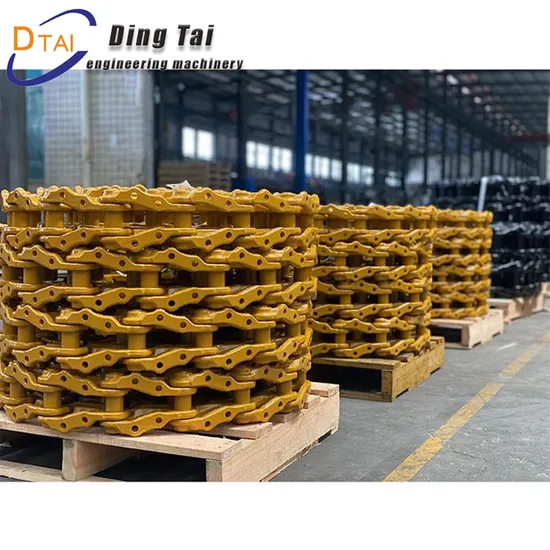
What is a Track Link?
The Track Link is the structural backbone of the excavator and bulldozer undercarriage system. Acting as the central connecting element for the track shoes, it forms the continuous track chain (or track group). This component serves two critical purposes: it supports the full operating weight of the machine and effectively transmits drive torque to ensure reliable mobility and operational stability.
Core Functions & Operational Benefits
- Heavy-Duty Durability: Manufactured from high-strength steel and subjected to specialized heat treatment, track links provide superior resistance to impact and abrasion. This ensures they can withstand prolonged, high-intensity duty cycles without premature failure.
- Sealed System Protection: The inclusion of a sealed and lubricated design effectively blocks dust, moisture, and grit from entering critical joints. This significantly reduces internal friction and extends the total service life of the link.
- Precision System Integration: Engineered with exact pitch specifications, the track link ensures seamless engagement with the sprocket and track rollers. This precision fit mitigates the risk of de-tracking (derailment) and minimizes wear on mating components.
- Enhanced Mobility & Stability: The flexible connection allows the machine to adapt to complex, uneven terrain, improving off-road traction and balance. The links also feature high fatigue and corrosion resistance to handle harsh environmental conditions.
- Cost-Effective Maintenance: The modular design simplifies assembly and disassembly, making it easier to repair or replace individual sections. This reduces maintenance complexity and lowers overall operating costs.
- Universal Compatibility & Comfort: Designed to fit a wide range of OEM excavator and bulldozer makes and models, these links are manufactured to minimize vibration and noise, contributing to a smoother ride and reduced operator fatigue.
What are the specifications of Track Links, and for which applications are they suitable?
1. Track Link Width Specifications
| Width | Application & Characteristics |
|---|---|
| 600mm | Suitable for medium and large excavators. Ideal for complex and rigorous conditions such as heavy-duty, high-intensity earthmoving and mining operations. Provides superior stability and load-bearing capacity. |
| 500mm | Suitable for medium excavators. Ideal for municipal construction, highway bridges, and building projects where a balance between maneuverability and load-bearing capacity is required. |
| 450mm | Equipped on small excavators. Suitable for landscaping, agriculture, water conservancy construction, and light earthmoving. Emphasizes overall machine flexibility and lower ground pressure. |
2. Track Link Pitch Specifications
| Pitch | Application & Characteristics |
|---|---|
| 154mm | Suitable for small excavators and light-duty operations, such as landscaping, agriculture, water conservancy, and urban infrastructure. These jobs require high flexibility and precision from the equipment. |
| 155.6mm | Suitable for medium excavators. Ideal for medium-load earthmoving scenarios like building construction, municipal engineering, and highway bridges. Balances durability and stability. |
| 160mm | Equipped on large or mining excavators. Suitable for high-intensity, heavy-duty mining, heavy earthmoving, and complex conditions. Requires track links with higher load capacity and wear resistance. |
3. Track Link Structural Types
| Structure | Description | Applicable Scenario | Pros & Cons |
|---|---|---|---|
| Open Type (Dry Chain) | Simple structure; no oil seals or sealing rings between links. Lubrication relies on periodic external maintenance. | Suitable for dry, low-dust, ordinary conditions where maintenance is convenient. | Pros: Lower cost, easy to repair and replace parts. Cons: Prone to wear and rust in harsh environments like mud and water. |
| Sealed Type (Greased/Lubricated) | Features seals and grease at the link pins, forming a closed lubrication system. Effectively prevents mud and dust entry, reducing wear and extending service life. | Suitable for harsh conditions like mining, muddy, or wet environments, as well as high-load and long-duration continuous operations. | Pros: Significantly improves chain durability and reliability. Cons: Higher cost. |
What are the differences between an Excavator Track Link, Track Link Assembly, and Track Group?
- Track Link: This is the smallest independent unit within the track structure. It is a single, solid component that serves as the foundational building block of the entire track chain.
- Track Link Assembly: This assembly consists of multiple track links connected by pins and bushings. It is designed to facilitate efficient field installation and maintenance, allowing for repairs or replacements without the need to dismantle the entire track system.
- Track Group: This represents the complete, fully assembled track system. It includes the entire track chain combined with track shoes and all necessary fastening hardware. It is supplied as a finished product, ready for immediate installation onto the excavator undercarriage.
How do we customize Excavator Track Links, Track Link Assemblies, and Track Groups?
Our customization process for excavator and bulldozer track components is engineered to meet specific operational demands with precision and efficiency. We follow a streamlined workflow to ensure optimal performance:
- Requirement Analysis: Simply provide the core specifications, such as the machine make and model, operational environment (e.g., heavy-duty mining or soft wetland terrain), required pitch, link count, or dimensional parameters of the existing parts. We will immediately develop a dedicated technical proposal.
- Material & Engineering Optimization: Our engineers select high-strength steel alloys and optimize heat treatment processes based on your specific requirements. We can also adjust sealing and lubrication structures to ensure the track link’s impact resistance and wear life are fully adapted to your working conditions.
- Precision Manufacturing: Upon design confirmation, we initiate production with strict quality controls. We ensure that the track link dimensions and pitch align perfectly with your sprockets and track rollers to prevent derailment and guarantee mechanical compatibility.
- Quality Assurance & Support: Finished components undergo rigorous inspection to meet industry quality standards. We arrange direct delivery and provide installation guidance to ensure proper fitment.
Throughout this process, we maintain transparent communication to ensure the final product is tailored to your equipment. This approach not only satisfies unique application requirements but also extends service life and reduces long-term maintenance costs.
Maintenance and Repair Guide: Damaged, Worn, or Broken Track Links
How to Inspect Excavator and Bulldozer Track Links
Begin by evaluating the wear condition of the track links and associated components. Check the pins, bushings, and track shoes for distinct signs of damage or excessive clearance (pitch extension). Next, clear away mud, gravel, and debris from the track group to ensure a clear view for inspection. Finally, based on the severity of the wear, determine whether the track links require replacement or if a simple track tension adjustment will suffice.
How to Disassemble Damaged Excavator and Bulldozer Track Links
- Safety Preparation: Power down the machine and ensure it is in a completely zero-energy state. If the repair requires additional clearance, elevate the undercarriage track and support it securely with rated jack stands to prevent instability or accidental drops.
- Tool Staging: Prepare a track pin remover (or press), a soft-headed hammer (to prevent surface damage), pry bars, cleaning tools, and penetrating lubricant. Ensure all tools are service-ready.
- Debris Removal: Thoroughly clean mud, grease, and contaminants from the area surrounding the target track link to prevent debris from binding during disassembly or damaging precision surfaces.
- Pin Removal: Locate the connection pin for the link requiring replacement. Using the hammer, apply consistent force to the pin end to gradually drive it out. Do not use violent force, as this can deform the track link or the pin bore.
- Link Separation: Once the pin is fully extracted, the links may remain tight. Use a pry bar to gently leverage the links apart from both sides, avoiding single-point pressure that could damage the components.
- Handling Seized Pins: If a pin is seized due to rust, apply penetrating lubricant to the interface between the pin and the bore and allow it to soak. If it remains stuck, carefully apply heat to the connection area (monitoring temperature to avoid altering the steel's metallurgy) before attempting to drive it out again.
- Component Inspection: After removing the old track link and pin, inspect the inner walls of the pin bore and the link connection points for excessive wear, deformation, or stress cracks. Any compromised mating components must be replaced simultaneously.
How to Install New Excavator and Bulldozer Track Links
- Safety Pre-check: Confirm the machine is powered down and stationary. If working space is limited, elevate the track to ensure sufficient access and secure the equipment against movement.
- Component Verification: Stage the new track links, pins, and bushings. Verify that the dimensions, track pitch, and pin bore specifications of the new components match the OEM requirements and the existing track group to prevent fitment issues.
- Alignment and Positioning: Align the new track link with the ends of the existing track chain. Adjust the angle and position to ensure the pitch remains uniform and the link aligns perfectly with the sprocket teeth to facilitate smooth rotation.
- Pin Insertion: Align the pin coaxially with the track link bores. Insert the pin smoothly; if resistance is met, adjust the alignment rather than forcing it, as "hard" insertions can damage the pin bore or the pin itself.
- Securing the Connection: Using a soft-headed hammer, drive the pin in with consistent, gradual force until fully seated. Avoid excessive impact to prevent deforming the link, damaging the bore, or causing a loose fit.
- Tension Adjustment: Once installed, immediately adjust the track tension. detailed in the operator's manual, check the track sag (deflection). The track must not be too loose (risk of de-tracking) nor too tight (causes accelerated wear on links and sprockets).
- Operational Check: Manually rotate the track or run the machine at idle. Observe the track link connection for security and ensure the track chain travels smoothly without binding or abnormal noise.
- Lubrication: Inject the appropriate grade of grease into the pin and bushing interface. Proper lubrication minimizes internal friction and wear, significantly extending the service life of the track link.
After-Sales Service & Support
- 24/7 Technical Response: Should you encounter any technical issues or quality concerns during operation, contact our support team immediately. We commit to a 24-hour response window to provide rapid, professional assistance.
- Diagnostic Support: Upon receiving an inquiry, we provide remote guidance for initial troubleshooting. Based on the findings, we will coordinate on-site engineering support or develop a specific repair strategy to resolve the issue efficiently.
- Inventory Availability: We maintain a robust inventory of critical replacement parts to ensure timely supply, minimizing equipment downtime.
- Warranty Coverage: Products with verified manufacturing defects will be repaired or replaced at no cost, in strict accordance with the contract terms. We assume full responsibility for service within the warranty period to protect your investment.
- Proactive Maintenance: Our service team conducts periodic follow-ups to monitor equipment performance. We provide expert maintenance recommendations to help extend the service life of your components and optimize operational efficiency.
Why Partner With Us
Engineering Expertise & Manufacturing Quality
We deliver professional, cost-effective solutions for excavator and bulldozer aftermarket parts. Backed by years of specialized R&D and manufacturing experience, we implement rigorous quality control protocols to ensure every component delivers superior durability and performance under heavy loads.
Broad Coverage & Custom Solutions
Our extensive catalog supports a wide variety of major equipment makes and models. Beyond standard fitments, we offer comprehensive customization capabilities, engineering components tailored to your specific operational environments and performance standards.
Dedicated Support & Global Logistics
We prioritize fleet uptime through a responsive after-sales network and expert technical support to minimize downtime. Furthermore, our deep experience in international export ensures a streamlined, compliant, and efficient procurement process for global clients.
Commitment to Reliability
Partnering with us means securing a supply chain built on quality and professional assurance. We are dedicated to supporting the operational success of your projects through consistent product integrity and service.