
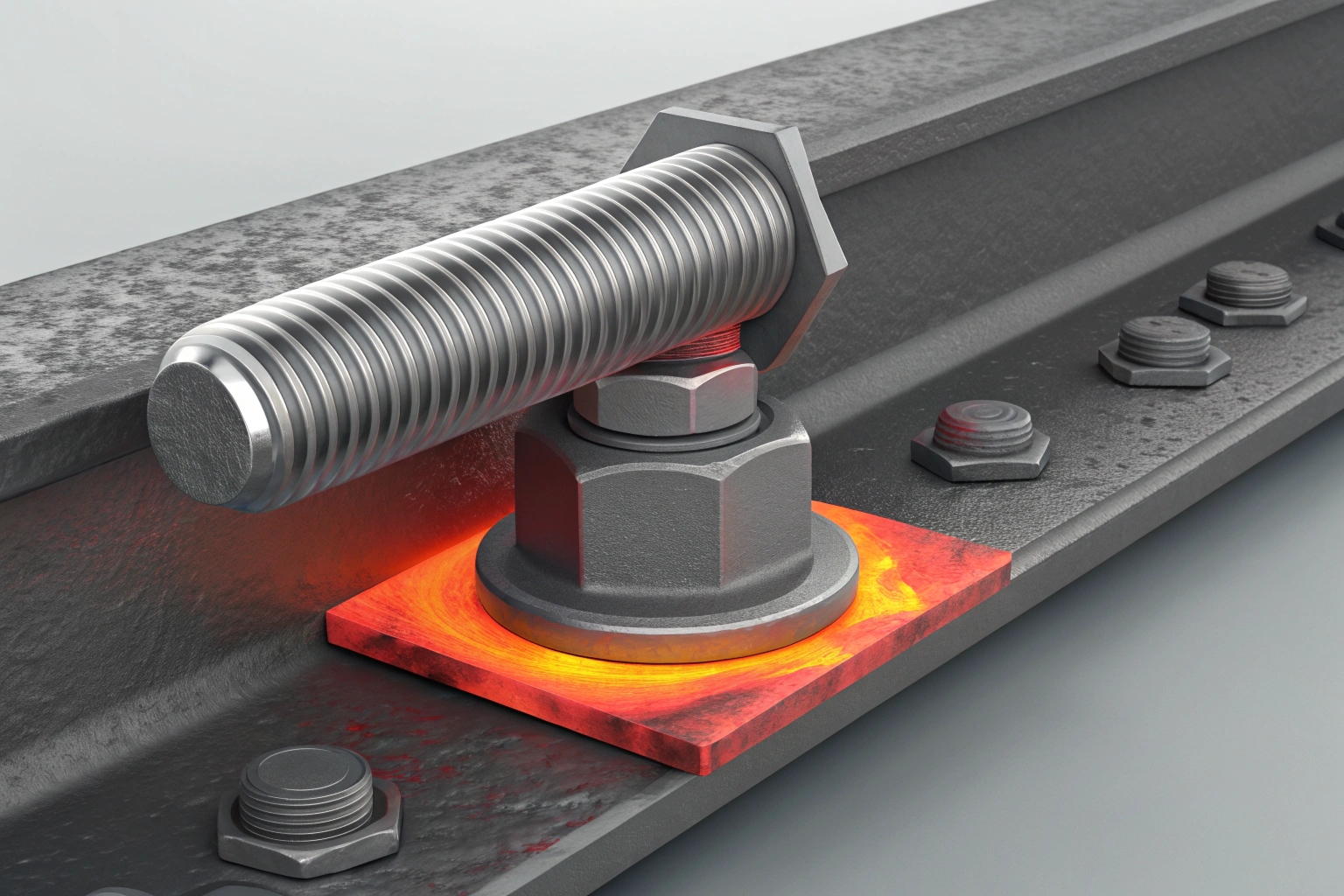
I know how frustrating it is when a shipment of track shoes arrives, and the bolt holes do not line up with the chain links. It wastes your time, delays your projects, and hurts your reputation with customers.
The dimensional tolerance for track shoe bolt holes strictly follows the ISO 273 standard for clearance holes. Generally, we maintain a tolerance range of ±0.2mm to ±0.3mm depending on the bolt size (M16 to M24). This precision ensures bolts fit freely without being too loose, protecting the undercarriage from vibration and wear.
In my years of manufacturing undercarriage parts at Dingtai, I have learned that "close enough" is dangerous. A difference of just one millimeter might seem small, but on a 50-ton excavator, it causes massive problems. In this post, I will explain the exact standards we use and how we guarantee every hole is perfect.
What happens if the hole alignment (pitch) is off by just a few millimeters?
I have seen mechanics try to force bolts into place with a sledgehammer because the holes were slightly off. It is a painful sight because I know that part is going to fail quickly.
If the bolt hole alignment, or pitch, is off by even a few millimeters, the track shoe cannot sit flat on the link. This forces the mechanic to drive the bolt in at an angle. This creates severe side-load stress, which leads to the bolt head snapping off or the shoe loosening within weeks of operation.
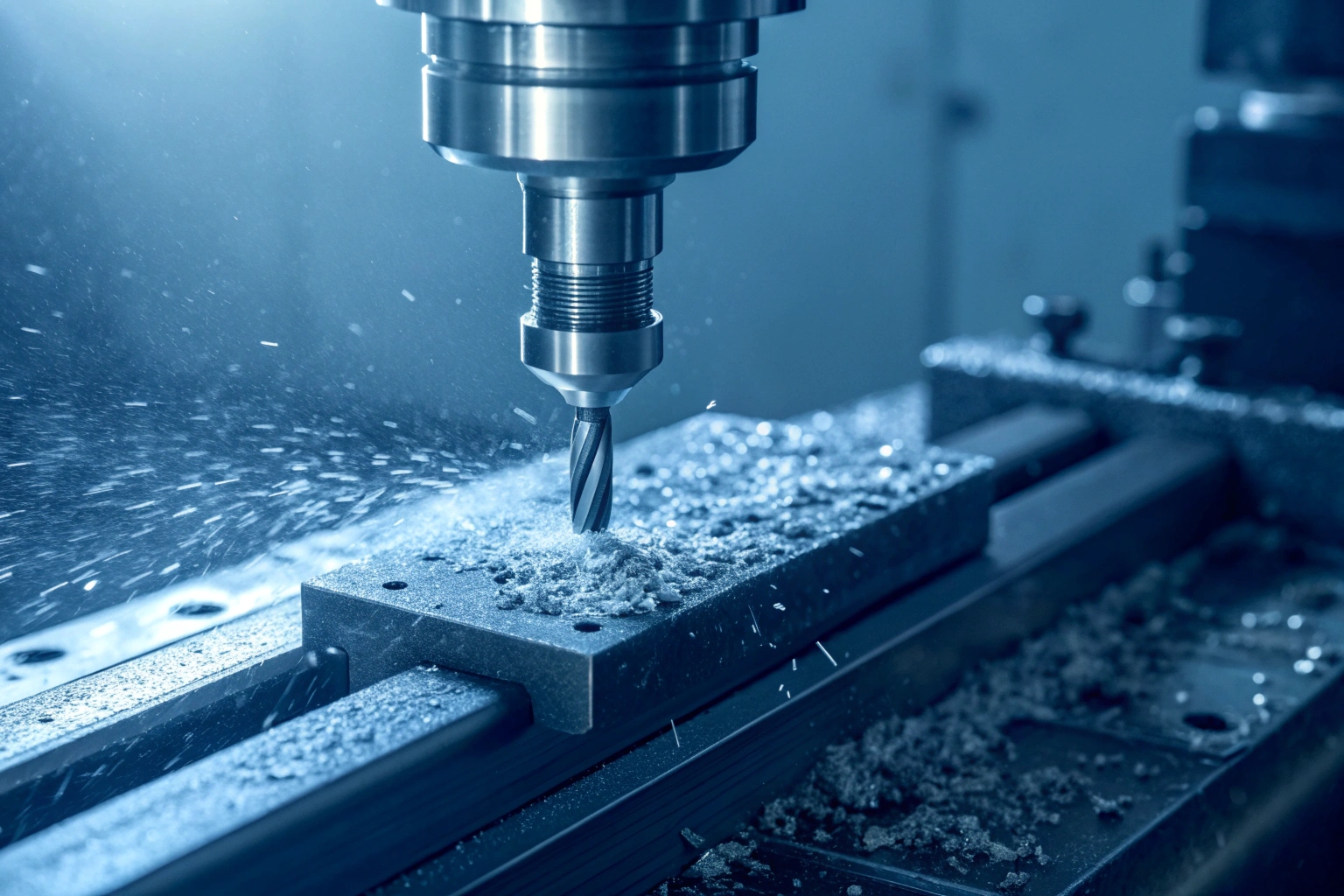
When we talk about "pitch," we mean the exact distance between the centers of the bolt holes. This is even more important than the size of the hole itself. If the pitch is wrong, the entire assembly process becomes a fight against physics.
The Lever Effect of Misalignment
Imagine trying to button a shirt where the buttonholes are in the wrong spots. The fabric bunches up. The same thing happens with steel. If the hole pitch on the shoe does not match the track link, the bolt acts like a lever. When you tighten it, you are not just clamping the shoe down; you are bending the bolt.
This bending creates shear stress 1. Bolts are designed to handle pulling forces (tension), not bending forces. When a machine like a D8 bulldozer starts moving, that bent bolt creates a weak point. The vibration from the ground attacks that weak point. Soon, the bolt head pops off.
Ovalization and Permanent Damage
Another issue is "ovalization." If a hole is slightly off, the bolt pushes hard against one side of the hole. Over time, the steel of the shoe starts to crush and deform. The round hole becomes an oval. Once this happens, the shoe can slide back and forth. This sliding acts like a hammer, hitting the bolt thousands of times a day until it breaks.
At Dingtai, we treat pitch alignment as a pass/fail metric. We do not allow "almost" aligned. It fits perfectly, or it is scrap. We understand that a bad fit destroys your reputation as a reliable distributor.
| Misalignment Level | Installation Method | Field Result |
|---|---|---|
| 0.0mm (Perfect) | Bolts slide in by hand. | Maximum Life. Even clamping force. |
| 0.5mm - 1.0mm Off | Requires light tapping. | Reduced Life. Stress on bolt shank. |
| > 1.5mm Off | Impact wrench or hammer used. | Critical Failure. Bolts snap; shoes fall off. |
What is your quality check process (e.g., CMM, gauge) for 100% of bolt hole dimensions and spacing?
You cannot improve what you do not measure. I never rely on just one way to check our quality because machines can drift and people can make mistakes.
Our quality control process uses a hybrid approach to ensure accuracy. We check 100% of the bolt holes on the production line using Go/No-Go plug gauges. Additionally, we take random samples from every batch to our lab for analysis with a Coordinate Measuring Machine (CMM) to verify the precise geometric position and spacing of the holes.
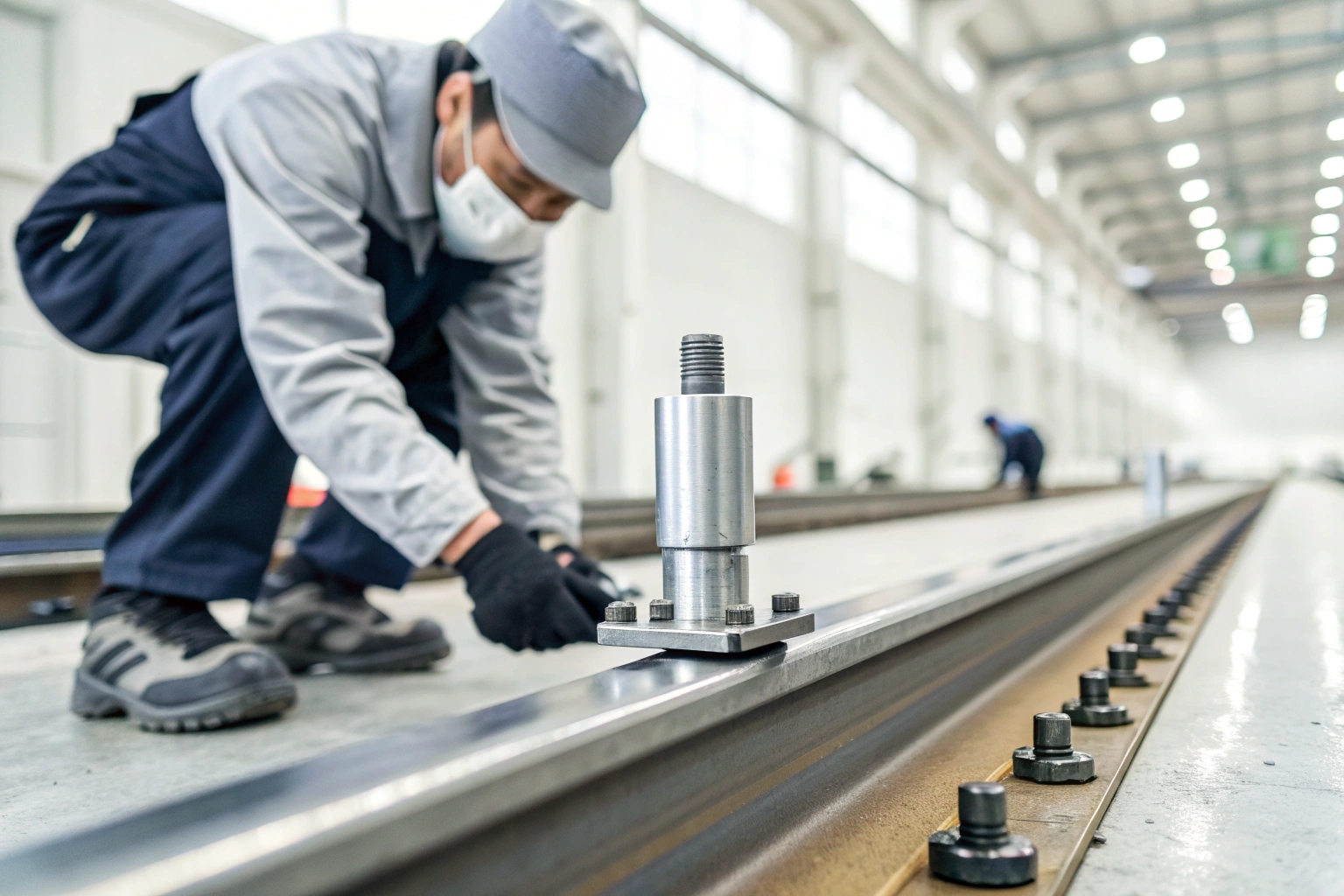
We use a multi-layer defense system against defects. This ensures that every shoe you receive is ready to install. I want to explain exactly how these layers work so you can feel confident in our process.
Layer 1: The Production Line Check
The first line of defense is the Go/No-Go gauge 2. Every operator on our drilling line has one. It is a simple but powerful tool.
- The "Go" Side: This is a steel plug sized to the minimum hole diameter. It must fit inside the hole. If it does not, the hole is too small.
- The "No-Go" Side: This plug is sized to the maximum limit. It must not fit. If it goes in, the hole is too big.
Our workers check every single shoe. This instantly catches common problems like a worn-out drill bit. If a drill bit gets dull, the hole shrinks. The gauge catches this immediately, and we change the tool.
Layer 2: The CMM Lab Analysis
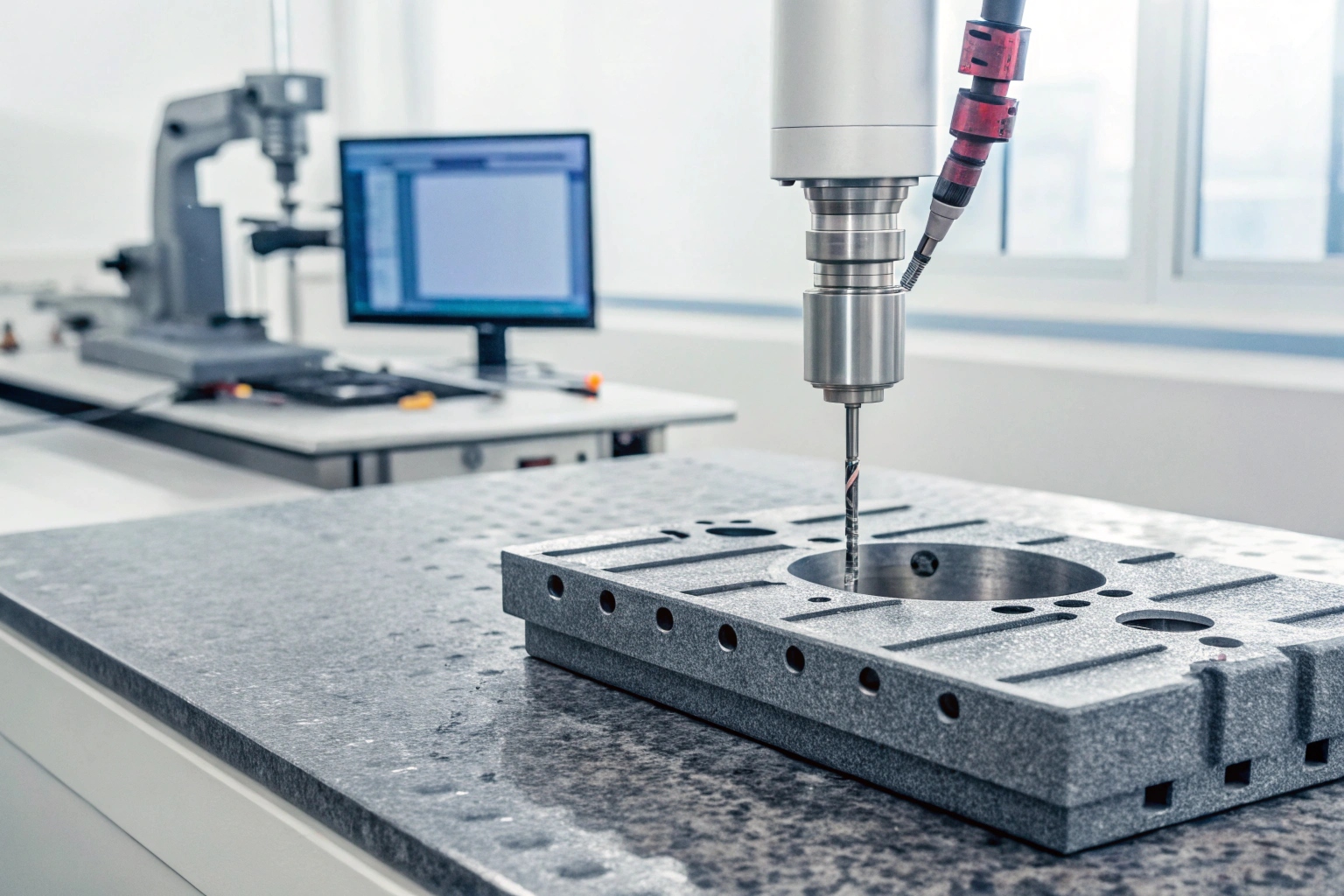
While the hand gauge checks the size, it cannot check if the holes are square to each other. For this, I rely on the CMM (Coordinate Measuring Machine 3).
I take 5 to 10 random pieces from your order and move them to our temperature-controlled lab. The CMM is a robot arm with a sensitive ruby tip. It touches the part in 3D space and creates a digital map of the holes. It compares this map to the original CAD drawing.
This machine is incredibly precise. It can detect if a hole has shifted by even 0.01mm. If we find any shift, we stop the production line and recalibrate the CNC machines.
Layer 3: The Functional Fit Test
Finally, we do a physical test. We keep "Master Links" from major brands like Komatsu and CAT in our factory. We physically mount random shoes onto these links. If the bolts do not drop in easily by hand, the part fails. This replicates exactly what your customer will experience.
| Inspection Type | Tool Used | What We Check | Frequency |
|---|---|---|---|
| Dimensional | Go/No-Go Gauge | Hole Diameter | 100% of parts |
| Geometric | CMM Robot | Pitch & True Position | Random Sampling |
| Functional | Master Link | ease of Assembly | Daily Checks |
Do you use CNC drilling or high-precision punching to ensure perfect alignment every time?
I have visited factories where the floor shakes from the sound of massive punching presses. While it is fast, I know it is not the right way to make a quality product.
We exclusively use multi-spindle CNC drilling centers for all our track shoe bolt holes. Unlike punching, which tears the metal, CNC drilling guarantees perfectly perpendicular hole walls and precise alignment. This prevents tapered holes and micro-cracks, ensuring the bolt grips the shoe securely for the long term.
The debate between drilling and punching is usually about cost versus quality. Punching is cheaper because it is fast. You slam a die through hot steel in one second. Drilling takes longer. But at Dingtai, we choose drilling because the result is far superior.
The Problem with Punching Holes
When a factory punches a hole, they are forcing metal to move. This causes three main problems:
- The Cone Effect: A punched hole is rarely a straight cylinder. The top is usually wider than the bottom. This means the bolt is sitting in a cone-shaped hole. It can wiggle and loosen over time.
- Stress Risers: The violent impact of punching creates stress risers 4 around the edge of the hole. Under the heavy weight of an excavator, these cracks grow. Eventually, the shoe can split in half.
- Rough Finish: The inside of a punched hole is rough and torn. This creates friction and makes it hard to get an accurate torque reading when tightening the bolt.
Why CNC Drilling Wins
We use computer-controlled (CNC) drills 5. The drill bit spins at high speed and cuts the metal cleanly.
- Perpendicularity: The computer ensures the drill comes down at exactly 90 degrees. The hole walls are straight and smooth. The bolt stands perfectly upright.
- Surface Finish: The inside of our holes is smooth (surface finish 6 Ra 3.2-6.3μm). This means there are no rough spots to catch the bolt threads.
- Consistency: The computer never gets tired. The 1,000th hole is exactly the same as the first one.
Handling Heat Distortion
We also have to deal with heat treatment. We heat the shoes to make them hard. This can make the steel warp. To solve this, we use a smart process. We calculate exactly how much the steel will move in the furnace. We program our CNC machines to drill the holes with a tiny offset. When the steel expands and cools, the holes move into the perfect position. This ensures you get hard steel and perfect holes.
| Feature | Dingtai CNC Drilling | Competitor Punching | Benefit to You |
|---|---|---|---|
| Hole Shape | Cylinder | Cone/Tapered | Better bolt grip. |
| Wall Finish | Smooth | Rough/Torn | No stress cracks. |
| Precision | High | Low | Guaranteed fit. |
Is your bolt-hole tolerance compliant with international (e.g., ISO) or OEM standards?
I often get asked if our parts are "genuine" quality. I always say that while the brand is Dingtai, the engineering standards we follow are the same ones used by the giants of the industry.
Yes, our bolt-hole tolerances are fully compliant with ISO 273 and OEM standards for clearance holes. We typically use the "Medium Series" tolerance class. This ensures that our shoes are completely interchangeable with original track chains from brands like Caterpillar, Komatsu, and Hitachi.
Compliance is not just a piece of paper to us. It is the rulebook for our factory. ISO 273 7 is the international standard that dictates exactly how big a clearance hole 8 should be for a bolt. We follow this strictly to ensure safety and compatibility.
Understanding the ISO Standards
When you look at our technical drawings, you will see specific numbers. For the "Medium Series," the standard requires a specific gap between the bolt and the hole.
- For an M20 Bolt: We drill the hole to 22mm.
- For an M24 Bolt: We drill the hole to 26mm.
This gap is calculated carefully. It allows for thermal expansion 9. When the machine works, the tracks get hot. The steel expands. If the hole is too tight, the bolt creates stress. If the hole is too loose (like the "Coarse Series"), the shoe shifts. We stick to the Medium Series because it is the perfect balance.
OEM Interchangeability
One big fear for buyers is compatibility. You worry, "Will this Dingtai shoe fit my customer's Komatsu chain?" The answer is yes.
We maintain a huge database of OEM specifications 10. If you order a shoe for a PC200, we pull the specific drawing that matches that machine's bolt pattern. We check:
- The Pitch: Is the distance between holes correct?
- The Countersink: Is the recess for the bolt head deep enough?
- The Flatness: Is the area around the hole flat?
We ensure that our parts are "plug and play." Your customers can mix our shoes with their existing OEM chains without any issues. We also provide a Dimensional Inspection Report with every shipment. This report proves that the parts in your container meet these international standards.
Why This Matters for Your Business
By following ISO and OEM standards, we remove the risk from your purchase. You are not buying a "cheap copy"; you are buying a component engineered to global standards. This means fewer returns, happier customers, and a more stable business for you. We do the hard engineering work so you can focus on selling.
Conclusion
The dimensional tolerance of bolt holes determines if a track shoe succeeds or fails. By sticking to ISO standards, using precise CNC drilling, and enforcing a triple-check quality process, we ensure perfect fitment every time. Would you like me to send you a sample of our CNC-drilled track shoes so you can test the fit yourself?
Footnotes
1. Explanation of shear stress mechanics in structural bolts. ↩︎
2. Guide to using Go/No-Go gauges for quality control. ↩︎
3. Overview of CMM technology for precise dimensional inspection. ↩︎
4. How stress risers lead to material failure in metals. ↩︎
5. Introduction to CNC drilling processes and benefits. ↩︎
6. Standard roughness charts for machined surface finish values. ↩︎
7. Official ISO standard for fastener clearance hole diameters. ↩︎
8. Engineering data for metric bolt clearance hole sizing. ↩︎
9. Physics of material expansion under heat changes. ↩︎
10. Definition of Original Equipment Manufacturer in supply chains. ↩︎