
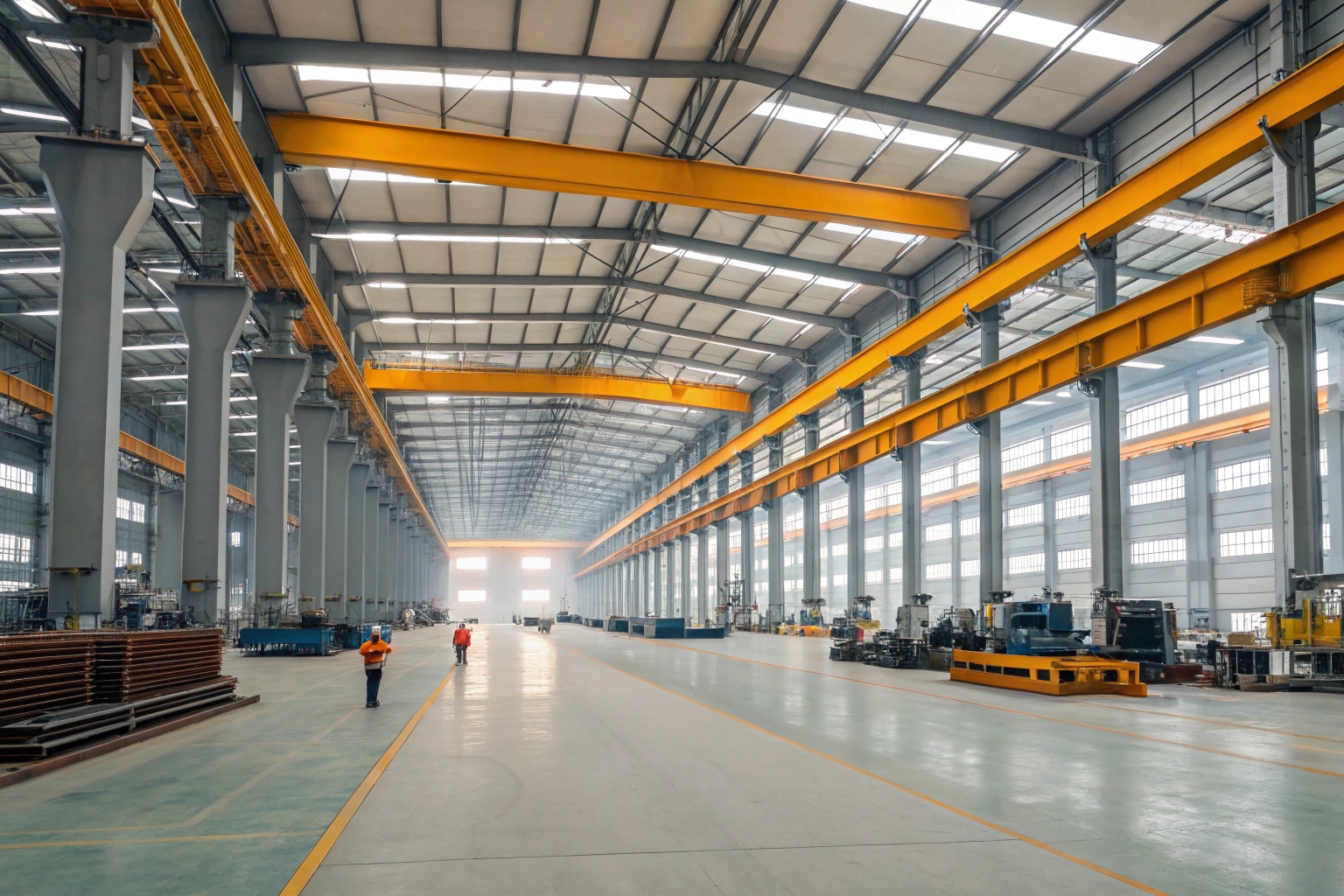
I know exactly how frustrating it is when a "heavy-duty" track shoe cracks within the first 500 hours of operation. You lose money on downtime, your client screams at you, and you are left wondering if the factory even checked the steel before shipping it. I have seen this happen too many times, and it is almost always due to cutting corners in the manufacturing process.
At Dingtai, our complete manufacturing process for track shoe assemblies follows seven strict stages: raw material pre-treatment, precision cutting, forging/forming, automated welding, heat treatment (Q&T), surface finishing, and a final 100% quality inspection. We control every variable, from the chemical composition of the boron steel to the exact seconds spent in the quenching tank, ensuring every unit meets ISO 9001 1 standards.
We believe that transparency builds trust. You should not have to guess how your parts are made. So, I am going to walk you through our entire production line, step-by-step, just as if you were walking through our factory floor in Fujian with me.
How Do We Ensure the Raw Material and Cutting Precision?
Cheap steel is the hidden killer of undercarriage parts, and no amount of heat treatment can fix a bad base material. We refuse to compromise here because we know that the durability of your excavator or dozer starts the moment the raw steel enters our yard.
We begin by sourcing premium Boron steel plates (like 25MnB) and high-strength pins, which we test immediately upon arrival using ultrasonic flaw detection 2 to ensure there are no internal cracks. Once the material passes, we use high-precision laser and plasma cutting 3 machines to slice the steel plates with a tolerance of ≤±0.5mm, ensuring perfect uniformity for every single shoe.
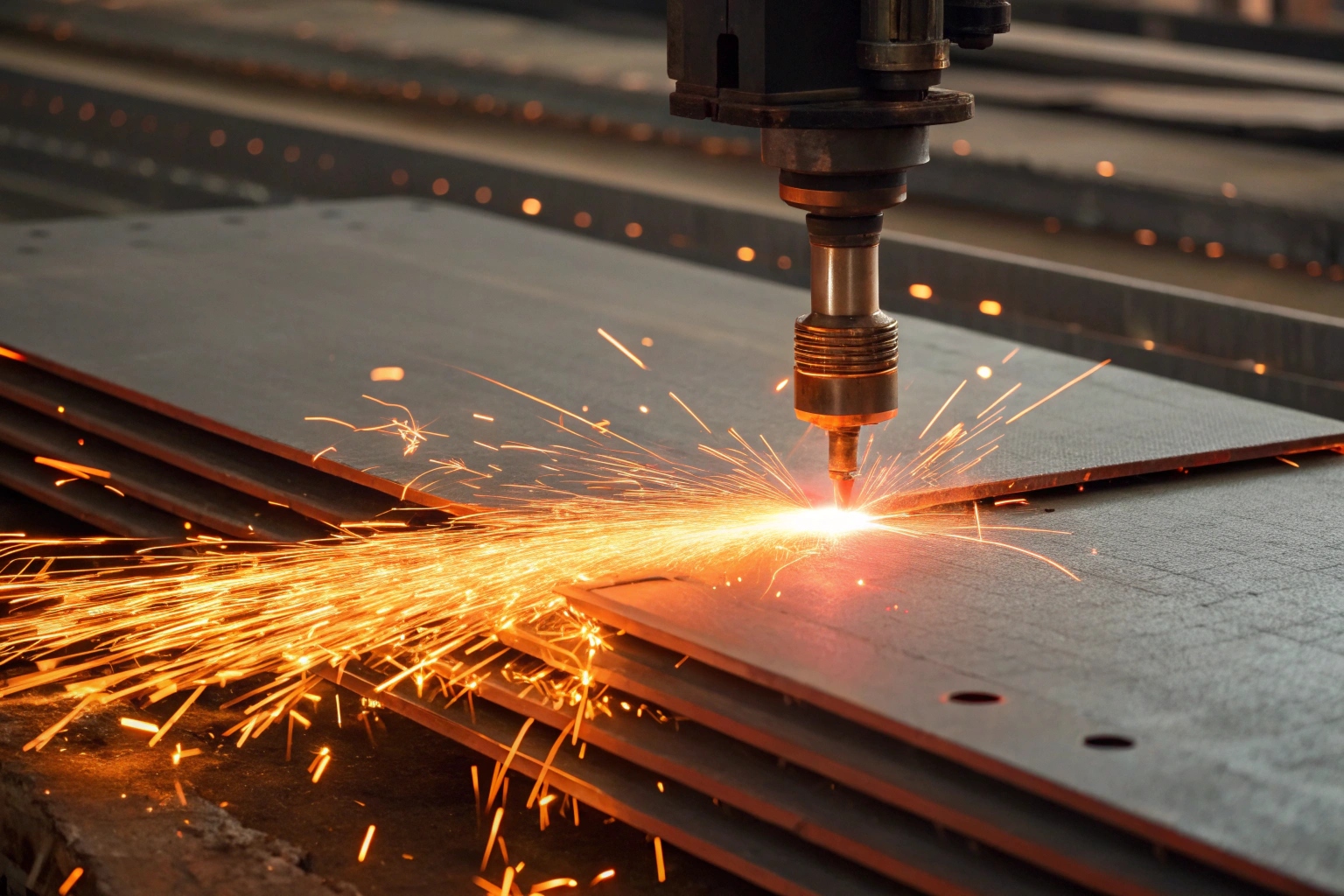
To truly understand why our track shoes last longer, we need to look deeper at the material science we apply before the manufacturing even begins. Many suppliers will simply tell you they use "Carbon Steel." That is not enough information. Simple carbon steel often lacks the "hardenability 4"—the ability to harden deep into the core—that is required for heavy mining machinery.
We use Boron steel 5 (specifically grades like 25MnB or 27MnTiB) for a very specific reason. Boron significantly increases the depth of hardness during heat treatment without making the steel brittle. This means the track shoe can withstand high impact without snapping. Before we cut a single sheet, we perform a chemical composition analysis. We are looking for the "Golden Ratio" of Carbon, Manganese, and Boron. If the Sulfur or Phosphorus content is too high (impurities), the steel will be weak. We reject those batches immediately.
The Precision of the Cut
Once the material is approved, we move to cutting. You might ask, "Why does cutting precision matter for a dirt machine?" It matters because of the bolt holes and the mating surface. If the profile of the shoe is cut poorly, or if the bolt holes are drilled just 1mm off-center, the shoe will not sit flush on the track link.
When a shoe does not sit flush, it creates a tiny gap. When the machine moves, that gap allows the shoe to rock back and forth. This constant micro-movement creates massive shear stress on the bolts. Eventually, the bolts snap, and the shoe falls off. We use automated plasma and laser cutting to ensure the profile is exact. We check the dimensions of the first 5 pieces of every shift (First Article Inspection) and then randomly check pieces every hour. This ensures that when you install our shoes, they line up perfectly with the chain links every single time.
Table 1: Material Standards We Adhere To
| Material Type | Grade Example | Key Characteristic | Application |
|---|---|---|---|
| Carbon Steel | 45# Steel | Basic hardness, lower cost | Light duty, small excavators |
| Boron Steel | 25MnB | High hardenability, tough core | Heavy duty, bulldozers (D8/D10) |
| Manganese Steel | 40Mn2 | High wear resistance | High abrasion environments |
How Do We Control Forging and Machining to Prevent Defects?
If the steel grain flow is messed up during forming, the part becomes a ticking time bomb waiting to snap under load. We treat the forming process as an art that requires strict scientific controls.
Our forming process uses high-tonnage friction presses (up to 2500 tons) to shape the track shoe profile and forge the links. We monitor the die pressure and temperature in real-time to ensure the metal flows correctly without folding or cracking. After forming, we use multi-spindle CNC drilling machines to create bolt holes that are perfectly perpendicular to the shoe surface, guaranteeing a tight, movement-free fit with the track chain.
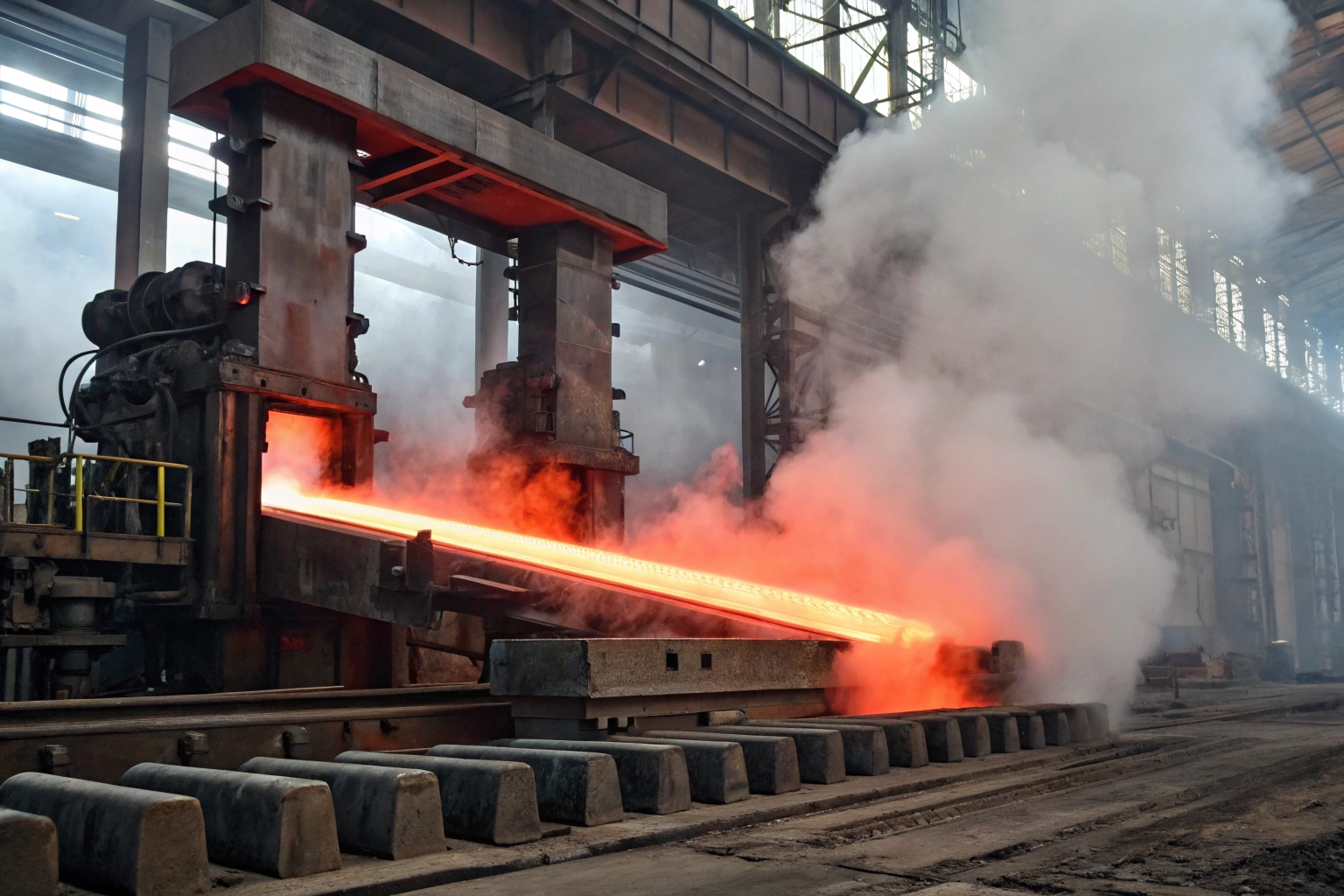
Let's dive deeper into the difference between "bending" steel and "forging" it properly. When we make the grouser (the raised part of the track shoe that digs into the ground), we are not just bending a flat plate. We are rearranging the internal structure of the steel.
The Importance of Grain Flow
Think of wood. Wood has a grain. If you chop against the grain, it splits. Steel also has a grain flow 6. When we use our 2500-ton presses, we ensure that the grain flow follows the shape of the grouser. This continuous grain flow gives the shoe incredible structural integrity. If a factory uses a cold-bending method on cheap steel, the grain structure breaks at the bend. That is exactly where the shoe will crack when it hits a rock. We validate this by occasionally cutting a finished shoe in half and etching it to inspect the grain lines visually.
Machining: The Multi-Spindle Advantage
After the shoe is formed, we must drill the holes for the bolts. This is a critical step that many overlook. We use specialized multi-spindle drills. This means all four (or six) bolt holes are drilled at the exact same time.
Why do we do this?
- Consistency: The distance between holes is fixed by the machine head, not by a human measuring with a ruler.
- Perpendicularity: The holes go straight down (90 degrees). If a hole is slightly angled, the bolt head will not sit flat against the shoe. This creates a "stress riser." Under the vibration of a moving bulldozer, that bolt head will snap off.
We also perform a crucial step called "countersinking." We machine a smooth cone shape at the top of the hole. This allows the bolt head to sit deep and tight, protecting it from wear and impact. We check these dimensions using Go/No-Go gauges on the production line. If the gauge doesn't fit, the part is scrapped immediately.
Is Our Heat Treatment Process the Secret to Longevity?
This is the most critical question you can ask, because heat treatment is what separates a premium product from scrap metal. You cannot see heat treatment with your eyes, but you will definitely feel it in your maintenance budget.
Our heat treatment involves a precise Quenching and Tempering 7 process. We heat the shoes to roughly 850°C-900°C, then rapidly cool them to lock in hardness. We immediately follow this with tempering to relieve internal stress. We control this using furnace sensors that log temperature data every second, ensuring the final product reaches a hardness of HRC 45-52 with a deep, uniform hardened layer.
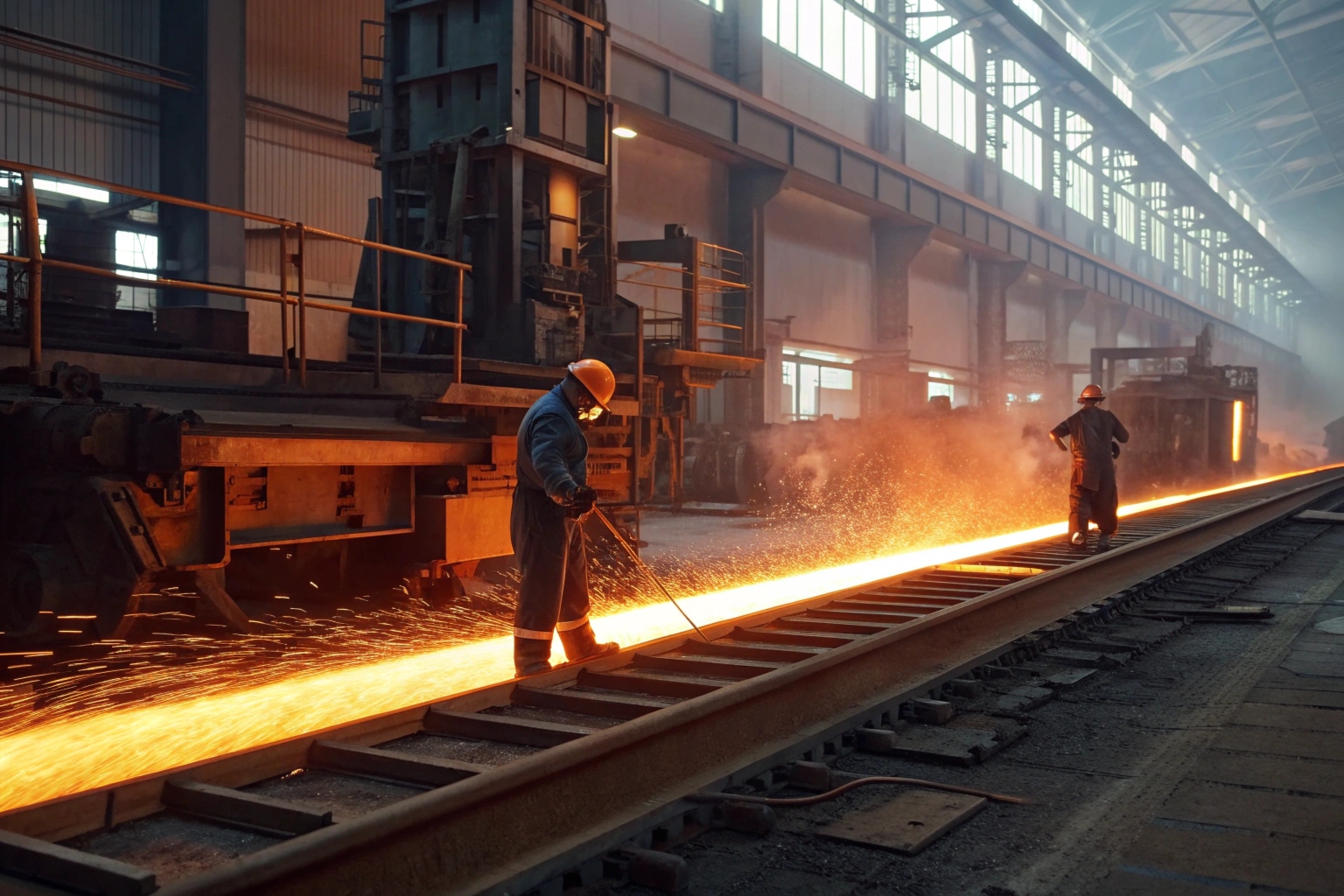
I want to explain the "Science of Hardness" in a way that helps you vet other suppliers. Heat treatment is a balance. If the part is too hard, it becomes like glass—it will shatter when it hits a rock. If it is too soft, it will wear out in a few weeks like a stick of butter. Achieving the perfect balance requires strict control over the "Transformation" of the steel structure.
The "Recipe" for Durability
We treat our heat treatment formula like a chef treats a secret recipe. We don't just put parts in an oven. We control three key variables:
- Time: How long the part soaks in the heat. It must be long enough for the heat to reach the very center of the steel.
- Temperature: The exact degree needed to change the crystal structure of the steel from Ferrite to Austenite.
- Quench Medium: The liquid we use to cool it down (usually a specialized oil).
Quenching: Locking in the Structure
When the track shoe comes out of the furnace glowing red hot, we plunge it into a quench tank. We have to control the temperature of the oil in that tank. If the oil gets too hot, the part cools too slowly, and it will be soft. We use high-flow circulation pumps to ensure cool oil constantly hits the metal surface. This rapid cooling transforms the Austenite into Martensite 8, the hardest form of steel.
Tempering: The Safety Step
This is the step bad factories skip to save money and time. After quenching, the steel is hard but very brittle. It is full of internal stress. We put the parts back into a different furnace at a lower temperature (around 200°C-500°C) for several hours. This "relaxes" the steel. It keeps the hardness but adds "toughness." Toughness is the ability to absorb energy without breaking. Without tempering, a track shoe might look fine, but it will explode under the first heavy load.
How We Monitor It
We do not rely on guesswork. Our furnaces have digital sensors connected to a central control room. If the temperature drops even 5 degrees below our standard, an alarm sounds. We keep these temperature charts. If you ever have a failure, we can pull the chart from the exact day and time your batch was processed to see what happened.
Table 2: Our Typical Heat Treatment Parameters
| Process Step | Temperature Range | Purpose | Resulting Property |
|---|---|---|---|
| Heating (Austenitizing) | 860°C - 900°C | Prepare structure | Uniform Austenite grain |
| Quenching | Rapid Cooling | Trap the structure | High Hardness (Martensite) |
| Tempering | 200°C - 500°C | Relieve stress | Toughness & Ductility |
What Are Our Critical Quality Control (QC) Checkpoints?
You asked for a copy of our QC Control Plan, and while I cannot share the proprietary document here, I can detail the exact checkpoints we use. We don't just check the final product; we check the process itself to stop defects before they are made.
Our QC process is integrated into every step, not just the end. We perform "First Article Inspection" at the start of every shift. During production, we do random spot checks for dimensions. After heat treatment, we cut sample pieces to test core hardness and metallographic structure. Finally, before painting, every single track shoe undergoes a visual and Magnetic particle inspection 9 to ensure zero cracks.
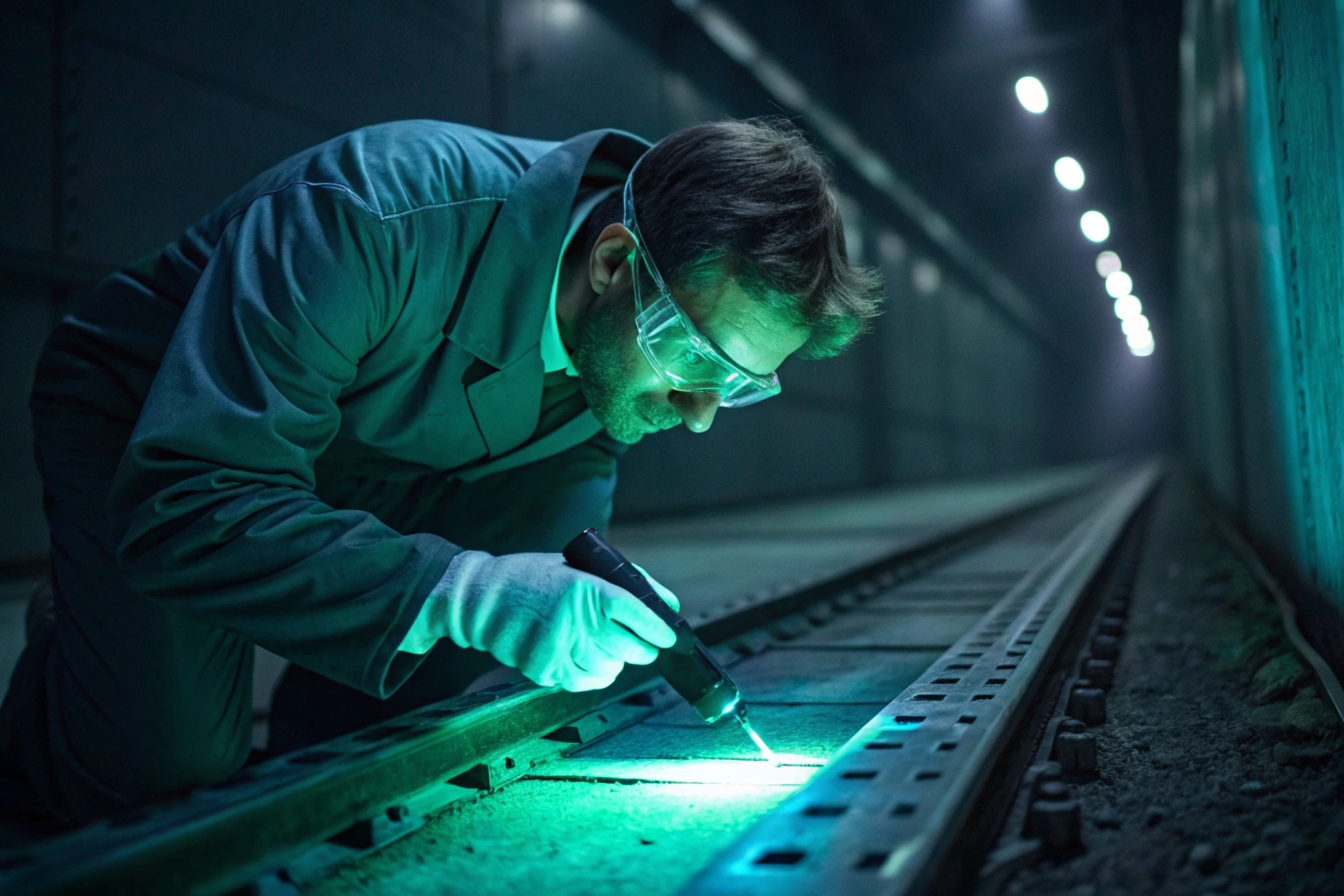
To give you complete confidence, I want to break down the "Invisible Tests" we perform. These are tests that verify things you cannot see with the naked eye. Many buyers only check if the part "looks nice," but the real quality is hidden inside the metal.
1. Metallographic Inspection
We take a sample piece of steel after heat treatment, polish it until it looks like a mirror, and look at it under a powerful microscope. We are looking at the shape of the crystals (grains) in the metal.
- Good: Fine, needle-like Martensite structure. This means the heat treatment worked perfectly.
- Bad: Large, blocky grains or "Ferrite" patches. This means the oven wasn't hot enough, or the cooling was too slow.
2. Impact Testing (Charpy V-Notch)
We take a small bar of the treated steel, cut a notch in it, and hit it with a heavy swinging hammer. We measure how much energy the steel absorbs before it snaps. We utilize the Charpy V-Notch 10 test to simulate your excavator hitting a giant boulder at full speed in freezing temperatures. If the value is too low, we know that batch of shoes will crack in cold weather (like in Canada or Russia). We reject the whole lot if it fails this test.
3. Magnetic Particle Inspection (MPI)
For critical areas, we magnetize the part and spray it with iron particles under UV light. If there is a tiny hairline crack that the human eye cannot see, the magnetic field will force the particles to line up along the crack. It glows bright green. This ensures we never ship a part with a pre-existing fracture.
4. The "Assembly Simulation"
For the full track assembly (chain + shoes), we run a "Pitch Measurement." We assemble a section and pull it tight. We measure the distance between the pins (the pitch). If this is off by even a millimeter, it will wear out your drive sprocket in weeks. We ensure the pitch tolerance is strictly controlled.
Table 3: Dingtai Quality Control Plan Summary
| QC Stage | Test Method | What We Look For | Frequency |
|---|---|---|---|
| Raw Material | Ultrasonic & Chemical | Impurities, laminations | 100% of Batches |
| Forging | Visual & Dimensional | Shape, fill, die wear | First piece + Hourly |
| Heat Treat | Rockwell C (HRC) Tester | Surface & Core Hardness | Every Batch |
| Finishing | Magnetic Particle | Surface cracks | Random Sampling |
| Final Product | Pitch Measurement | Assembly length accuracy | 100% of Assemblies |
Conclusion
Manufacturing a track shoe assembly isn't just about bending metal; it is about controlling the science of steel to withstand extreme punishment. From our Boron steel selection to our precise Tempering cycles and microscopic inspections, every step at Dingtai is designed to give you a product you can install and forget. If you are ready to see this process in person, I invite you to visit our facility in Fujian—I’ll walk you through these steps myself.
Footnotes
1. International standard specifying requirements for quality management systems. ↩︎
2. Non-destructive testing method used to detect internal material flaws. ↩︎
3. Process that cuts electrically conductive materials by using hot plasma. ↩︎
4. The property determining the depth and distribution of hardness induced by quenching. ↩︎
5. Steel alloyed with boron to increase hardenability without sacrificing toughness. ↩︎
6. Alignment of the metal's grain structure to improve strength in forged parts. ↩︎
7. Heat treatment process to harden steel and then improve its ductility. ↩︎
8. A very hard form of steel crystalline structure formed by rapid quenching. ↩︎
9. NDT method for detecting surface and slightly subsurface discontinuities in ferromagnetic materials. ↩︎
10. Standardized high-strain-rate test to determine the amount of energy absorbed by a material. ↩︎